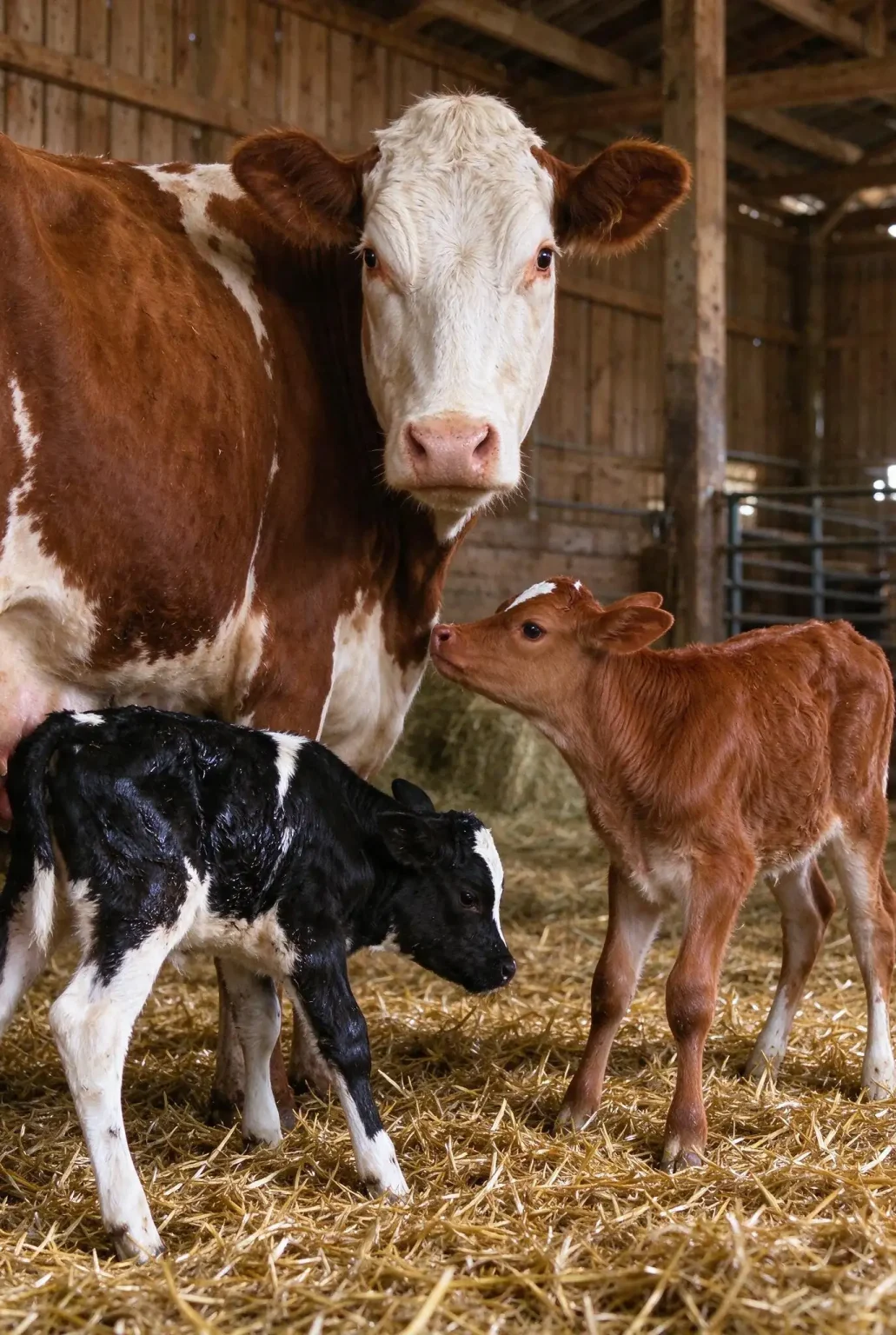
GRAND BAY, Ala. — A pair of newborn calves has given a Mobile County cattle operation a milestone it had never reached before. Twin calves arrived at the Grand Bay farm of C-4 Cattle Company on Sunday, Nov. 22, the first twins ever born on the farm, and both appeared healthy and lively within minutes of birth.
The mother, a young cow called S’mores, delivered one male calf and one female calf. The farm, which is also connected with Vets to Cowboys, said it already knew she was carrying a calf but had no idea two were on the way. Making the event even more unusual, this was the first time S’mores had ever been pregnant.
Why the Grand Bay twin calves stand out
Twin births are uncommon in cattle to begin with, and they are rarer still in first-time mothers. A farm representative explained that heifers, the term for young females that have not yet calved, give birth to twins in well under 1 percent of pregnancies, with the odds placed at less than half a percent. That made the double delivery a genuine surprise for the people who care for the herd.
Twinning rates in cattle vary with breed, age and genetics, and animal science researchers generally find that mature cows that have calved several times are more likely to carry twins than younger animals. Most beef calvings produce a single calf, which is one reason a set of twins tends to draw attention on any working farm.
Most twins in cattle are fraternal, meaning they develop when a cow releases two eggs during the same cycle rather than from a single embryo splitting in two. Fraternal twins can be the same sex or, as in this case, one of each, and they are no more alike genetically than any other full siblings.
A brother and a sister
The twins are a bull calf, meaning a male, and a heifer calf, meaning a female. The bull calf came first, and his sister followed only a few minutes later. Neither calf has been given a name so far.
Mixed-sex twins carry a particular point of interest for cattle producers. Veterinary references widely note that when a heifer is born as a twin to a bull, she is very often a freemartin, a condition in which shared blood supply in the womb affects the development of the female’s reproductive tract. Freemartin heifers are usually unable to have calves of their own. Producers who want to know for certain whether a twin heifer can become a breeding animal typically work with a veterinarian, who can examine the calf or arrange testing. The farm has not said whether it plans to pursue such testing, and there is no indication either way of the heifer calf’s status.
A delivery that came as the owners arrived
The timing of the birth was nearly cinematic. The farm said S’mores went into labor and delivered as the owners were driving up the driveway on Sunday, putting them on hand for the arrival of both calves.
Both newborns were quick to get going. According to the farm, the pair jumped to their feet right away and were already playing and nursing within about five minutes. That is an encouraging sign, because getting up and nursing early is one of the most important milestones in a calf’s first hours of life.
Why the first feeding matters
The first milk a cow produces after calving, known as colostrum, is rich in antibodies that help protect a newborn calf from disease. Calves are born without much built-in immunity, and they absorb those protective antibodies best in the first several hours after birth. Agricultural extension services, including the Alabama Cooperative Extension System, regularly advise producers to make sure newborn calves nurse promptly, and to step in with supplemental colostrum when a calf is weak or slow to stand.
Twins can sometimes face added challenges, since they are often smaller than single calves and may be born earlier than expected. A mother cow may also bond more strongly with one calf than the other. For that reason, livestock specialists often encourage producers to keep a close eye on twins during their first days to be sure both are getting enough to eat.
Fresh from the state fair
S’mores was not just any cow on the property. Earlier in November, she was shown at the Greater Gulf State Fair, the annual fair that draws exhibitors and visitors from across the Mobile area and the central Gulf Coast. The farm said it had actually expected her to calve before the fair took place, but the calves held off until several weeks later.
Livestock shows at fairs give farm families and youth exhibitors a chance to present animals for evaluation, learn from judges and connect with others in the agricultural community. For a farm, having a show animal go on to deliver a healthy set of twins shortly afterward makes for a memorable fall season.
A temporary nursery in the barn
Since the birth, S’mores and her two calves have been staying in a barn on the farm that has been set up as a makeshift nursery. Keeping a new mother and her young together in a sheltered space gives the calves protection from weather and allows the farm to watch them closely during their first days.
Cool late-November nights along the Gulf Coast are typically mild compared with much of the country, but newborn calves still benefit from dry bedding and shelter from wind and rain. Barns and calving pens also make it easier to check that the calves are nursing and gaining strength.
More calves on the way
The twins may be the first of many new arrivals at C-4 Cattle Company in the months ahead. The farm said roughly a dozen of its cows are currently pregnant.
Cattle carry their calves for a little more than nine months, with gestation generally lasting about 283 days, so a group of expectant cows can mean a steady stream of births for a farm over the coming season. Whether any of those pregnancies will produce another set of twins remains to be seen, but the odds suggest the farm should not count on it.
Cattle farming in Grand Bay and Mobile County
Grand Bay is an unincorporated community in the southwestern corner of Mobile County, close to the Mississippi state line. The area has a long rural and agricultural history, with pastures, timberland and small farms spread between the community and the coast. While much of Mobile County’s identity is tied to the port city and the bay, farming families continue to raise cattle, grow crops and keep traditions alive in communities like Grand Bay, Wilmer and Irvington.
Cattle production is one of Alabama’s leading agricultural activities, and beef cattle can be found in every county in the state. Many Alabama operations are cow-calf farms, which keep a herd of breeding cows and raise calves that are later sold or kept as replacements. Seasonal calving, careful herd health practices and good pasture management are the backbone of these operations.
Resources for local producers
Farmers and families interested in raising cattle in south Alabama have several places to turn for guidance:
- The Alabama Cooperative Extension System, a partnership of Alabama A&M University and Auburn University, offers publications and county-level agents who can answer questions about calving, nutrition and herd health.
- Local large-animal veterinarians can help with pregnancy checks, difficult deliveries and questions such as whether a twin heifer will be able to breed.
- The Alabama Cattlemen’s Association provides education and networking opportunities for beef producers across the state.
- County fairs and regional events, including the Greater Gulf State Fair, offer young people and farm families a way to show livestock and learn from experienced exhibitors.
What comes next for the twins
For now, the bull calf and heifer calf are spending their days close to their mother in the barn, nursing and growing stronger. Names for the pair have not yet been chosen, and the farm has not announced longer-term plans for the calves.
For a Grand Bay operation marking its first-ever twins, the arrival is a welcome bit of good news heading into the Thanksgiving holiday. With about a dozen more calves expected in the herd, the barn at the C-4 Cattle Company farm is likely to stay busy for some time to come.