

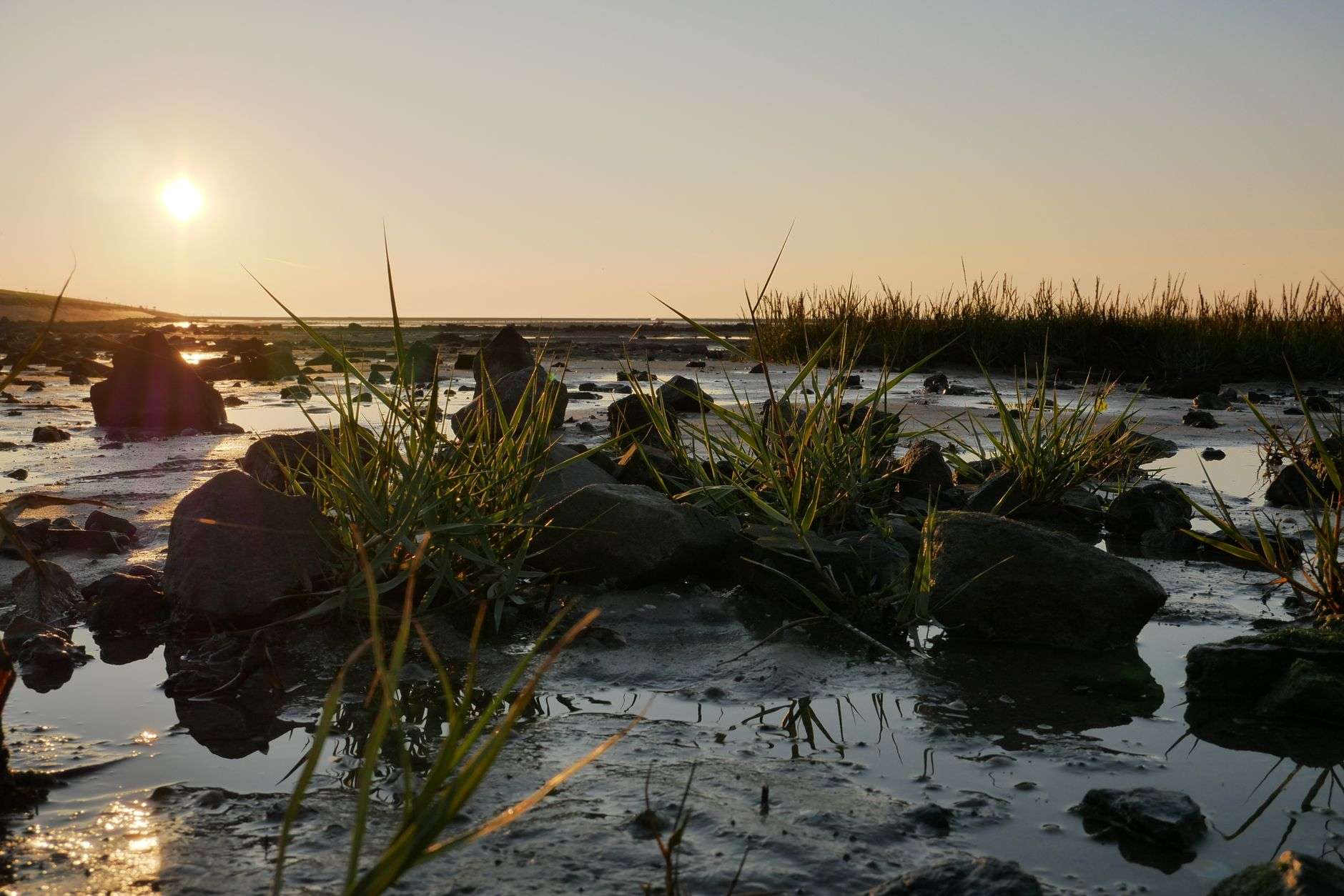
Coastal Alabama is a place defined by its watery edges: rivers, bayous, marshes and bays that give the region its character, its seafood and much of its economy. Protecting the land along those edges is the work of the South Alabama Land Trust, the Fairhope-based nonprofit better known as SALT. In a 2023 conversation, Outreach and Communications Manager Katherine Kuhn laid out how the organization conserves sensitive habitat, why it works with developers rather than against them, and how residents can help, from planting native species to buying a ticket to its annual Bald Eagle Bash.
From Weeks Bay Foundation to South Alabama Land Trust
SALT was founded in 1990 as the Weeks Bay Foundation, a nonprofit with a dual mission: protect land and serve as a Friends Group to the Weeks Bay National Estuarine Research Reserve. As its reach grew beyond the Weeks Bay watershed, the organization changed its name in 2020 to South Alabama Land Trust to better reflect the territory it serves.
Weeks Bay Reserve is one of about 30 National Estuarine Research Reserves across the country, a system that protects coastal and estuarine habitats for long-term research, water-quality monitoring, education and coastal stewardship. Another reserve in the system, Grand Bay, sits just across the Mobile County line near Moss Point, Mississippi.
In 2023, SALT described itself as a primarily volunteer organization with a small paid staff. Kuhn, who earned a marine biology degree from Spring Hill College in 2016, had been with the group for about a year and a half at the time.
“Whether we realize it or not, we are people of the water, and there are plenty of watery edges around here,” Kuhn said. “We are about protecting land at the water’s edge.”
How SALT Protects Land
SALT’s core focus is identifying, conserving and protecting sensitive natural habitats. It is a nationally accredited member of the Land Trust Alliance, the national organization that sets standards for land trusts across the United States.
Once a priority parcel is identified, SALT reaches out to landowners about donating the land or selling it at a reasonable price. The organization gives preference to:
- Parcels that connect to land already held by the state.
- Other sensitive wetland areas.
- Land whose use would directly affect a nearby waterway.
“Most wetlands are already protected,” Kuhn said. “We try to strike a balance between what degree a parcel can be developed vs what is already protected.”
SALT works closely with the Alabama Department of Conservation and Natural Resources. “We can purchase land and hold it until it has a clear path to be purchased and managed by the State,” Kuhn explained. That bridging role is common among land trusts, which can often move faster than government agencies when a key property comes up for sale.
At the time, SALT monitored roughly 11,000 acres. One of its properties, the Fish River Nature Preserve, is a longleaf pine ecosystem that depends on fire, so SALT conducts prescribed burns there as part of its management, with the goal of eventually opening the preserve to the public.
Not Anti-Development, but Pro-Planning
Baldwin County has been one of Alabama’s fastest-growing counties for years, and that growth puts pressure on the woods, wetlands and waterways that make the area attractive. SALT’s approach is to engage early.
“Our mission is to protect the water and land we depend on,” Kuhn said. “We are not anti-development, but we are always exploring how development can be done better. Education is important, but getting involved in the beginning to discuss how things can be done to protect the environment is a major focus for us.”
Clean Water Partnerships and Education
SALT partners with other conservation groups, including Dog River Clearwater Revival and Mobile Baykeeper, to track bacteria levels in local waters, sponsoring four testing sites. It also hosts educational workshops and field trips to keep the public informed.
The land trust also partners with the Osprey Initiative, which started in Mobile and now operates nationwide, supporting its annual Floating Cleanup. The Osprey Initiative’s Don Bates invented the Litter Gitter, a device deployed in waterways across the United States to intercept floating trash carried by stormwater runoff before it reaches bays and the Gulf.
Bringing Native Plants Back Home
SALT’s Native Habitat Program encourages homeowners to restore native plants and trees that support local bees, butterflies and other insects.
“Insects haven’t adapted to non-native, exotic plants that are being introduced to our area,” Kuhn said. Non-native plants, she explained, do not support the food web local pollinators depend on. The program puts restoring native species in the hands of property owners. “There is so much individuals can do to sustain and improve this area.”
Signature Events: BirdFest and the Bald Eagle Bash
SALT raises money through grants, donations, memberships and events. Two events stand out.
The Alabama Coastal BirdFest is SALT’s big fall event, traditionally held around the first full weekend in October; the 2023 festival ran October 4 through 7. The all-volunteer event features experts from groups such as Alabama Audubon and the Alabama Ornithological Society leading kayak and pontoon boat tours through local estuaries. Participants have also been able to board the Dauphin Island Sea Lab’s research vessel Alabama Discovery to explore sea life in Mobile Bay and the Gulf.
The Bald Eagle Bash, billed as The Party for Preservation, is held each spring at the Tonsmeire Weeks Bay Resource Center at the Fish River Bridge and boat launch on Scenic Highway 98. The 13th annual Bash took place Saturday, April 29, 2023, and featured:
- Shrimp dishes prepared by more than a dozen local restaurants, with shrimp provided by Bon Secour Fisheries.
- Beer donated by Fairhope Brewing Company and Mobile’s Braided River Brewing Company.
- Live music from Dial Street Band of Mobile and Ladycouch of Nashville.
Tickets that year were $50 early-bird for SALT members from March 9 to 12, then $55 for members and $65 for non-members. Anyone interested in future events should check with SALT for current dates and pricing.
How to Get Involved
For residents who want to help protect coastal Alabama, SALT offers several paths: becoming a member, volunteering at events and on the land, attending workshops, adopting native plantings at home or supporting its fundraisers. In 2023, the organization also had job openings and volunteer opportunities for people interested in land conservation and environmental work.
Leadership has evolved since that conversation; SALT recently named Jamie Marshall as executive director, succeeding the retiring Jane Herndon. The mission Kuhn described, protecting the water and land coastal Alabama depends on, remains the organization’s foundation.