Hammerhead Sharks: Recovering Populations Along the Gulf Coast
Hammerhead sharks are recovering along the Gulf Coast, growing to 20 feet and using their hammer-shaped head to hunt stingrays.
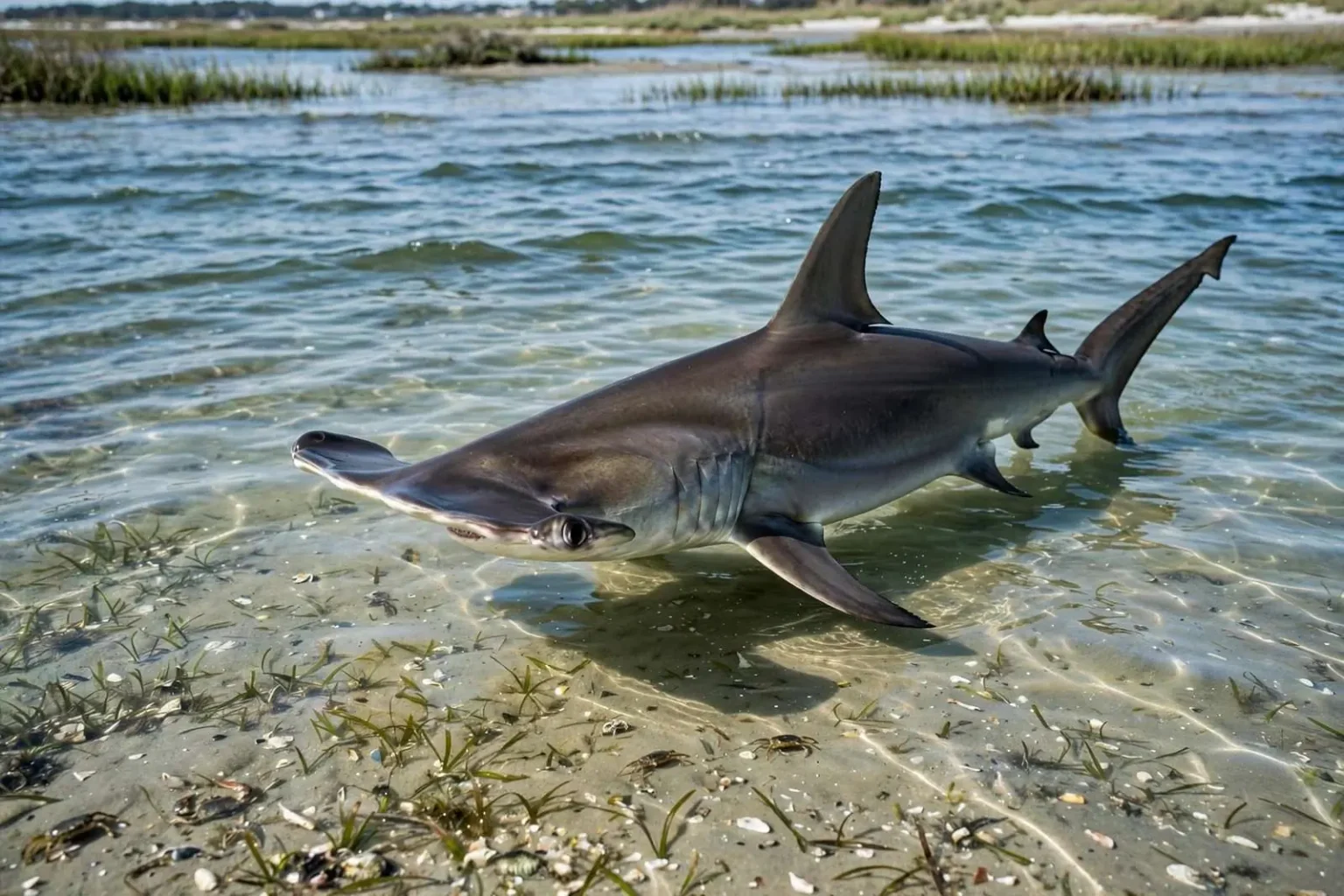
Hammerhead sharks are becoming more common along the Gulf Coast as their populations recover from overfishing, according to marine experts.
Dr. Sean Powers, director of the University of South Alabama School of Marine and Environmental Sciences and senior marine scientist at the Dauphin Island Sea Lab, says hammerhead populations were overfished for a long time but are now recovering.
“They are also a species that will eat stingrays and they love to come up really shallow and chase stingrays like we’ve seen in video recently,” Powers said.
The sightings that reach social media each summer, a broad shadow crossing a sandbar or a wide head slicing through surf near the sand, fit what the scientists who study the Gulf have been documenting in their data. After decades in which hammerhead numbers fell under pressure from commercial and recreational fishing, the species is encountering anglers, boaters and swimmers more often, particularly along the shallow nearshore waters of Alabama’s coast where stingrays gather.
Size and species
The great hammerhead can grow to about 20 feet and weigh about 1,000 pounds. They have tremendous fins that make them very agile.
There are two species of hammerhead in the Gulf: the great hammerhead, which occurs solo, and the scallop hammerhead, which forms social schools.
The difference in behavior shapes how people encounter them. A lone great hammerhead cruising a drop-off is the rarer and more dramatic sight, while schools of scalloped hammerheads, often made up of younger animals, can number in the dozens and are frequently spotted from boats and piers. Federal fishery managers have imposed strict limits on hammerhead harvest for years, and the scalloped hammerhead carries federal protection under the Endangered Species Act for portions of its population, measures credited with giving both species room to rebuild.
Feeding behavior
Hammerheads specialize on bottom-dwelling prey, using their distinctive hammer-shaped head to pin their prey or detect movement on the sea floor.
“They’re going to use that hammer to either pin their bait or just sense things that are moving around on the sea,” Powers said.
The hammer, technically called a cephalofoil, is one of the most specialized tools in the shark world. Spreading the eyes and nostrils across a wide blade gives the animal a wider field of view and better smell coverage, and it houses sensory pores that detect the faint electrical fields every living fish gives off. That last ability matters most for a hunter working the bottom, where stingrays and other prey can bury themselves in sand and vanish from sight. A hammerhead sweeping its head across the floor reads the hidden landscape below in a way other predators cannot.
Not a threat to humans
Because their mouth is positioned on the bottom of their body, hammerheads are not implicated in many shark bites or attacks on humans.
“Hammerheads because that mouth is on the bottom of them. They’re really not implicated in many shark bites or shark attacks. It’s very, very rare,” Powers said.
That anatomy is the key to understanding the species. A hammerhead feeds downward, on things in or under the seafloor, not on prey swimming at its own level. Humans at the surface or wading in the surf simply do not fit the hunting pattern, and even when a large hammerhead passes close to a swimmer, it is usually there for the stingrays. The species’ reputation, built on its size and strange silhouette, has never matched its actual record of interactions with people.
Lifeguards and marine scientists along the coast offer the same practical guidance for any large shark: give it space, avoid swimming near schools of feeding fish or where people are chumming for game fish, and remember that shallow water where stingrays gather is exactly where hammerheads hunt. Stingray injuries to beachgoers, a far more common occurrence than any shark bite, are themselves part of the same food chain Powers describes.
An accidental ally for oysters and crabs
Hammerheads play an important role in the ecosystem by controlling stingray populations, which helps protect blue crabs, oysters, and other valuable species.
The connection runs through the Gulf’s food web in ways most beach visitors never see. Stingrays prey heavily on shellfish, crushing oysters and digging up crabs from the bay floor, and an unchecked ray population can pressure the same beds that commercial and recreational harvesters depend on. A healthy hammerhead population keeps ray numbers in check, which in turn takes pressure off the shellfish. It is a top-down effect that begins with a 1,000-pound predator and ends on the oyster reefs and crab grounds of Mobile Bay and the surrounding sounds.
That role is why marine scientists view the recovery as good news rather than a warning. A Gulf with more hammerheads is a Gulf moving back toward the predator-prey balance it held before overfishing thinned the ranks of large sharks, and the Dauphin Island Sea Lab’s researchers have spent years documenting how those relationships hold the ecosystem together. Where the big sharks have disappeared elsewhere, ray populations have surged and shellfish beds have suffered, a pattern that illustrates what Alabama’s coastal waters gain when the balance is restored.
Watching the recovery continue
Researchers expect sightings to keep climbing as the population grows, and they treat every video and photograph from the public as useful data. The Sea Lab and its partners monitor shark populations through survey work in the bay and the nearshore Gulf, tracking which species are present and how their numbers shift from year to year.
For now, the message from the scientists who know these animals best is consistent. The hammerhead is returning to Alabama’s waters because conditions have improved, it feeds on the bottom where few swimmers ever go, and its comeback is a sign of a healthier Gulf rather than a more dangerous one.
The science behind the sightings
The Dauphin Island Sea Lab, where Powers serves as senior marine scientist, functions as Alabama’s principal marine research institution, a consortium of colleges and universities that runs education and research programs on the barrier island at the mouth of Mobile Bay. Its scientists survey the bay and the coastal waters of the northern Gulf, and their work feeds the state’s understanding of everything from oyster reefs to the large predators that pass through coastal waters each summer.
Powers leads the University of South Alabama’s School of Marine and Environmental Sciences, which trains the next generation of Gulf researchers in the same waters the students will eventually study. The pairing of the university program and the Sea Lab has made the Mobile area one of the Gulf’s centers for shark and fisheries research, with long-running surveys that give scientists the baseline data needed to say with confidence that populations are rising.
The recovery itself is the product of policy as much as biology. Federal managers tightened shark fishing rules in the 1990s and 2000s, banning the practice of removing fins at sea and setting quotas and size limits for the large coastal species, including hammerheads. State and federal protections now restrict harvest, and catch-and-release fishing for sharks has become the norm among most Gulf anglers. Hammerheads are known to be vulnerable to the stress of capture, which is why researchers urge anglers who hook one to cut the line quickly rather than bring the animal alongside the boat.
The biology of the species makes the recovery slower than it might be. Hammerheads grow slowly, mature late and give birth to relatively small litters of live young, usually in warm coastal nurseries during the warmer months. That life history meant overfishing cut the population down quickly while rebuilding takes decades, and it is why managers treat each spawning season as a step that cannot be rushed. The females that survive to adulthood carry the recovery on their backs, which is one more reason protections on large, mature animals matter more than they might for a faster-reproducing species.
Alabama’s coastal geography also helps explain where the sightings happen. The shallow, sandy flats from Mobile Bay through Mississippi Sound and along the beaches of the Fort Morgan peninsula hold dense stingray populations in summer, and the passes between the barrier islands give hammerheads an easy route from deeper Gulf water into the shallows. When conditions line up, warm water, moving tides and rays feeding on the flats, the predators follow, and someone on a pier or a paddleboard usually ends up with the video to prove it.
Each summer’s sightings will bring the same questions from beachgoers, and the answer from the Gulf’s marine science community remains what it has been: the animals are hunting stingrays in shallow water, they almost never trouble people, and their growing numbers are exactly what a recovering Gulf is supposed to look like.