Historic Oakleigh House Museum in Mobile Closes for Major Roof and Interior Repairs
The Historic Oakleigh House Museum in Mobile has closed temporarily for a new roof and interior repairs after water damage from a roof leak, with officials targeting a September reopening.
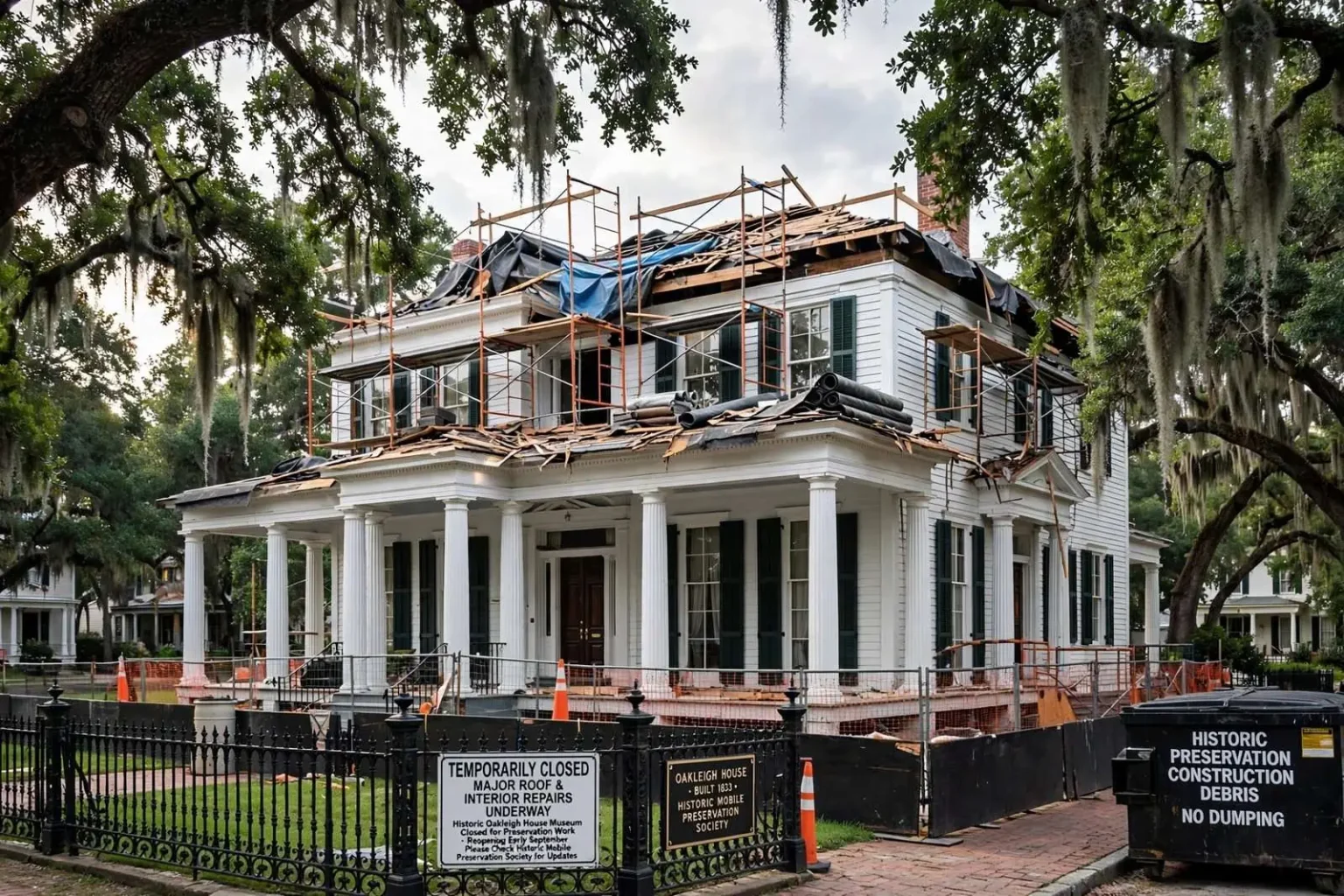
The Historic Oakleigh House Museum in Mobile has temporarily closed its doors while crews complete major repairs to the antebellum home, which has suffered water damage from a roof leak. The closure takes one of the city’s most visited historic properties off the tour circuit during one of its busiest stretches of the year, as crews work to stop the intrusion and repair what it left behind.
Work began in late July, and crews discovered three layers of roofing material on the house, including the original layer dating to the home’s construction. The layered roofing — a kind of archaeological record of nearly two centuries of repairs — had to be carefully stripped before the new roof could go on, revealing conditions that no inspection from below could fully anticipate.
The project now underway includes a full roof replacement, repairs to damaged ceilings and walls, and repainting of interior rooms. Crews are working through the house section by section, addressing the water paths the leak followed before they close the roof back up and turn to the interior finishes.
Museum officials say the work is intended to protect the home’s collection of antiques and artifacts from further water intrusion. The furnishings and objects displayed throughout the house — many of them period pieces tied to Mobile’s history — are the reason visitors come, and keeping them safe is the priority driving the repair schedule.
The museum hopes to reopen during the first week of September, though the timeline could shift depending on what else crews find as repairs continue. Old houses are known for revealing surprises once work begins, and officials have been clear that the reopening date is a target, not a guarantee.
A Mobile landmark dating to 1833
Built in 1833, Oakleigh is one of Mobile’s most recognizable historic homes and has operated as a house museum for decades, drawing visitors interested in the antebellum architecture and history of the Gulf Coast. The home’s T-shaped Greek Revival design and tall columns make it one of the defining images of antebellum Mobile, and it stands among the oldest surviving houses in the city.
The property sits in the Oakleigh Garden District, a historic residential neighborhood near downtown Mobile that takes its name from the mansion. The district surrounding the house is known for its collection of historic homes and its walkable, oak-lined streets, and the mansion anchors the neighborhood’s identity to this day.
As a house museum, Oakleigh offers guided tours that walk visitors through the home’s history — the era of its construction, the families who lived there, and the enslaved and working people whose labor surrounded households like it in antebellum Mobile. School groups, tourists and history enthusiasts make up the steady stream of visitors the museum counts on throughout the year.
The closure interrupts that rhythm, but preservation officials note that visitors who return in September will see a house better protected than it has been in generations — with a new roof above, repaired ceilings within, and fresh paint throughout the affected rooms.
Preservation on a historic budget
The home has faced funding and maintenance challenges before. The Historic Mobile Preservation Society, which oversees the museum, has previously relied on community fundraising to help keep the property open, reflecting the ongoing cost of maintaining a nearly 200-year-old structure. Membership drives, ticket sales and donations all feed the steady upkeep a house of this age demands.
Roof failures are a common and costly problem for historic homes of Oakleigh’s age, since original building materials and construction methods can make modern repairs more complex. A roof on an 1833 house is not simply replaced the way a modern one is — the work has to respect the original structure, meet preservation standards, and account for materials and methods that no longer exist in standard practice.
Discovering multiple layers of roofing, as crews did at Oakleigh, is not unusual in older homes that have been re-roofed several times over the decades rather than fully stripped and replaced. Each generation of repair added a layer over the last, and the weight and trapped moisture that come with that approach eventually catch up with a structure.
Stripping to the original layer gives preservationists a chance to see the building as its builders left it — and, in Oakleigh’s case, confirmed the age of the original roofing materials dating to the home’s construction. That kind of discovery is valuable to historians even as it complicates the job for contractors.
What water damage means for a collection
Water is the most persistent enemy of historic interiors. A slow leak can warp plaster, stain and weaken ceilings, darken paint, and swell woodwork — and if it reaches collections, it can damage textiles, paper, and furniture finishes in ways that are difficult and expensive to reverse. Museum staff keep close watch on collection pieces during any repair project.
The repairs now underway are aimed at cutting off that threat at its source. Once the new roof is sealed, the interior work — ceilings, walls, paint — restores the rooms visitors see, and the museum can return its focus to interpretation and education rather than triage.
House museums across the country face similar cycles. A property like Oakleigh requires a maintenance plan measured in decades: painting, roofing, foundation work, and climate control all recur on their own schedules, and a preservation society’s budget must stretch to meet them all while keeping the doors open to the public.
What visitors should know
Visitors and Mobile residents can expect the museum to remain closed until repairs are complete, with officials targeting an early September reopening. Those planning a visit in the meantime are encouraged to check with the Historic Mobile Preservation Society for updates as the work progresses.
The society’s other programs and events continue while the house is closed, and supporters who want to help can contribute to the preservation effort directly. Every ticket, membership and donation ultimately cycles back into the same work now underway at Oakleigh — keeping a 193-year-old house standing, watertight, and open to the public.
When the doors reopen, tours will resume on the museum’s regular schedule, and the first visitors through in September will be among the first to see the repaired ceilings and fresh paint that mark the end of this summer’s emergency. The house has stood in the Garden District since 1833; the current project is the latest entry in a maintenance history that stretches back nearly as far.
For now, the quiet around the property is temporary. Behind the scaffolding and stripped roof, the work being done this summer is the kind that visitors rarely notice when it is finished — which is precisely the point.
Oakleigh’s construction in 1833 placed it in the middle of Mobile’s antebellum boom years, when cotton wealth flowing through the port financed the grand homes that still define parts of the city’s historic districts. The house has survived wars, hurricanes, and waves of development that swept away many of its contemporaries, which is part of what makes its preservation so valuable to the city.
The Oakleigh Garden District grew up around the mansion in the decades that followed, and today the neighborhood is one of Mobile’s most active preservation communities. Its streets connect the house museum to churches, parks, and blocks of restored residences, and neighborhood organizations have long worked alongside the preservation society on projects of shared interest.
The summer closure falls during peak tourist season for the Gulf Coast, when family trips and school-break travel bring the heaviest foot traffic to Mobile’s historic attractions. Losing even a month of tours has a real effect on the museum’s finances, which is why officials are working toward the early September target with an eye on both the calendar and the quality of the repairs.
The work itself
Roof replacement on a house like Oakleigh typically proceeds in stages: stripping the accumulated layers, inspecting and repairing the underlying decking and structure, installing the new roof system, and then addressing the interior damage the leak caused. Crews discovered the three layers early in the process, which set the scope of the job now underway.
The ceiling and wall repairs follow the roof work, since the water stains and weakened plaster can only be properly addressed once the source of the moisture is gone. Repainting comes last, matching the finishes that visitors expect as they move through the museum’s rooms.
Preservation standards guide each step. Materials and methods are chosen to respect the house’s historic character, and the work is being done with an eye toward durability — the goal is a roof that will protect the house for decades, not another layer over the last one.
For the Historic Mobile Preservation Society, the project is the kind of unglamorous work that keeps a house museum alive: invisible to most visitors when it is done, indispensable to everything the museum does. The society has cared for Oakleigh for decades, and this summer’s repairs are the largest visible piece of that stewardship in some time.
Updates on the reopening will come from the museum as the work wraps, and the society’s members and supporters — the same community that has rallied before to keep the house open — will be watching for the date the doors open again.