History Museum of Mobile to Host Lunchtime Screening on Lingering Oil Spill Effects
The History Museum of Mobile will host a free lunchtime screening and discussion on the lasting effects of the Deepwater Horizon oil spill.
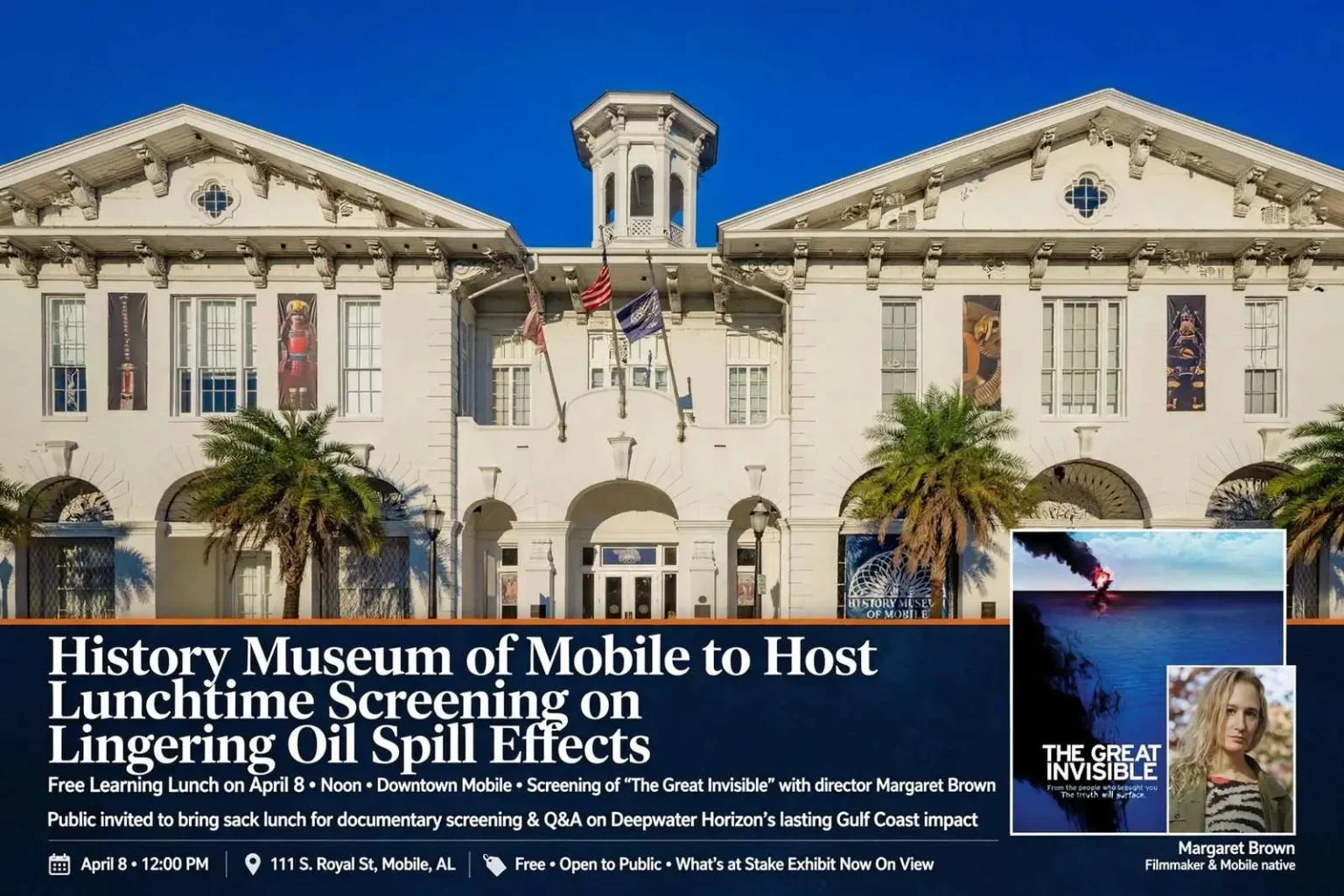
The History Museum of Mobile is inviting the public to bring a sack lunch and take part in a free Learning Lunch event next month centered on the lasting environmental effects of the 2010 Deepwater Horizon disaster, one of the largest oil spills in U.S. history. The gathering, set to begin at noon on April 8 at the museum’s downtown Mobile location on Royal Street, will feature a trailer screening from the documentary The Great Invisible, followed by a discussion led by the film’s director, Mobile native Margaret Brown.
Admission is free and open to anyone interested in learning more about the spill’s aftermath along the Gulf Coast. The museum’s Learning Lunch series has long offered downtown workers, retirees and students a chance to hear authors, historians and filmmakers speak over the lunch hour, and organizers expect strong interest for a topic so close to home: the rig that exploded in April 2010 sat in Mississippi Canyon Block 252, some 50 miles off the Louisiana coast, and its consequences washed onto every shoreline from Texas to Florida, including Alabama’s beaches and bays.
The disaster began on the night of April 20, 2010, when the Deepwater Horizon drilling rig exploded while capping an exploratory well for BP, killing 11 workers and igniting a fire that sank the platform two days later. Over the following 87 days, an estimated 4.9 million barrels of oil poured into the Gulf before the well was finally capped, making it the largest marine oil spill in the history of the petroleum industry. Fishing grounds were closed, beaches along the Alabama coast saw tar balls and cleanup crews, and the region’s seafood, tourism and oilfield workforces all absorbed the shock.
Brown spent years working on the documentary, traveling the coastline from Alabama to Texas to gather firsthand accounts from residents, workers and officials affected by the explosion and subsequent spill. Her reporting took in shrimpers and oystermen, oil workers and rig families, coastal mayors and environmental scientists — the full range of people whose livelihoods and communities were upended by the disaster and the ensuing drilling moratorium.
A Film Years in the Making
The film blends personal interviews, archival news footage and industry analysis to examine both the disaster itself and its long-term consequences for coastal communities and ecosystems, including oil that researchers say remains on the ocean floor years after the well was capped. Rather than focusing solely on the 87-day crisis, the documentary follows what came after: the cleanup, the compensation claims, the congressional hearings and the slow recovery of a region whose economy is inseparable from the Gulf’s waters.
The Great Invisible earned major recognition on the festival circuit, including the Grand Jury Prize for documentaries at the South by Southwest Film Festival in Austin, where it premiered. Critics praised the film for humanizing an event that had been covered largely through statistics and corporate news conferences, giving audiences the faces and voices of the people who live with the spill’s consequences daily.
For Brown, a Mobile native, the project represented a return to the Gulf Coast stories that have marked her career. Her earlier documentaries — including The Order of Myths, an acclaimed examination of Mobile’s Mardi Gras traditions and their racial history — established her as a filmmaker drawn to the complicated social fabric of her hometown, and The Great Invisible extends that sensibility to the environmental and economic fault lines the spill exposed across the Gulf.
Art and Film Together
The lunchtime event coincides with an ongoing exhibit at the museum titled What’s at Stake, which showcases work from 20 local artists exploring the spill’s after-effects on the region. The exhibit offers a visual companion to the documentary screening, giving visitors multiple ways to engage with the topic through both art and film. Paintings, photographs and mixed-media pieces in the show respond to the disaster from perspectives that range from the shoreline to the marsh to the kitchen table, documenting how the event entered the region’s creative consciousness.
Pairing the exhibit with the screening was a deliberate choice by museum staff, who have increasingly built programming that connects permanent and temporary exhibits to contemporary issues facing the Gulf Coast. For visitors who attend both, the experience moves from the immediacy of documentary testimony to the more reflective register of visual art, and back again — a layered look at how a single disaster continues to ripple through the region’s culture five years later.
A National Audience Coming
Following its screening in Mobile, The Great Invisible is scheduled to air nationally on PBS later in April, with representatives from the network expected to attend the museum event. The broadcast will bring the Gulf’s story to a national television audience, and organizers in Mobile will have the chance to see the film in the company of the network that will carry it into living rooms across the country.
Organizers say the lunch discussion offers local residents a chance to hear directly from the filmmaker about her reporting process and the stories that shaped the documentary before it reaches a broader television audience. Brown’s conversations with coastal residents during the making of the film — from Bayou La Batre’s seafood docks to the bars and homes of oil towns in Texas — gave her a perspective that questions from a homecoming audience will likely draw out.
The homecoming element is a distinctive part of the April 8 event. Mobile audiences will watch a film about their own coastline, made by a filmmaker who grew up in their city, screened a few blocks from the port whose commerce was halted by the drilling moratorium that followed the spill. Few Learning Lunch programs have offered that combination of local subject, local filmmaker and national platform.
The Museum’s Gulf Coast Programming
The History Museum of Mobile has hosted a range of programming tied to Gulf Coast environmental and cultural topics, part of a broader effort by the museum to serve as a civic gathering place for the region it documents. Housed in the Old City Hall complex on Royal Street, the museum traces more than 300 years of Mobile Bay area history, from Native American settlement through French, Spanish, British and American rule, and its exhibits regularly connect that deep past to the issues of the present day.
The Learning Lunch series, which runs on weekday noons throughout the year, has become one of the museum’s signature public programs. Speakers have covered subjects ranging from colonial archaeology to hurricane history to the seafood industry, and the format — free admission, a midday hour and an informal question period — has made it accessible to an audience that might not attend an evening lecture.
Five years after the well was capped, the spill remains a live subject along the Gulf. Restoration projects funded through the legal settlements from the disaster continue to reshape coastal habitats, researchers continue to study the spill’s ecological footprint, and communities from Bayou La Batre to Grand Bay continue to weigh what a changing Gulf means for their futures. A film like The Great Invisible, and a conversation with the woman who made it, gives those ongoing questions a public forum in the city at the center of them.
The Museum’s Gulf Coast Programming
The History Museum of Mobile has hosted a range of programming tied to Gulf Coast environmental and cultural topics, part of a broader effort by the museum to serve as a civic gathering place for the region it documents. Housed in the Old City Hall complex on Royal Street, the museum traces more than 300 years of Mobile Bay area history, from Native American settlement through French, Spanish, British and American rule, and its exhibits regularly connect that deep past to the issues of the present day.
The Learning Lunch series, which runs on weekday noons throughout the year, has become one of the museum’s signature public programs. Speakers have covered subjects ranging from colonial archaeology to hurricane history to the seafood industry, and the format — free admission, a midday hour and an informal question period — has made it accessible to an audience that might not attend an evening lecture.
Five years after the well was capped, the spill remains a live subject along the Gulf. Restoration projects funded through the legal settlements from the disaster continue to reshape coastal habitats, researchers continue to study the spill’s ecological footprint, and communities from Bayou La Batre to Grand Bay continue to weigh what a changing Gulf means for their futures. A film like The Great Invisible, and a conversation with the woman who made it, gives those ongoing questions a public forum in the city at the center of them.
Attending the Event
Seating for Learning Lunch events is first come, first served, and museum staff encourage attendees to arrive early for popular speakers. Guests are welcome to bring their own lunches, and the museum provides drinks and a table setting in its auditorium on Royal Street in downtown Mobile. The April 8 program begins at noon and includes the trailer screening, Brown’s discussion and an opportunity for audience questions.
For more information about the event, the What’s at Stake exhibit or the museum’s other programming, visitors can contact the History Museum of Mobile directly. Those unable to attend the lunchtime screening will have another chance to see the full documentary when PBS airs it nationally later in the month, though organizers note that the chance to question the filmmaker in person — in her hometown, about her hometown’s coastline — is available only on April 8.
The museum’s location in the heart of downtown also makes the event easy to reach for workers on their lunch breaks, with public parking within walking distance of Royal Street. Staff said the combination of a hometown filmmaker, a nationally recognized film and a free midday format made the April 8 program one of the most anticipated entries on the Learning Lunch calendar this year.