Holifield Guilty Plea Planned as Former Mobile County Sheriff’s Fleet Sergeant Faces Fraud, Tax Counts
A former Mobile County Sheriff's Office sergeant who managed the agency's vehicle fleet has notified a federal judge that he intends to plead guilty to bank fraud, money laundering and tax evasion counts.
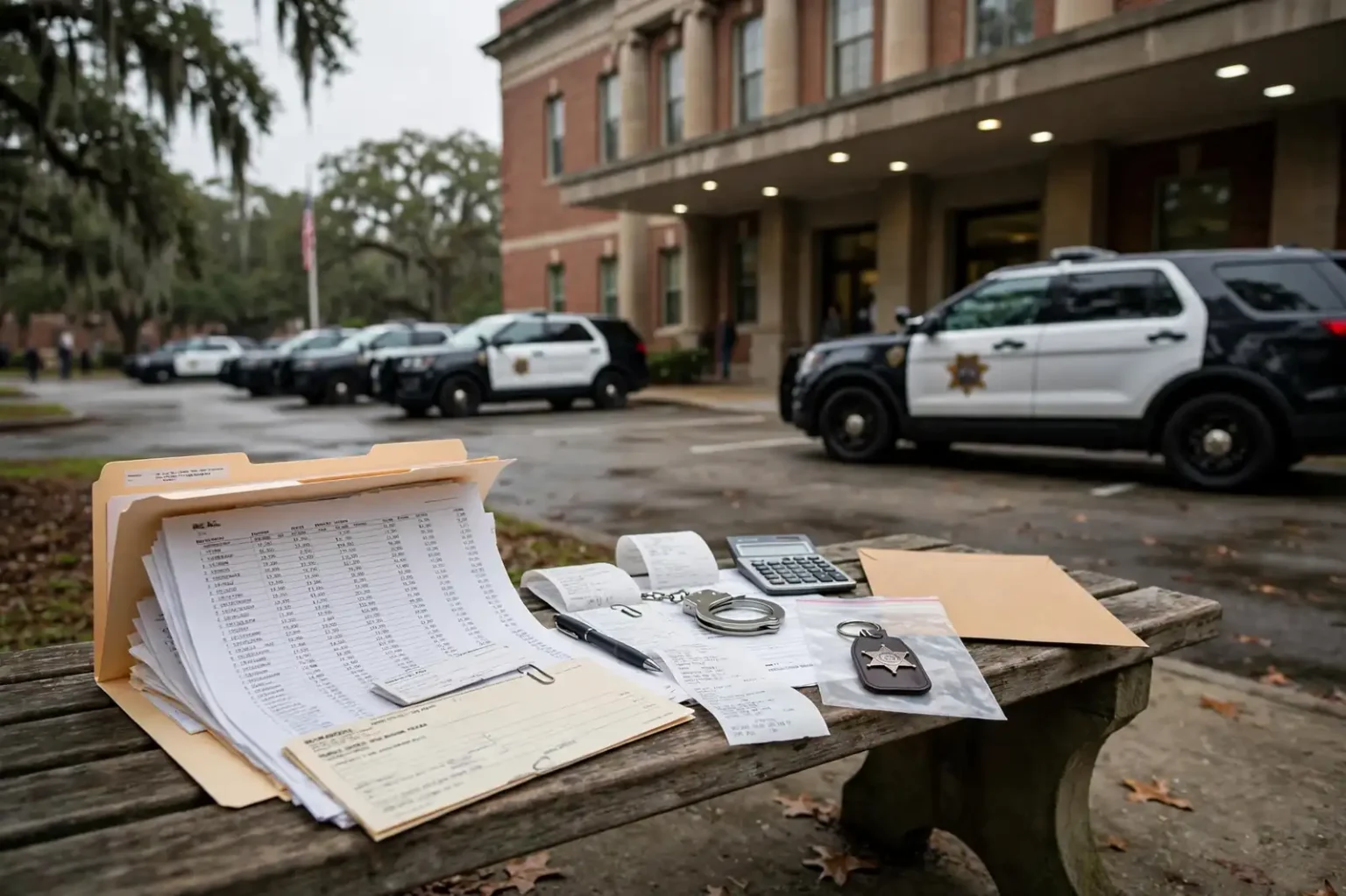
MOBILE, Ala. — Daniel Holifield, a former sergeant who oversaw the vehicle fleet for the Mobile County Sheriff’s Office, has told a federal judge he plans to enter a guilty plea on three of the 14 counts in the federal indictment accusing him of collecting duplicate payments tied to agency vendors and depositing insurance checks meant for the county. A notice of the intended Holifield guilty plea was filed by his attorney on Wednesday, Nov. 11.
The three counts are bank fraud, money laundering and tax evasion. Taken together, they carry combined statutory maximum prison terms of 55 years, though federal sentences are determined by a judge after weighing a range of factors and are often well below the statutory ceiling.
The Three Counts in the Plea Notice
- Count One, bank fraud: punishable by up to 30 years in federal prison.
- Count Eleven, money laundering: tied to a $15,487.88 deposit that prosecutors say was made to a Wells Fargo account on March 8, 2023, and punishable by up to 20 years.
- Count Fourteen, tax evasion: alleging that his amended federal return for 2023 was false because it reported $179,729 in taxable income, a figure prosecutors say understated what he actually earned. This count carries up to five years.
What Prosecutors Allege
Federal prosecutors say Holifield took advantage of his role as the sheriff’s office fleet manager to obtain money in two main ways.
The first involved vendors. According to the indictment, roughly 80 transactions connected to about 11 vendors led to approximately $236,332 being deposited into accounts belonging to Holifield, through payments that duplicated legitimate ones.
The second involved insurance reimbursements. Prosecutors allege he deposited about $74,356 drawn from 18 insurance checks that were supposed to go toward claims belonging to the sheriff’s office or the Mobile County Commission.
Combined, the amounts alleged in those two parts of the indictment exceed $310,000.
The Original Indictment
A federal grand jury returned the indictment in May, charging Holifield with bank fraud on 10 counts, tax evasion on three counts and a single count of money laundering. The plea notice covers the first count, the lone money laundering count and the last of the tax evasion counts.
A notice of intent to plead guilty signals what a defendant plans to do, but the plea does not become official until it is entered before a judge. At a change-of-plea hearing, a federal judge questions the defendant under oath to make sure he understands the charges, the rights he is giving up and the possible penalties, and confirms there is a factual basis for the plea. Only after that process can the court accept the plea and set a sentencing date.
Hints of Cooperation
In August, Holifield’s new defense lawyer asked the court for permission to submit a sealed motion, explaining that Holifield might seek a lighter sentence for providing substantial assistance to investigators. The filing referenced possible criminal activity by other people who, at that time, had not been charged in Holifield’s case. It did not name anyone, and it did not say Holifield had been promised any reduction in his sentence.
In the federal system, a sentence reduction for substantial assistance generally depends on a motion filed by prosecutors, not the defense. Under the U.S. Sentencing Guidelines, the government may ask a judge to go below the recommended range if a defendant has provided meaningful help in investigating or prosecuting someone else. Federal rules also allow prosecutors to seek a reduction after sentencing if the help comes later. Whether to grant any reduction, and by how much, is ultimately up to the judge.
State Charges Still Pending
Holifield’s legal troubles are not confined to federal court. A 13-count state indictment returned in August 2025 accused him of theft of property and of possessing forged instruments. In a later, separate case, county grand jurors handed up three counts of first-degree theft of property by deception.
State and federal prosecutions are handled by separate governments, and a resolution in one court does not automatically end a case in the other. In Alabama, first-degree theft generally applies to property valued at more than $2,500 and is classified as a Class B felony.
How Federal Sentencing Works
If the court accepts the guilty pleas, the next major step is typically a presentence investigation conducted by the U.S. Probation Office. That report examines the defendant’s background, the details of the offenses, the amount of financial loss and other factors used to calculate a recommended range under the federal sentencing guidelines.
The guidelines are advisory, meaning the judge must consider them but is not bound by them. The judge also weighs factors spelled out in federal law, such as the seriousness of the offense, the need for deterrence and the defendant’s history. There is no parole in the federal prison system, so defendants generally serve most of the term imposed.
In fraud cases, federal courts also commonly order restitution, which requires a defendant to repay victims for their financial losses. In a case involving public money, that can include government agencies that lost funds.
Understanding the Charges
Bank fraud is a federal crime that covers schemes to defraud a financial institution or to obtain money held by a bank through false or fraudulent representations. Because it reaches transactions that pass through federally insured institutions, it is frequently used in embezzlement and check schemes.
Money laundering generally involves conducting financial transactions with proceeds of a crime, often to conceal where the money came from or to promote further illegal activity.
Tax evasion is a willful attempt to evade or defeat a federal tax, which can include filing a return that understates income. Such cases are typically investigated with the involvement of the Internal Revenue Service.
What a Partial Plea Can Mean
Holifield’s notice covers three of the 14 counts against him. In federal court, it is common for a defendant to plead guilty to a smaller number of representative counts, with the government agreeing to dismiss the remaining charges at sentencing as part of a plea agreement. Even so, a sentencing judge may consider the full scope of the alleged conduct, including the total financial loss, when calculating the guidelines range, which means dismissed counts do not necessarily drop out of the picture entirely.
Federal sentences also frequently include a period of supervised release after any prison term. During supervised release, a person must follow conditions set by the court and report to a probation officer, and violations can lead to a return to prison. Courts can also impose fines, and in fraud and tax cases a judge may order the defendant to pay back unpaid taxes or lost funds.
Public Money and Public Trust
Cases involving alleged theft by government employees draw particular attention because the money at stake belongs to taxpayers. Funds that flow through a sheriff’s office pay for patrol vehicles, equipment, staffing and jail operations, and losses can affect how far an agency’s budget stretches. Allegations of this kind also tend to prompt questions about internal controls, such as who approves vendor payments, how insurance proceeds are tracked and how often accounts are reconciled.
Why Fleet Management Matters
A sheriff’s office fleet manager is typically responsible for the purchase, maintenance and repair of patrol cars and other agency vehicles, which involves handling vendor invoices, repair bills and insurance claims after crashes or damage. Those responsibilities place large sums of public money in the hands of whoever oversees the process, which is why government agencies generally rely on audits, separation of duties and approval requirements to catch duplicate or improper payments.
The Mobile County Sheriff’s Office is the county’s chief law enforcement agency, patrolling unincorporated areas of Mobile County and operating the county jail. Funding for county operations runs through the Mobile County Commission, which is why some of the insurance claims at issue were intended for the commission.
What Happens Next
A change-of-plea hearing in federal court is expected to follow the notice, at which point the judge will determine whether to accept the pleas. Until a plea is formally entered and accepted, Holifield remains presumed innocent of the federal charges, as he does in the separate state cases.
Sentencing would come later, after the presentence report is completed. Any cooperation-based bid for a shorter sentence would be addressed by the court at that stage or afterward.