Hunting Team Lands 537-Pound, 12-Foot Alligator on the Alabama River
A hunting team from Deer Park and Citronelle landed a 12-foot, 537-pound alligator on the Alabama River south of Jackson during the state's season.
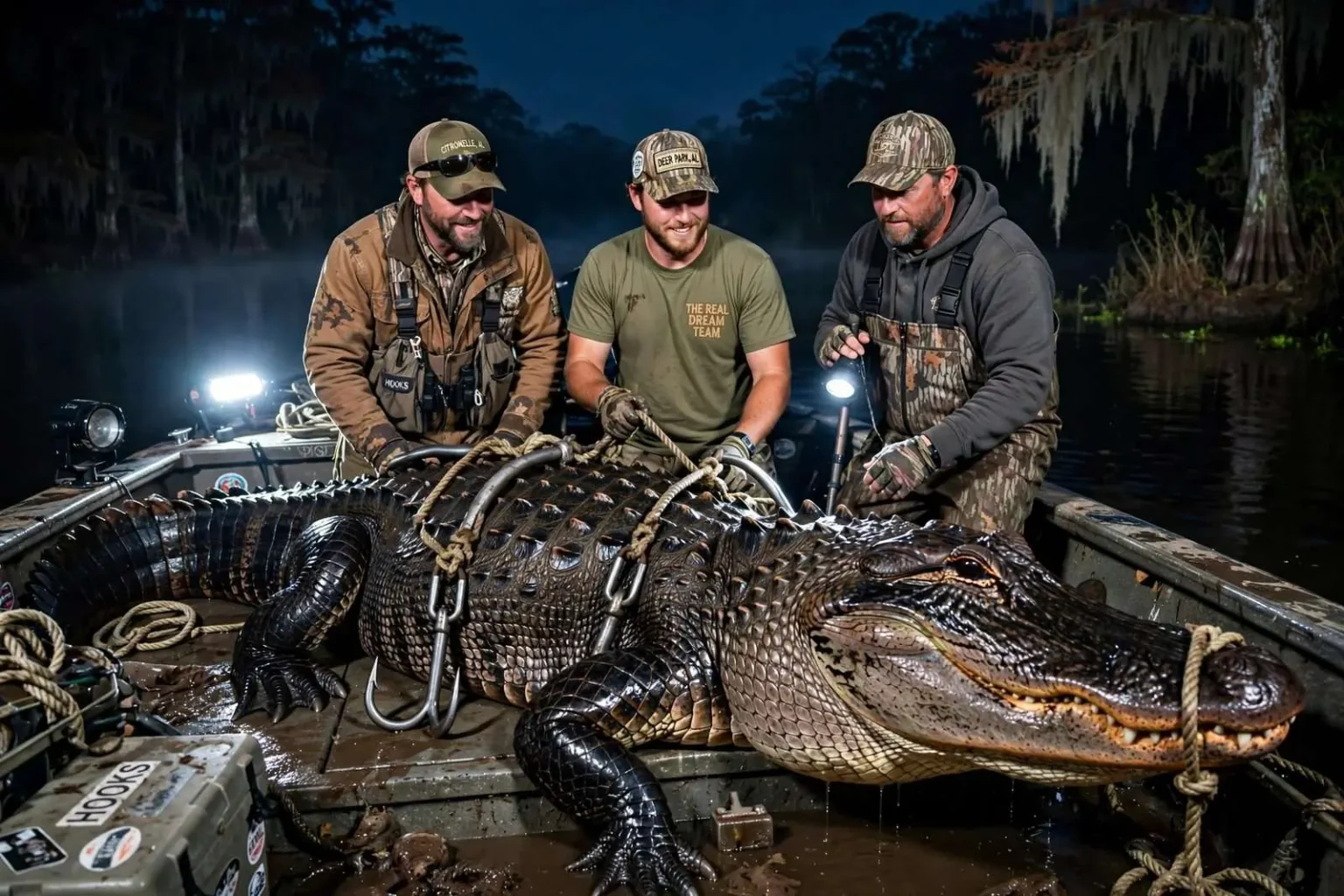
A hunting party working the Alabama River south of Jackson brought in one of the larger alligators taken during Alabama’s regulated season, a 12-foot animal weighing 537 pounds. Tyler Dees of Deer Park said the capture took three separate hooks before the alligator could be secured and brought aboard.
Mike Odom of Citronelle set the first hook, Dees set the second, and a third was placed by another member of the group. A fight of that length is a workout as much as a hunt: a 12-foot alligator can weigh more than half a ton, and once hooked it dives, rolls and pulls against the line with strength that no reel is designed to stop. Getting three hooks into the animal before finally securing it speaks to both the gator’s power and the crew’s persistence.
The tag used for the animal belonged to Dees’ brother, Thomas Dees. Under Alabama’s system, that detail matters as much as the size of the catch, because the state issues a limited number of tags each year and every alligator taken must be tied to one of them.
The Real Dream Team
The team, which hunts together under the nickname “The Real Dream Team,” has taken part in Alabama’s alligator hunt for several years. Dees said the 537-pound animal, taken on a Saturday in mid-August, was not the largest the group has landed, a statement that says as much about the crew’s history as about this catch. Groups that return to the drawing year after year are the ones who learn the water, the patterns and the patience the hunt demands.
Experience is the hidden ingredient in a successful alligator hunt. Locating a mature gator on a dark river at night, judging its size from the spacing of its eyes and the wake it leaves, presenting a baited hook or a snare at the right angle and then holding on through a fight that can last hours are skills accumulated over seasons, not weekends. The Dream Team’s multi-year run has built exactly that body of knowledge.
The hunt took place on the Alabama River south of Jackson, a stretch of the river where Clarke County’s bottomlands crowd the banks and the water runs wide enough to hold mature alligators. Jackson, sitting on the river’s west bank, has long been a base for sportsmen working this section of southwest Alabama’s river country, and Deer Park and Citronelle, the hometowns of the hunters, lie within the same broader landscape of creeks, swamps and river systems that alligators call home.
How Alabama’s Alligator Season Works
Alligator hunting in Alabama is tightly limited. Hunters must win a randomly drawn tag, and each tag permits a single animal, taken within a designated zone and a narrow window of dates. The Southwest Alabama zone covers private and public waters in the Mobile-Tensaw Delta region and stretches of the Alabama and Mobile river systems, drawing hunters from Mobile, Washington, Baldwin and Clarke counties each summer.
The lottery is the gatekeeper. Applications far outnumber the tags issued, which makes every drawn tag a scarce commodity and explains why families like the Dees brothers treat a season as an event planned around for months. The tag holder must be present for the hunt, the animal must be taken with approved methods during the zone’s dates, and the harvest is documented by the state before the animal leaves the water.
Alabama’s program is often described as a model of controlled harvest. The state’s alligator population, once rare enough that the species was in serious decline across the Southeast, rebounded under federal and state protection and is now robust enough in the state’s southern rivers and deltas to support a limited hunt. The tag system caps the harvest at a level biologists have determined the population can sustain, which is why the season can be both an trophy opportunity and a conservation tool.
The Waters of the Southwest Zone
The Mobile-Tensaw Delta, where the Alabama and Tombigbee rivers join to form the Mobile River, is one of the most biologically rich landscapes in North America, a labyrinth of channels, bayous and bottomland swamp covering hundreds of thousands of acres north of Mobile Bay. Alligators thrive in that environment, and the delta’s public waters draw hunters each August to waters that hold some of the largest animals in the state.
The Alabama River itself, flowing south from Selma to its confluence at the delta, borders Clarke County’s remote bottomlands south of Jackson. Its oxbows, sloughs and backwater lakes provide exactly the habitat mature alligators prefer: quiet water, deep channels for refuge and abundant prey. It is the kind of country where a 12-foot animal can live long enough to reach its full size, undisturbed for most of the year.
The hunters on this trip came from towns scattered across that alligator country. Deer Park is a small community in Washington County, Citronelle sits in northern Mobile County, and Jackson anchors the river stretch in Clarke County where the hunt took place. The Southwest Alabama zone’s drawing pool, spanning Mobile, Washington, Baldwin and Clarke counties, matches the map of the waters themselves.
What a Hunt Looks Like
Alligator hunting in Alabama happens largely at night, when gators slide to the surface and their eyes reflect a spotlight’s beam. Hunters work the water in boats, scanning banks and cuts for a telltale pair of orange glows, then attempt to close the distance and present a hook or snare. The moment of hookup is where the real contest begins, and where a 537-pound animal makes its size felt.
Securing a mature alligator is a staged process. The animal is worn down against the line, a second hook restrains the fight, and only when the gator is exhausted does the crew approach to dispatch and secure it. Three hooks on this animal, set by Odom, Dees and a third member of the group, indicate a fight that tested every tool the crew had. No part of the process allows for shortcuts, and the state’s rules require that the kill be made in a prescribed manner once the animal is controlled.
The mid-August Saturday timing placed the hunt squarely in the season’s heart. Alabama’s Southwest zone hunt runs in August, with dates and conditions set annually by the state, and the season ended the Sunday following the capture, closing out another year of the state’s limited hunt. For the Dream Team, the timing could not have been better, converting a drawn tag into one of the season’s notable animals just before the window closed.
After the Catch
A 12-foot, 537-pound alligator represents years of growth in some of Alabama’s wildest country, and the state requires the harvest to be validated and the animal tagged before processing. Successful hunters typically use the meat, and the hides of animals this size are prized, but the first stop after the river is the state’s check station process, where the catch is recorded and measured.
Catches of this size draw attention wherever they surface, and they feed the lore of the drawing itself. Every summer, the photos from the delta and the river stretches make their way through tackle shops, social media and hunting camps, reminding applicants why they keep entering a lottery they may never win. The Dream Team’s animal, taken with three hooks and a long fight, will take its place in that tradition.
For the hunters from Deer Park, Citronelle and the river towns, the hunt ended the way seasons do, with a Sunday deadline and a full boat. Alabama’s alligator season will open again next August, the lottery will fill with applicants again, and the rivers south of Jackson will keep holding the animals that make the wait worthwhile.
The Alligator’s Return to Alabama Waters
The abundance that makes a 537-pound catch possible is a modern development. American alligators were hunted to the edge of extinction across the Southeast for their hides, and by the mid-20th century the species had disappeared from much of its historic range. Federal protection under the Endangered Species Act, followed by careful state management, allowed populations to recover to the point that controlled hunting returned to Alabama and neighboring states.
Alabama’s alligator population is now concentrated in the southern part of the state, in the Mobile-Tensaw Delta, the coastal rivers and the lakes and swamps of the river systems that drain southwest Alabama. Adults can live for decades, and animals that survive their first years grow slowly but steadily, which is why the largest specimens are also the oldest and the rarest. A 12-foot gator represents an animal that has lived long enough to top the food chain in its home waters.
The hunt exists because biology and management converged: populations large enough to sustain a limited harvest, confined to waters where human-alligator conflict management is also a public safety concern. Biologists set the tag numbers each year based on population data, and the lottery distributes the opportunity in a way that no one can buy or influence.
The Lottery and the Culture Around It
Alabama’s alligator tag drawing has developed a culture of its own. Applications are submitted online in early summer, odds are published afterward, and the announcement of the drawing results is followed by weeks of scouting, gear preparation and planning among the winners. Families and longtime hunting partners apply together year after year, and groups like the Dream Team represent the persistence the odds demand.
The hunt’s rules are strict because the stakes are high. Hunters must take the animal in the assigned zone, during the zone’s dates, using methods the state approves, and the harvest must be reported. Violations cost more than a fine; they cost the credibility of a program that depends on voluntary compliance in remote waters where enforcement is difficult.
That compliance culture is visible in how successful hunters behave. The tag holder is present at the kill, the catch is validated through the state’s process and the details of the hunt, the hooks, the fight, the hours on the water, are told afterward as story rather than secret. The Dream Team’s account of the mid-August capture fits that tradition: a full accounting of a legal, regulated harvest on public water.
A Season’s End
The Sunday closing that followed the capture marked the end of another year in which a handful of tags became a few hundred pounds of river legend. For every hunter who lands a 12-foot animal, dozens come home with stories of the one that rolled under the boat and away, which is part of what keeps the drawing’s application numbers high.
The Alabama River south of Jackson will hold its gators through the fall and winter, and by next August the same stretches of dark water will carry the spotlights and boats of a new lottery’s winners. Among them will be veterans like the Real Dream Team, whose several seasons of experience now include a 537-pound reminder of why the hunt draws them back: in Alabama’s rivers, the wildest thing left in the state still surfaces at night, and once a year a lucky few are allowed to meet it.