Feds Ask Mobile Judge to Reconsider ICE Stay Order on Construction-Site Raids
The U.S. Attorney's Office says Judge Jeffrey Beaverstock's stay on alleged ICE worksite policies acts as a 'de facto injunction' and wants agents' identities kept confidential in Leonardo Garcia Venegas' lawsuit.
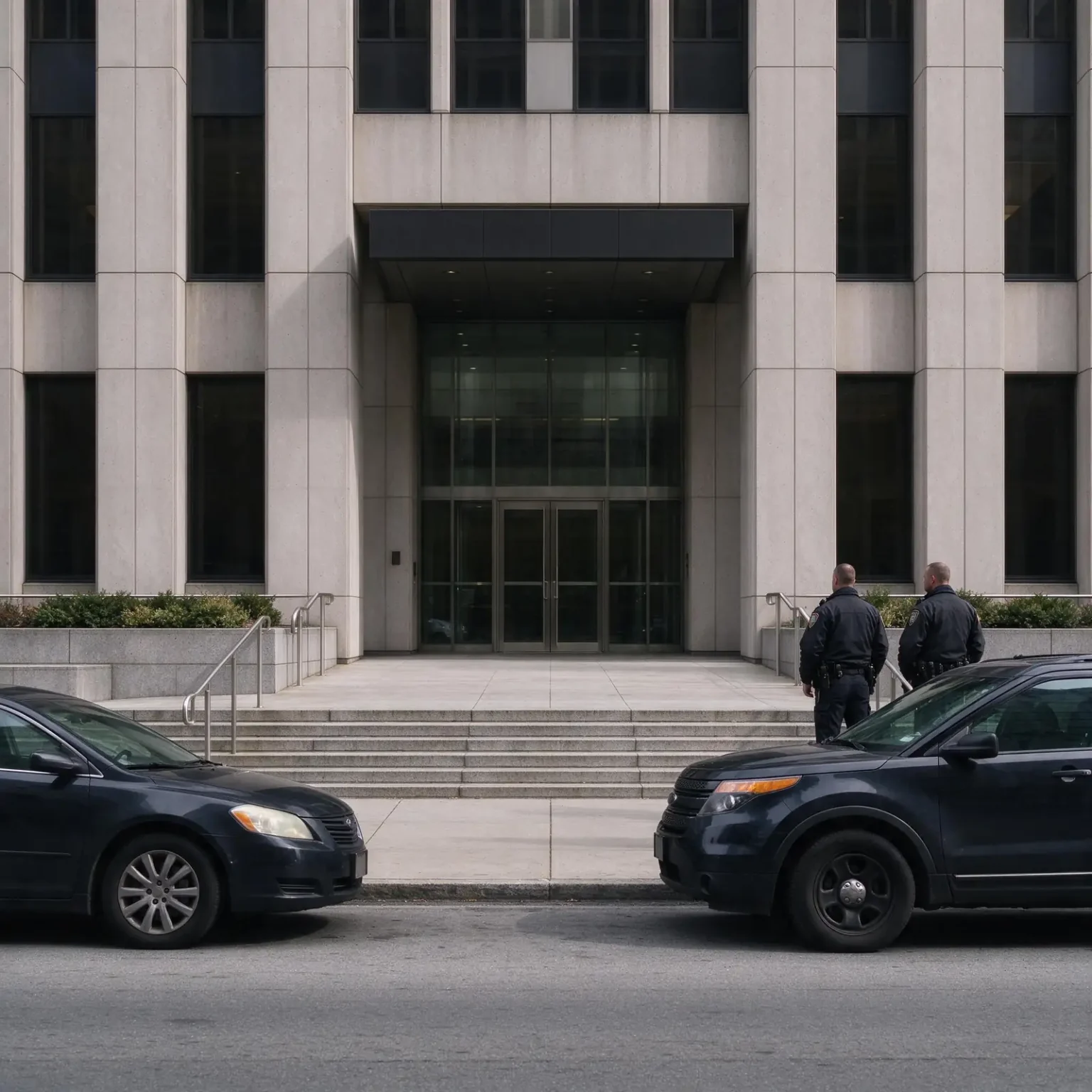
MOBILE, Ala. — The federal government is asking a Mobile federal judge to reconsider his ICE stay order, which pauses certain immigration enforcement practices at construction sites across southern Alabama, arguing the ruling works as a “de facto injunction” that is confusing, overly broad and could block lawful immigration actions. In a separate request, the government wants the court to keep secret the identities of Immigration and Customs Enforcement agents involved in the raids at the center of the lawsuit.
The challenge was filed Monday, Oct. 19, by U.S. Attorney Sean P. Costello on behalf of the federal government in a lawsuit brought by Leonardo Garcia Venegas, a Baldwin County construction worker. Costello argued that U.S. District Judge Jeffrey Beaverstock made several errors when he issued the stay last month.
As of Oct. 21, Beaverstock had not ruled on the motion or scheduled a hearing on it.
The government’s argument
In September, Beaverstock issued an order temporarily staying the immigration enforcement policies that Venegas alleges are unconstitutional, barring ICE agents from conducting warrantless raids “to the extent that the alleged policies will be temporarily stayed.” In his order, the judge described a stay as “a less drastic remedy” than an injunction that would be “sufficient to redress” Venegas’ alleged injury. The order also granted conditional certification of a class, allowing the case to proceed on behalf of a broader group of people.
Costello took issue with that characterization.
“The Court indicates that its choice of a stay ‘is a less drastic remedy’ that is ‘sufficient to redress [Venegas’s] alleged injury,’” Costello wrote. “As entered, the Court’s order functions as a de facto injunction that could be construed to preclude immigration actions that otherwise are consistent with the Constitution and applicable law.”
The government argues the order is too narrow in some places, in how it defines the legal circumstances that permit or prohibit a warrantless search of a construction site, and too broad in others, in how far it restricts ICE enforcement.
“The stay is therefore confusing, unworkable, and is overly broad,” Costello wrote. “Applying the principles of a preliminary injunction to the Order, it should be set aside or clarified. Likewise, while the Court’s order grants a conditional certification, it does not set the parameters of membership of the conditional class so as to allow the parties to adequately control discovery in this action.”
Preliminary injunctions are among the most closely scrutinized forms of relief in federal court. A party seeking one generally must show a likelihood of success on the merits, a risk of irreparable harm without relief, that the balance of hardships favors relief and that relief is in the public interest. By asking the judge to apply those standards to the stay, the government is arguing that the order should be held to the same test.
A dispute over whether the policies exist
At the heart of the case is a basic factual disagreement. Venegas’ attorneys say ICE agents in Alabama began following unwritten policies in 2025 that are likely unconstitutional and unlawfully discriminatory. The federal government says those policies do not exist and that Venegas’ rights were never violated.
Costello wrote that it was unusual for the court to pause policies whose existence the parties do not agree on.
“A factual dispute on the existence of the alleged policies lies at the heart of this litigation,” he wrote. “… Although the Court has indicated that it would find otherwise, its order does not outline with specificity the policy that it believes to exist. Without further specificity, it is unclear what actions the Court intends to delay. This Court should correct that ambiguity.”
Venegas’ motion had asked the court to bar ICE agents, within the court’s jurisdiction, from enforcing policies that allow them to:
- Search non-public areas of construction sites without consent from a person with lawful authority to give it, or without a judicial warrant based on probable cause.
- Detain workers on construction sites without particularized evidence that would lead a reasonably prudent officer to believe each individual worker is violating the law.
- Continue to detain workers on the premise that they may be in the country illegally, even after the workers show, or officers see, presumptive evidence of U.S. citizenship or lawful presence.
How the lawsuit began
Venegas, a U.S. citizen, filed suit in September 2025 with representation from the Institute for Justice, a national public-interest law firm based in Arlington, Virginia. His attorneys allege the government violated his Fourth Amendment rights and discriminated against him when agents detained him and refused to accept his Alabama driver’s license as valid on two occasions in May and June 2025.
Since then, Venegas’ attorneys have identified other Alabama residents who say they were detained in similar circumstances. One of them, Jorge Estrada, said in July 2025 that ICE raids were focusing on construction sites and that he, too, was detained after agents would not accept his identification.
Earlier this year, P.J. Lavoie, the resident agent in charge of the Department of Homeland Security’s Mobile office, testified that construction sites were targeted based on investigative information such as tips, not chosen at random because they were construction sites. He agreed, however, that construction companies often hire immigrants who are in the country illegally and that many sites are raided because Baldwin County has a large number of developers building homes.
Construction is a major part of Baldwin County’s economy. The county has been among the fastest-growing in Alabama for years, with new subdivisions and commercial projects spreading across the Eastern Shore, central Baldwin and the coast.
Agents’ identities in dispute
Whether individual ICE agents should be publicly named in the lawsuit has been contested since last year. Earlier this month, in a joint motion for a protective order, the government argued that the identities of agents involved in Venegas’ detention and other operations should be kept confidential for their protection. The filing noted that the plaintiffs and defendants disagree on that point. Beaverstock has not ruled on the protective order.
Protective orders are common in federal litigation and allow judges to limit how sensitive information exchanged in a case can be used or disclosed. Courts weigh the reasons for confidentiality against the public’s general right of access to court records.
Beaverstock has, however, allowed Venegas’ attorneys to amend their complaint and add defendants, including several ICE agents and other federal officials. Among them is Homeland Security Investigations agent Kent Blacklidge, whom the amended complaint alleges took part in Venegas’ detention at a construction site on May 21, 2025.
Blacklidge was arrested in September and charged in an unrelated Baldwin County criminal case with multiple felony sex offenses, including rape, sodomy and sexual abuse charges. His arraignment had been canceled as of this week, and the criminal case remains pending. It is unclear whether he is still employed by the Department of Homeland Security. Blacklidge has not been convicted and is presumed innocent unless and until proven guilty in court. The allegations against him in the civil lawsuit also have not been proven.
The amended complaint also names two other federal officers: Joshua Woodruff, a special agent who worked alongside Blacklidge, and Benjamin Prater, an officer with ICE’s Enforcement and Removal Operations division. Two additional officers who Venegas says were involved in his detention have not yet been identified by name.
Attorneys for the federal government had not yet responded to the amended complaint. Venegas’ attorney, Jared McClain, did not respond to a request for comment.
The legal backdrop
The Fourth Amendment protects everyone in the United States against unreasonable searches and seizures. Federal immigration law gives officers authority to question people they believe to be noncitizens about their right to be in the country and, in certain circumstances, to make arrests without a warrant. Courts have long held that those powers must still be exercised within constitutional limits. Generally, a brief stop requires reasonable suspicion and an arrest requires probable cause.
Immigration detention authority applies only to noncitizens, which is why the question of how quickly officers confirm a person’s citizenship or lawful status has become central to disputes over worksite enforcement. Alabama’s STAR ID, the state’s REAL ID-compliant license issued by the Alabama Law Enforcement Agency, requires applicants to document their identity and lawful status.
What happens next
Beaverstock will decide whether to reconsider, clarify or leave in place his September stay order, and whether to grant the government’s request to shield the identities of the agents involved. The newly named defendants are expected to respond to the amended complaint. Either side could seek review from the U.S. Court of Appeals for the 11th Circuit, which hears appeals from federal courts in Alabama, Georgia and Florida.
People who believe they were mistreated by a federal immigration officer can file a complaint with the Department of Homeland Security’s Office for Civil Rights and Civil Liberties or report misconduct to the DHS Office of Inspector General.