MOBILE, Ala. — Patients in the Mobile area have a new option for specialized heart care after USA Health added interventional cardiologist Dr. Mustafeez Ur Rahman to its Mobile Heart Specialists practice, where he is now accepting new patients.
The appointment adds another physician trained in catheter-based heart procedures to the University of South Alabama’s academic health system. Along with seeing patients, Rahman joins the faculty of USA’s Frederick P. Whiddon College of Medicine as an assistant professor, helping train the next generation of heart doctors through the health system’s fellowship programs.
What the addition means for patients
For people living with heart and blood vessel disease, the arrival of another interventional cardiologist can mean more access to evaluation and treatment close to home. Mobile Heart Specialists at USA Health is located at 6701 Airport Blvd., in Suite A-107, in west Mobile, and Rahman is taking new patients there.
Interventional cardiology is a subspecialty of cardiology focused on diagnosing and treating heart and vascular conditions using thin, flexible tubes called catheters, which are threaded through blood vessels, usually from the wrist or groin. Rather than opening the chest, these physicians can view blockages using special imaging and then treat them, often by opening narrowed arteries with a small balloon and placing a stent to keep the vessel open. Many of these procedures are performed in a cardiac catheterization lab, and patients frequently go home the same day or the next day.
Common reasons a patient might see an interventional cardiologist include chest pain or other symptoms that suggest coronary artery disease, an abnormal stress test, a heart attack, narrowed arteries in the legs or other parts of the body, and certain structural heart problems.
A path that led back to Mobile
Rahman is no stranger to the city. Mobile has been his home for seven years, and he regards the city as a second home apart from his native country, where he began his medical career.
He earned his medical degree at Khyber Medical College in Peshawar, Pakistan. His graduate medical training then brought him to USA Health, where he finished a residency in internal medicine followed by a fellowship in cardiovascular disease.
To specialize further, he went on to an interventional cardiology fellowship at Beacon Kalamazoo, which is affiliated with Michigan State University, in Kalamazoo, Michigan. That additional year of training focuses on the hands-on procedural skills interventional cardiologists use in the catheterization lab.
He is board-certified in internal medicine as well as cardiovascular disease. Additional certifications cover nuclear cardiology, which involves imaging tests that use small amounts of radioactive tracers to show how blood flows to the heart muscle, and in vascular interpretation, which relates to reading ultrasound and other studies of the blood vessels. He is a member of the Society for Cardiovascular Angiography and Interventions as well as the American College of Cardiology, two of the leading professional organizations in his field.
Personal reasons for choosing cardiology
Rahman’s interest in the heart has roots in his own family. Cardiovascular disease affected both his father and his grandfather, giving him a firsthand sense of how heart illness can shape the lives of patients and the people who love them.
That understanding deepened during his training, when he cared for patients in the cardiac catheterization lab. In describing his decision, USA Health noted that seeing how much the specialty can do for people at the most critical moments of their lives played a major role in steering him toward interventional work.
Teaching the next generation
As a faculty member, Rahman will help educate and mentor physicians enrolled in USA Health’s general cardiology and interventional cardiology fellowship programs. Fellows in these programs are doctors who have already completed medical school and residency and are spending several more years learning to diagnose and treat heart disease.
In announcing the appointment, the health system highlighted the role that strong faculty mentors, including those at USA, play in shaping young cardiologists, and it described the opportunity to pass that training along to future physicians as a central part of the new faculty position.
Academic medical centers like USA Health combine patient care, education and research. Faculty physicians typically divide their time among treating patients, supervising residents and fellows, and contributing to studies that help shape how care is delivered. For patients, that model can mean being seen by teams that include both experienced physicians and doctors in training under close supervision.
Research focused on complex heart conditions
Rahman’s published work reflects his interest in procedures for patients with complicated cardiovascular problems. His research includes studies of outcomes after left atrial appendage closure, a comparison of two major approaches to treating blocked heart arteries in people with end-stage kidney disease, and minimally invasive techniques for complex conditions.
Left atrial appendage closure is a procedure used for some patients with atrial fibrillation, a common irregular heart rhythm that raises the risk of stroke. In atrial fibrillation, blood can pool and form clots in a small pouch of the heart known as the left atrial appendage. Closing off that pouch with an implanted device can reduce stroke risk, and it is often considered for patients who have difficulty taking blood thinners long term.
The kidney disease research compared percutaneous coronary intervention, the catheter-based approach that typically involves balloons and stents, with coronary artery bypass grafting, the open-heart surgery in which surgeons reroute blood around blocked arteries using vessels taken from elsewhere in the body. Patients with end-stage renal disease face especially high cardiovascular risk, which makes choosing the right treatment strategy particularly important.
Medical journals that have carried his work include Expert Review of Cardiovascular Therapy, the International Journal of Cardiology and the American College of Cardiology’s flagship journal, JACC.
What a cardiology visit may involve
For patients who have never seen a heart specialist, a first appointment usually starts with a detailed conversation about symptoms, medical history, family history and medications, followed by a physical exam. The cardiologist may then order tests to get a clearer picture of how the heart is working.
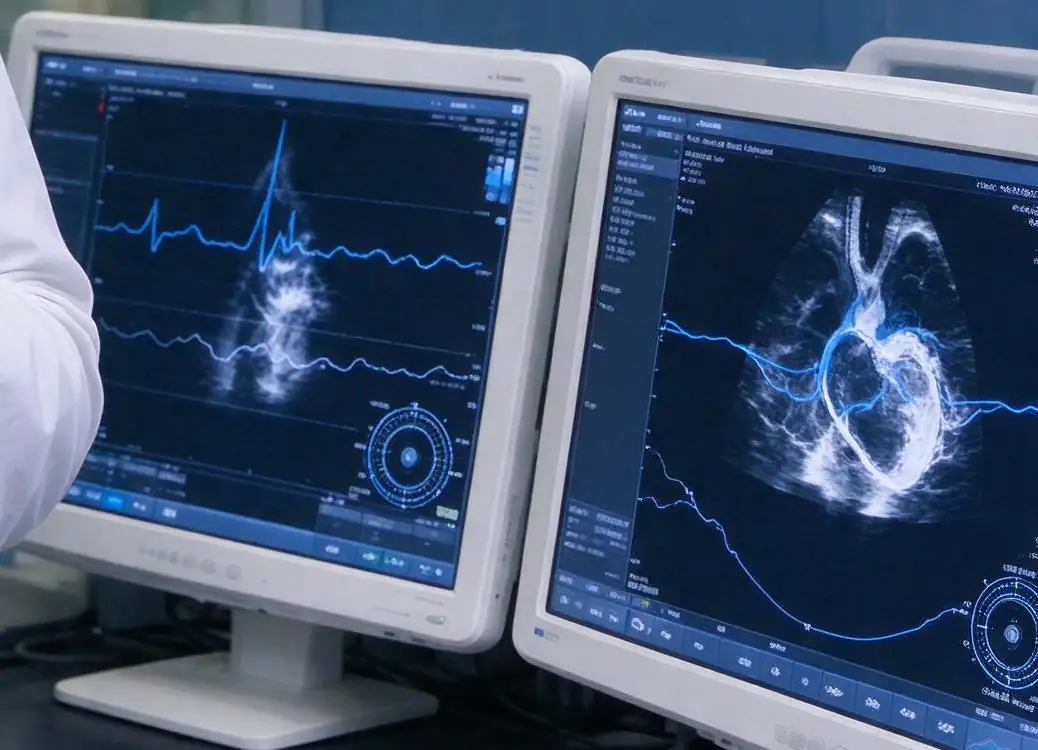
Some of the most common tests include an electrocardiogram, which records the heart’s electrical activity; an echocardiogram, an ultrasound that shows the heart’s chambers and valves in motion; and a stress test, which checks how the heart responds to exercise or to medication that mimics exercise. Nuclear imaging studies, one of the areas in which Rahman holds certification, can be added to a stress test to show whether parts of the heart muscle are getting too little blood.
If these tests suggest a significant blockage, a cardiac catheterization may be recommended. During that procedure, the physician injects contrast dye through a catheter and takes X-ray images of the coronary arteries. If a narrowed artery is found, it can often be treated during the same procedure. Not every patient needs an invasive test, and many heart conditions are managed with medication and lifestyle changes alone.
Heart disease in Alabama and the Gulf Coast
The need for heart specialists in the region is significant. Heart disease is the leading cause of death in the United States for both men and women, according to the Centers for Disease Control and Prevention, and Alabama has long ranked among the states with the highest rates of death from cardiovascular disease.
Risk factors that contribute to heart disease, including high blood pressure, diabetes, obesity, high cholesterol, smoking and physical inactivity, are common across the state. Rural residents in parts of southwest Alabama may also live far from specialty care, making regional centers in Mobile an important resource for patients from surrounding counties.
Health experts stress that many heart problems can be prevented or managed with early attention. Regular checkups, keeping blood pressure and cholesterol under control, staying active, eating a balanced diet and avoiding tobacco can all lower risk.
Know the warning signs
The American Heart Association and the CDC urge people to learn the warning signs of a heart attack and to call 911 right away if they occur. Common signs include:
- Chest pain or discomfort, which may feel like pressure, squeezing or fullness and may come and go.
- Pain or discomfort in one or both arms, the back, neck, jaw or stomach.
- Shortness of breath, with or without chest discomfort.
- Breaking out in a cold sweat, nausea or lightheadedness.
Women, older adults and people with diabetes may experience less typical symptoms, such as unusual fatigue, shortness of breath or nausea, without obvious chest pain. Getting emergency care quickly can limit damage to the heart muscle and improve survival.
How to schedule a visit
Patients interested in seeing Rahman can contact Mobile Heart Specialists at USA Health at its Airport Boulevard office in Mobile. Depending on insurance, some patients may need a referral from a primary care provider before scheduling with a specialist, so checking with an insurer ahead of time can help avoid delays.
Anyone with symptoms of a possible heart attack or stroke should not wait for an appointment and should call 911 immediately.