

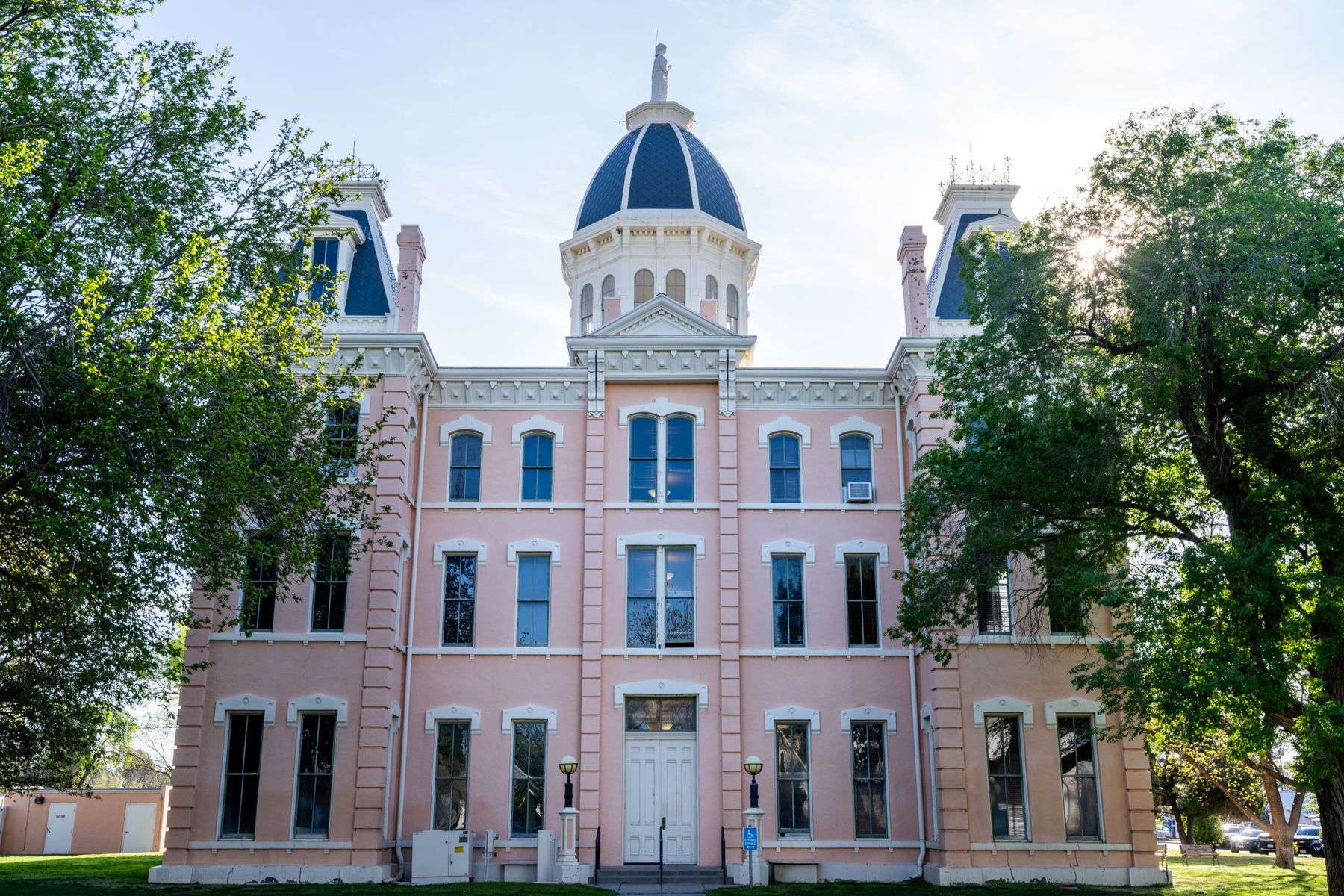
JACKSON, Ala. — The Jackson City Council on July 14 signed off on funding to replace the heating and air conditioning system at the city’s municipal court building and gave the green light to a tax abatement tied to a planned industrial project in the city. The two votes, taken at the same meeting, captured the ordinary but essential rhythm of small-city government in southwest Alabama: maintaining the buildings the city already owns while working to attract the kind of investment that broadens the local tax base for years to come.
Councilmembers voted unanimously to spend $10,274 in capital funds to replace the HVAC unit at the court building. The purchase comes out of the city’s capital budget rather than day-to-day operating money, a distinction that matters for a municipality the size of Jackson, where major equipment failures have to be planned for across budget cycles. Court buildings see steady public traffic year-round, and a failed climate system is more than an inconvenience in a south Alabama summer — it can disrupt hearings, damage records and force the city to scramble for temporary space.
The council also approved a resolution authorizing a tax abatement for the planned PCA project. Tax abatements are among the most common economic development tools available to Alabama municipalities, allowing local governments to exempt qualifying industrial projects from certain property taxes during construction and early operations. The incentive lowers the up-front cost of a project in exchange for the jobs, payroll and long-term investment it is expected to bring to the community.
A Mayor’s Report Full of Community News
Mayor Audra Raybon opened the meeting by spotlighting the city’s youth basketball program, which kicked off this week with 326 participants. “It says a lot about the City of Jackson,” she said. “We appreciate all the families living in our community and everyone who partners with us to make these programs possible.” A youth league of that size touches hundreds of households, and mayors in cities like Jackson often point to recreation programs as among the most visible services a small city delivers.
Raybon also thanked city employees and volunteers for helping make the Fourth of July celebration a success, and gave an update on the splash pad, which was struck by lightning. She said the equipment was initially repaired, but additional wiring later burned out; that damage was fixed last week. The episode illustrated the awkward chain of small-city infrastructure problems: a lightning strike damages equipment, an initial repair appears to solve it, and a deeper electrical fault surfaces only after the system is back in service. With the wiring now replaced, the splash pad is available again during the hottest weeks of the summer, when families depend on it most.
The July session was also a reminder of how tightly small-city budgets are sequenced. Capital purchases like the HVAC replacement compete with paving, drainage and equipment needs across the year, and councilmembers weigh each one against the reserve funds they may need for the unexpected — a storm, a main break, a sudden repair at another city building. Approving the court building work unanimously reflected a shared view that the need could no longer wait for a better budget year.
Chamber Activities on the Calendar
Jackson Area Chamber of Commerce Executive Director Courtney Clark briefed the council on upcoming chamber activities. She said the chamber’s annual Back-to-School Breakfast for educators is set for Aug. 4 starting at 8:30 a.m. The event brings local teachers and school administrators together with business and civic leaders at the start of the academic year, giving educators a moment of recognition and a chance to connect with the employers and organizations that support local schools.
Clark also announced the chamber’s Aug. 7 First Friday event will include a “Spirit Night,” giving school clubs and athletic organizations a chance to raise money by selling food and other items during the downtown gathering. First Friday events of this kind have become a staple of downtown revitalization across small Alabama cities, and folding school fundraisers into the evening draws student families into the crowd while giving booster clubs a busy night of sales they could not generate on their own.
Hospital Renovation and Street Concerns
Councilmember Bobby Brooks reported that the hospital renovation project remains underway and thanked patients and visitors for their patience during construction. He said contractors will soon temporarily close the College Avenue exit while sewer line work is completed, with all hospital traffic routed through the main entrance during that time. For a rural hospital, construction logistics are not just an inconvenience — ambulance access and patient flow depend on clear routes, which is why the city and the contractor are publicizing the detour in advance rather than letting visitors discover it in the parking lot.
The meeting also gave residents a direct line to city staff on neighborhood problems. During the meeting, residents thanked the city for installing a stop sign on McIntyre Street and asked about a requested speed bump; city officials said the speed bump has already been ordered. Other residents reported loose rocks washing onto McIntosh Street near the arts building following utility work, and city officials said they would notify the water department so the area could be addressed. Both complaints trace back to recent work in the rights-of-way, and both were logged on the spot rather than sent home with a promise to look into it later.
Recognizing the Next Generation of Leaders
The council also recognized members of the Jackson Area Chamber of Commerce’s Pine City Ambassadors leadership program, which introduces area high school students to community leadership. Earlier in the day, the students met with city officials to learn about municipal government before attending the council meeting. Programs like this one are designed to give teenagers a working understanding of how their city actually runs — where the money comes from, how ordinances are passed and who answers when a resident calls city hall — with the hope that some of them will eventually serve on boards, councils and community organizations themselves.
For the students, the evening meeting offered a live demonstration of everything they had discussed earlier in the day: agenda items moving one by one, residents raising neighborhood concerns, and elected officials balancing maintenance budgets against incentive deals. Few civics lessons put students that close to the decisions, and cities that run ambassador programs say the payoff arrives years later when those students become the adults who volunteer, run for office and support local institutions.
Business leaders in attendance noted that the abatement and the chamber calendar tell the same story from different angles. A community that keeps its downtown events full, its schools engaged and its industrial incentives current is the kind of place where existing employers expand and new ones take a second look. In cities Jackson’s size, economic development is less about headline announcements than about steadily stacking small advantages over neighboring communities.
Honors at the Police Department
Jackson Police Chief J.T. Moore introduced the department’s newest officer, Mario Fuller, who is expected to complete field training within the next few weeks before beginning solo patrol duties. Field training is the bridge between the police academy and independent police work, pairing a new officer with experienced trainers who evaluate everything from report writing to judgment on traffic stops. For a small department, each officer who completes the program represents a meaningful addition to patrol coverage across the city.
Moore presented Exceptional Service Awards to officers John Blacksher and Tyler Merida for apprehending a burglary suspect during a break-in at Mac’s Drugs on March 23. Burglary cases in small cities often turn on how quickly officers respond and whether they can establish a perimeter before a suspect leaves the area, and the chief used the awards to underscore the value of that quick, coordinated response.
The chief also recognized investigators Brian Tanner and Ron Smith for their work with the First Judicial Major Crimes Task Force, where they help analyze surveillance footage, extract digital evidence from electronic devices, and assist in solving homicide, child exploitation and other felony cases. Digital forensics has become central to major-case work, and small departments rarely have the equipment or specialized training to pull data from modern devices on their own, which is what makes task force assignments like these valuable to the home agency.
Moore additionally highlighted the work of K-9 Milo, which has assisted with searches for contraband and evidence at correctional facilities, and recognized Sgt. Daniel Scott as the department’s Officer of the Quarter. The quarterly award recognizes sustained performance rather than a single incident, and the department’s use of a K-9 team extends its reach into work — like facility searches — that would otherwise require outside assistance.
The recognition ceremony closed with the kind of detail residents rarely see: trainers evaluating the new officer’s progress, detectives balancing local caseloads with task force duty and a K-9 handler maintaining a search dog’s certification. Behind each honor is a commitment of training hours and budget, and departments that celebrate them publicly say it helps retention in an era when small agencies compete with larger ones for a thinning pool of qualified applicants.
The Business of a Small City
Nothing on the July 14 agenda was glamorous, and that was the point. A unanimous vote on an air conditioner, an abatement resolution, a splash pad repair and a new stop sign are the small decisions that add up to how a city functions between crises. With the court building repaired, the PCA project moving forward under abatement, the hospital detour posted and a new officer nearly ready for solo patrol, the council left the chamber having checked off the kind of work that residents notice only when it does not get done.