

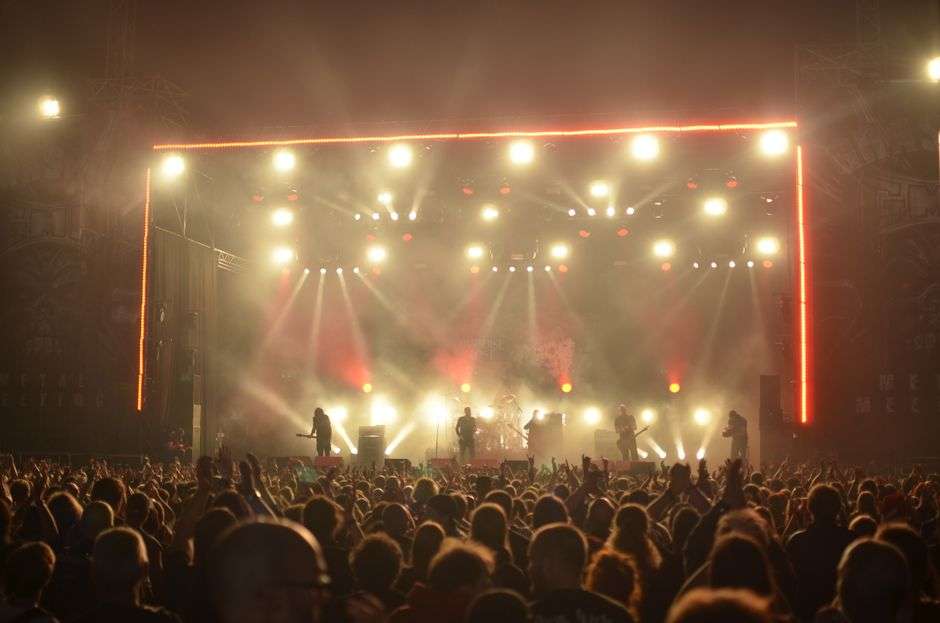
Gulf Shores will get a taste of one of Alabama’s most storied music traditions this weekend when the Hangout Oyster Cook-Off closes out its festivities with a live tribute to the Muscle Shoals sound. Jimmy Hall and the Muscle Shoals All-Stars are scheduled to take the Courtyard Stage on Saturday, Nov. 2, at 6:30 p.m., following the event’s awards ceremony. For a festival built around Gulf Coast food, the booking reaches to the opposite corner of the state — and to a sound many Alabamians consider the state’s greatest musical export.
The performance is being built around decades of music that came out of the Muscle Shoals area, a small stretch of the Tennessee River that became an unlikely hub for hit recordings starting in the late 1960s. What happened there remains one of the improbable stories in American music: a pocket of northwest Alabama, far from any recording capital, producing the backing tracks for soul, pop and rock records heard around the world.
Hall, a Grammy-nominated vocalist and longtime frontman for the Southern rock band Wet Willie, said the goal of the set is to give audiences an authentic feel for that sound rather than a simple greatest-hits run-through. The planned setlist draws from artists closely associated with Muscle Shoals recording studios, including Wilson Pickett, Delbert McClinton and Eddie Hinton, along with a handful of Wet Willie songs and selections from Hall’s solo catalog.
Hall said the strength of the backing musicians will be what sets the performance apart. “With that full band, it brings a lot of stuff to life,” Hall said. “It’s a great production, and it’s a lot of fun. These guys are pros and so studio seasoned. You can hear that Muscle Shoals sound.”
The Shoals session players
Backing Hall will be a full horn section and vocal support from The Shoal Sisters, along with a lineup of musicians who built their reputations working out of Muscle Shoals studios. David Hood, a co-founder of Muscle Shoals Sound Studio and a member of the Alabama Music Hall of Fame, will play bass; his session credits include work with Boz Scaggs, Aretha Franklin and Paul Simon. Keyboardist Clayton Ivey, known for his studio work with Randy Travis and Joss Stone, will also make the trip to the Gulf Shores stage.
Hood’s presence alone makes the night something of a living archive. Muscle Shoals Sound Studio, which he helped found, became famous for the house band that laid down grooves for visiting artists, and the rhythm section’s feel — patient, deep and unhurried until the moment it needed to move — is the thing record producers kept flying south to capture. Hearing it played by the people who made it is different from hearing it played well by admirers.
Guitar duties will be split between Will McFarlane, who has toured and recorded with Bonnie Raitt, and Kelvin Holly, whose decades of session and touring work run through soul and rock alike. Between the two guitars, the keyboards, the bass and the horn section, the stage will carry most of the moving parts that gave Muscle Shoals records their unmistakable blend of muscle and restraint.
“There’s a mass of people onstage,” Hall said. “It’s a full, full sound.”
From the Shoals to the coast
The Muscle Shoals story began to take shape in the late 1960s, when artists and producers discovered that the small studios along the Tennessee River delivered a sound the big-city facilities could not. Aretha Franklin cut some of her defining records there, and the roll call of musicians who passed through — Etta James, Wilson Pickett, the Rolling Stones, Paul Simon, Bob Dylan among them — turned the area into a pilgrimage site for music fans who now travel to northwest Alabama to see the studios where it happened.
Wilson Pickett’s sessions in the Shoals helped establish the sound’s reputation, and Eddie Hinton — a Muscle Shoals songwriter and guitarist whose soulful voice never found the audience it deserved in his lifetime — has become a cult favorite whose songs are now treated as standards. Delbert McClinton’s Gulf Coast-inflected rhythm and blues fits the same lineage, which is why the setlist reaches for those writers rather than a generic soul revue.
Hall himself is part of that Alabama story. Wet Willie, formed in Mobile, rode “Keep On Smilin'” and a string of Southern rock and soul records to national success in the 1970s, and Hall’s harmonica and saxophone work alongside his gritty vocals made him one of the region’s most recognizable frontmen. A Grammy nomination later confirmed what Gulf Coast audiences already knew, and his solo records have kept him on the road ever since.
The Gulf Shores show is one stop in a busy stretch for Hall, who has spent recent months touring with guitarist Jeff Beck and performing at festivals and charity events, including the Blue Star Connection benefit in Denver, which raises money to provide instruments to critically ill children. Hall said he contributes harmonicas to the event’s silent auction each year, alongside items donated by other musicians such as Joe Bonamassa.
Touring with Beck placed Hall in one of the most storied guitar settings in rock, a credit that surprised some longtime fans of his Gulf Coast roots but made sense to anyone who had watched him front a band: a vocalist who can hold a stage opposite a virtuoso needs exactly the kind of command he built over decades of Southern soul and rock.
The cook-off stage
The Hangout Oyster Cook-Off has grown into one of the fall’s signature Gulf Shores events, drawing chefs, shuckers and oyster lovers to the beach town for a weekend of competitions and tasting. The Courtyard Stage performance follows the awards ceremony, giving the festival a closing celebration that runs from the kitchen to the dance floor.
For attendees, the timing is the point. The Saturday-night slot turns the cook-off’s final evening into a concert, with the awards finished and the crowd settled in. Organizers are positioning the performance as a fitting close to the Hangout Oyster Cook-Off weekend, giving attendees a chance to hear Muscle Shoals history performed live on the Alabama coast.
There is a wider argument in the booking, too, one that Alabama’s tourism officials have made increasingly in recent years: the state’s music heritage — Muscle Shoals in the north, the Shoals’ studio legacy, the Gulf Coast’s own contributions through artists like Hall — is an attraction in its own right. Bringing the Shoals sound to a Gulf Shores stage links the two ends of that map in a single evening.
Hall’s reputation as a frontman, built on a soulful vocal style along with his work on saxophone and harmonica, has made him a natural fit to lead a project built around honoring the Muscle Shoals legacy. The material rewards a singer who can shout, plead and croon in the same set, and Hall has spent a career proving he can do all three.
For the audience, the promise is simple: the songs that came out of the Shoals, played by players who helped put them there, on a Gulf Shores night built for it. The cook-off will hand out its oyster honors earlier in the evening, and then the Courtyard Stage gets the last word — a full band, a full horn section and a sound Alabama has been exporting for more than half a century.
How the Shoals sound works
Part of what the All-Stars are recreating is a working method, not just a songbook. The Muscle Shoals studios ran on the idea that a song cut quickly by players who had recorded together for years would carry a groove that a hand-picked all-star lineup could not fake. The rhythm section played to each other first and to the chart second, and singers arriving from Memphis, Detroit or London found the band already holding the exact pocket the song needed.
That is why Hall has emphasized the seasoned quality of the players rather than their fame. A room full of household names can produce a stiff record, while a room full of working session men produces a record that moves. The Gulf Shores audience will be hearing the difference live: the same horn stabs, bass figures and drum feels that carried hit records out of northwest Alabama, played by people whose instincts were formed in those rooms.
The tribute format has become a regular thread in Hall’s recent work, appearing at festivals and listening rooms across the region, and each version gives him a chance to dig deeper into a songbook that has aged remarkably well. The Wilson Pickett and Eddie Hinton material in particular has been rediscovered by younger audiences through reissues and film soundtracks, giving the set an audience beyond the fans who remember the records the first time around.
A good night for the coast
For Gulf Shores, the concert adds a musical anchor to a food festival that has steadily expanded its reach. The city’s fall calendar has become one of the busiest on the coast, with events pulling visitors during the shoulder season after the summer crowds thin, and a headline act on a Saturday night extends the weekend for restaurants, condos and shops well beyond the festival grounds.
It also gives Alabamians a rare chance to see this particular collection of musicians in one place. The session players who anchor the All-Stars spend most of their year in studios and on other artists’ tours, and assembling them for a Gulf Coast date is not an everyday booking. For fans of the Shoals legacy who cannot make the trip to the studios themselves, the Courtyard Stage brings the pilgrimage in reverse.
The awards ceremony will wrap earlier in the evening, and then the stage belongs to Hall, Hood, Ivey, McFarlane, Holly, the horn section and the Shoal Sisters — a mass of people onstage, as Hall put it, making a full, full sound. If the set does what its leader promises, the Hangout Oyster Cook-Off will close its weekend with the rarest kind of tribute: one performed by the people who were actually there.