

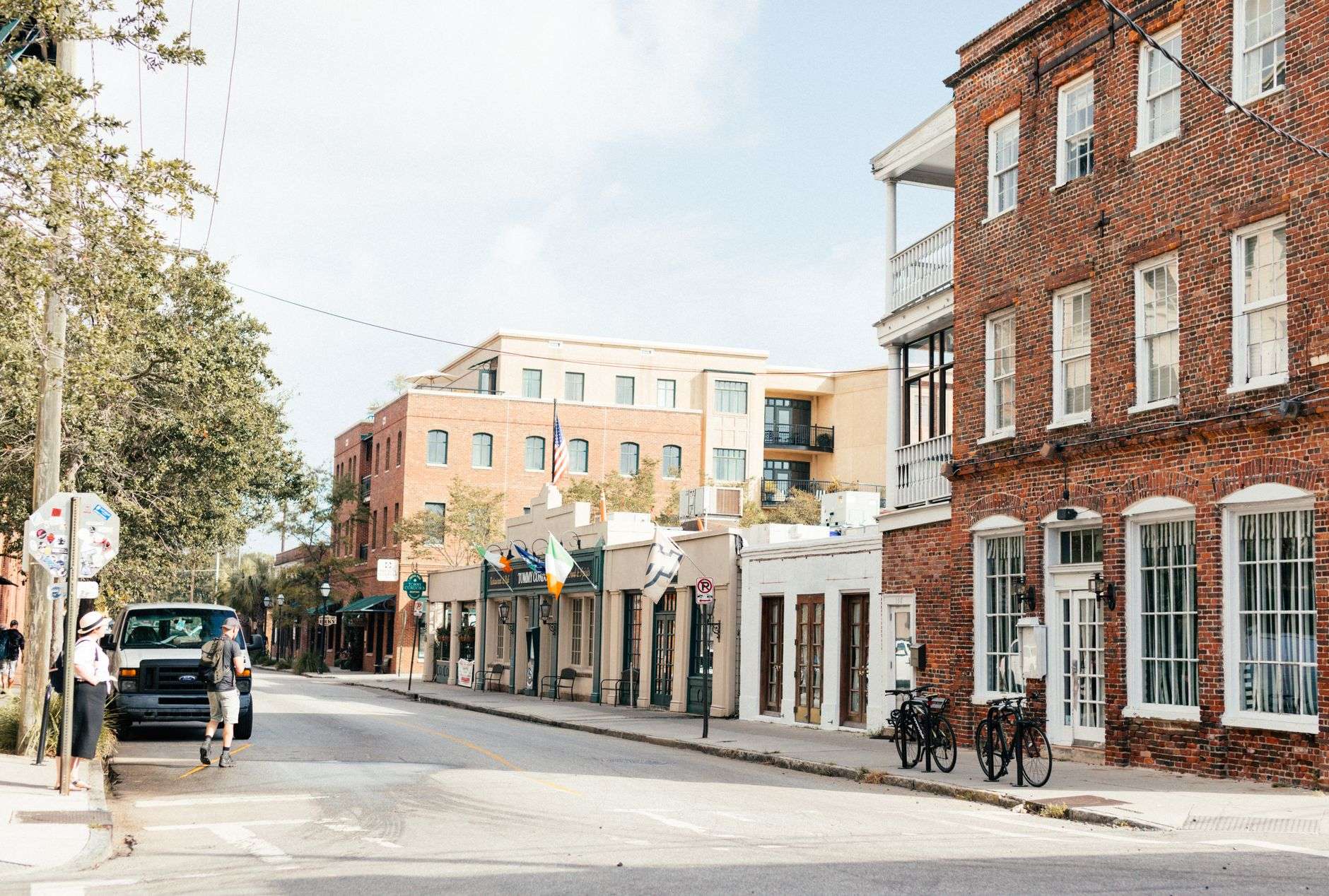
A legal battle over a rejected Murphy USA gas station and convenience store proposed for downtown Mobile is moving to mediation, nearly two years after the project was first denied.
Mobile County Circuit Judge Ben Brooks has appointed retired Judge Charles Fleming to mediate the dispute between the project’s developers and the city’s Architectural Review Board. Under the court’s order, the developers, city representatives, attorneys and anyone with authority to settle the case must personally attend the entire mediation session.
The parties have until Sept. 17 to complete mediation and report the results back to the court. A status hearing has been set for 10:30 a.m. Sept. 18. The judge’s order makes clear that mediation “will not stop other pretrial activity or delay a potential trial,” meaning the case will continue moving toward trial even as settlement talks proceed.
The appointment of a retired judge as mediator, and the requirement that every participant with settlement authority attend in person, signal that the court wants this case resolved by negotiation rather than by verdict. Judges order mediation in land-use disputes for practical reasons: a trial decides only who wins the current round, while a settlement can produce a redesigned project, a negotiated sale of the property, or a withdrawal of the appeal — outcomes that end the fight rather than prolong it. Fleming’s career on the bench makes him the kind of mediator who can tell both sides, credibly, what a judge is likely to do with their arguments.
The parallel-track structure of the order matters too. By requiring mediation without staying discovery or the trial schedule, Brooks has removed the parties’ ability to use settlement talks as a stalling tactic. The developers’ case continues to be built and the city’s defense continues to be prepared, no matter what happens in the mediator’s conference room — a structure that keeps pressure on both sides to negotiate seriously and quickly.
How the dispute began
The fight traces back to October 2024, when Mobile’s Architectural Review Board unanimously voted to reject plans to tear down a vacant CVS building and replace it with a Murphy USA convenience store, fuel canopy and gas station along Government Street near Broad Street.
The Architectural Review Board reviews proposed construction and demolition projects within Mobile’s historic districts to determine whether they are compatible with the character of surrounding historic buildings and neighborhoods. When the board took up the Murphy USA proposal, residents packed the meeting to voice opposition, arguing that a large-scale gas station, convenience store and fuel canopy would clash with the historic district around it.
Board members cited concerns about the project’s design, its utility connections and its potential impact on the character and integrity of nearby historic neighborhoods. When the board voted to deny the project, the crowd in attendance applauded.
The site sits at the edge of one of the most closely watched corridors in the city’s historic fabric — Government Street, the tree-lined axis that runs west from downtown through neighborhoods lined with nineteenth- and early twentieth-century houses and institutions. Redevelopment battles along the corridor have become flashpoints in a larger argument about Mobile’s future: whether the city can court national retail investment without letting the design standards that protect its historic identity erode block by block. A fuel canopy and a brightly branded convenience store are among the most visually aggressive building types in American retail, which is why the proposal drew a packed room and an unanimous denial.
The developers’ appeal
Pan American Engineers, representing Murphy USA and property owner Hygia Inc., appealed the board’s decision to Mobile County Circuit Court on Oct. 15, 2024. The appeal argues the board’s denial was “arbitrary, unsupported by the facts and based on issues the developers argue the board was not legally permitted to consider.”
According to the developers, opposition to the project focused mainly on the fact that it would be a gas station and convenience store, rather than on whether the design itself met the city’s historic-development guidelines. The appeal states that Architectural Review Board staff had conducted a detailed review beforehand and determined the proposed development was consistent with applicable design guidelines and would not materially harm the historic district.
That staff-recommendation point is the technical heart of the appeal. Boards like Mobile’s Architectural Review Board operate under written design guidelines precisely so that decisions rest on standards rather than tastes. When a board’s professional staff reviews a proposal against those standards and finds it compliant, and the board then denies the project anyway on grounds the guidelines do not contain, the applicant has a genuine legal argument that the board substituted its own preferences for the adopted rules. Courts reviewing such denials ask exactly that question: did the board apply the standards, or did it invent new ones in the meeting?
The developers further contend that board members improperly weighed in on whether the gas station would be economically viable and based their decision on subjective objections to elements such as utility panels, rather than strictly applying the district’s design standards.
The distinction matters because a board’s mandate is design compatibility, not market analysis. Whether a fuel station at a particular corner will succeed commercially is not a question the design guidelines empower the board to answer, and arguments that a project is “the wrong use” — as opposed to the wrong design — fall outside the board’s legal authority. Utility panels, screening and equipment placement, by contrast, are design questions, but the developers argue that such elements can be conditioned or adjusted rather than used as grounds for wholesale denial.
The appeal also notes that the property is not classified as a contributing structure within the historic district and has been used for commercial purposes since 1926, housing a car dealership, a furniture and carpet outlet, an automotive paint shop and a muffler shop over the years.
That history is the developers’ strongest factual answer to the character argument. Historic district protection exists to preserve structures that contribute to a district’s significance; the vacant CVS building is not one of them, and the land itself has hosted nothing but commercial uses for a century — vehicles, retail and automotive services, the same categories a fuel station belongs to. The developers’ implicit point is blunt: there is no historic building to protect on this lot, only a vacant modern structure, and the “character” being defended is a preference about what businesses belong on the corner.
In addition to challenging the denial of the gas station itself, the appeal takes issue with the board’s rejection of the project’s proposed signage. The developers say they agreed during the meeting to shrink the sign to the city’s required maximum of 64 square feet, but the board denied the signage request anyway.
The signage episode, as the developers tell it, is the appeal’s best evidence of arbitrariness. A board that accepts a concession bringing a sign into full compliance with the size limit, and then denies the sign regardless, has — in the applicant’s framing — revealed that the decision was never about the standards. Signage denials are also among the easier board actions for courts to second-guess, because the applicable standard is a bright-line number rather than a judgment call.
The developers also argue the board failed to follow its own procedural rules, claiming the motion to deny the project did not specifically identify which facts supported the decision and instead referred broadly to matters raised during the meeting.
Procedural findings are the least dramatic and most effective ground in land-use appeals. Boards are generally required to make findings of fact that tie a denial to specific provisions of the standards they enforce, both to discipline their own decisions and to give reviewing courts something to evaluate. A motion that simply collects the evening’s objections into a denial gives the applicant’s lawyers an easy target: if the record shows no findings tied to the guidelines, the court can remand or reverse without ever reaching the merits of the design.
Through the appeal, the developers are asking the court to overturn the board’s decision, find that the project complies with applicable guidelines, and order the Architectural Review Board to approve the gas station, convenience store and signage as proposed.
The requested remedy — a court order directing approval — is aggressive but not unheard of in Alabama land-use litigation. More commonly, a court that finds a board’s decision defective remands the matter for reconsideration under the proper standards, which returns the project to the same board with its legal exposure clarified. A full order of approval would require the court to conclude that the guidelines compelled approval as a matter of law, leaving the board no discretion to withhold it — a high bar, but one the developers argue the staff’s own favorable review already establishes.
What mediation means for the case
The order sending the case to mediation does not approve the project or reverse the board’s decision. It simply requires both sides to attempt to work out a resolution before the case proceeds further through the court system. If mediation fails to produce an agreement, the case remains on track for further pretrial proceedings and a possible trial.
The potential settlements take several familiar shapes. The developers could accept a redesign — relocated canopy, screened utility equipment, smaller branding — and return to the board with a proposal the members can approve without reversing themselves. The city could agree to approve a conditioned version of the project in exchange for withdrawing the appeal. Or the property could change hands, ending the dispute with the site’s redevelopment for a different use entirely. Any of those outcomes is available in the mediator’s room and none is available at trial, which is the whole point of the order.
The mediation deadline of Sept. 17, followed by a status hearing the next morning, gives the process a short fuse. Cases that enter mediation without a deadline can drift for months while lawyers trade scheduling conflicts; a 24-hour turn from mediation report to courtroom status conference makes clear that Judge Brooks expects an answer — either a settlement announced, or a candid report that the parties are proceeding to trial. Either way, the court will know where the case stands before the fall docket fills.
For the neighborhood groups that packed the original board meeting, the mediation is a reminder that the fight is not over, but also that it has changed form. Nothing in a mediated settlement binds the board’s critics, but a deal struck between the developers and the city would present the neighborhood with a finished result rather than a proposal to oppose. For Murphy USA and Hygia Inc., nearly two years of litigation have bought a seat at a table where a redesigned store could finally be approved. And for the city, the mediation offers a chance to resolve a case that tests its historic review process — before a trial does it for them, on the record, in a courtroom where the board’s reasoning will be examined line by line.