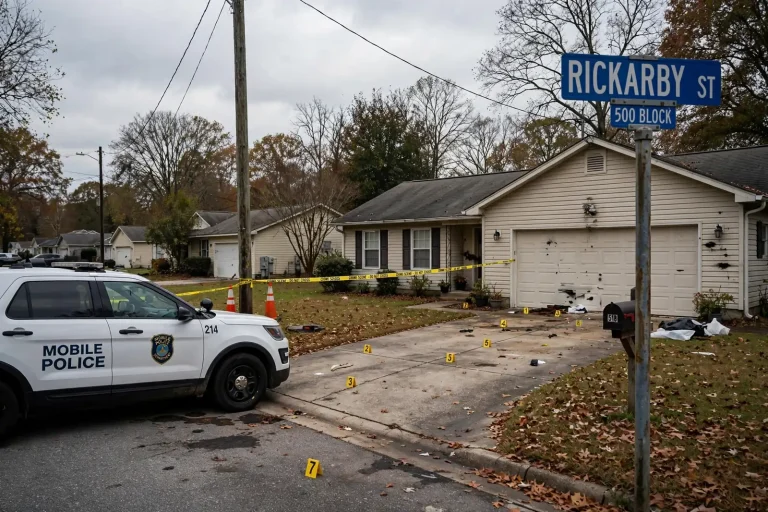
Mobile Judge Upholds Child Hearsay Statute in Capital Murder Case Over Death of 3-Year-Old Boy
A Mobile County circuit judge denied a defense bid to declare Alabama's child hearsay law unconstitutional in the capital case of a man accused in a 3-year-old's 2021 death, but a dispute over whether the evidence qualifies remains.
MOBILE, Ala. — A Mobile County circuit judge on Thursday, Nov. 12, refused to strike down Alabama’s child hearsay statute, clearing away a constitutional objection raised by the defense in the capital murder case of a 24-year-old Mobile man accused in the 2021 death of his girlfriend’s 3-year-old son. The ruling keeps alive the prosecution’s effort to put statements from the child’s older brother in front of a jury, though the defense has signaled that the fight over that evidence is not finished.
Abraham Hatch is charged with capital murder in the death of the boy, who was about a month away from turning 4 when he died in August 2021 at the University of South Alabama Children’s and Women’s Hospital in Mobile. Prosecutors in Mobile County contend the child endured weeks, and possibly months, of serious abuse before his death.
The District Attorney’s Office is not pursuing the death penalty in the case.
What the Judge Decided
Hatch’s attorneys had asked the court to declare the child hearsay law unconstitutional, arguing it conflicts with protections guaranteed to him by the Fifth, Sixth and 14th amendments to the U.S. Constitution. Those amendments protect, among other things, the right to due process and the right of an accused person to confront the witnesses against him. The circuit judge denied the request.
After the hearing, the district attorney said the statute has been in effect for years and that his office has relied on it in other prosecutions.
The Evidence at Issue
At the center of the dispute are out-of-court statements made by the boy’s older brother, who was 6 years old at the time of the death. Prosecutors want jurors to hear what the brother said.
As a general rule, statements made outside the courtroom and offered to prove that what they say is true are classified as hearsay, and hearsay is normally barred from trials. The rule exists because the person who made the statement is not on the witness stand, under oath, where the opposing side can cross-examine them and the jury can judge their credibility.
The law recognizes a number of exceptions to that rule, and Alabama has one written specifically for young witnesses. The Child and Protected Person Physical and Sexual Abuse, and Violent Offense Victim Protection Act allows out-of-court statements from witnesses under the age of 12 to be used in abuse cases. Laws like this one reflect a recognition that very young children may struggle to testify in a formal courtroom setting, particularly about traumatic events involving people close to them.
A Case That Went to the Appeals Court and Back
The question of the brother’s statements has already made one round trip between the trial court and the state’s Court of Criminal Appeals.
Initially, the circuit judge ruled the statements could not be shown to the jury because they were hearsay. Prosecutors challenged that decision, and in February the Court of Criminal Appeals concluded that the statements fall within the exception created by the child protection statute.
That appellate ruling left one issue unresolved. The defense had argued, for the first time during oral arguments before the appellate judges, that the brother’s statements do not actually meet the requirements of the statute. The appeals court pointed out that this argument was raised late and that the statements themselves were not included in the material submitted for its review. It sent the matter back and directed the circuit judge to evaluate that argument.
Once the constitutional challenge was decided on Thursday, Hatch’s defense attorney said he plans to press that remaining question.
Why Prosecutors Could Appeal Before Trial
It is unusual for a criminal case to visit an appellate court before a jury has even been chosen, but rulings that keep evidence out of a trial are one of the situations where that can happen. Alabama allows prosecutors to ask an appellate court to review certain pretrial decisions that exclude evidence. The reason is practical: once a defendant is tried and acquitted, the constitutional protection against double jeopardy prevents the state from appealing and trying the case again, so any challenge to an evidence ruling has to come before trial.
Defendants, on the other hand, generally must wait until after a conviction to challenge most rulings that go against them, raising those issues in a direct appeal. That difference helps explain why the question of the brother’s statements went up to the Court of Criminal Appeals at the state’s request and has now returned to the circuit court for further work.
When an appellate court sends a case back with instructions, as it did here, the trial judge is bound by the higher court’s legal conclusions. In this case, that means the circuit court must treat the statute as applying to this type of evidence while still deciding the separate, fact-specific question the appeals court left open.
The Defense Position
According to the defense, the hearsay exception requires that a child’s statement relate to a material element of the specific crime that has been charged. The defense attorney said the brother’s statements describe earlier episodes of alleged abuse rather than the event that caused the fatal injury. He said the child has never stated that he saw what caused that injury.
The Prosecution Position
The district attorney said he is confident the state will win on the remaining issue. He said prosecutors believe the brother’s statements fall squarely within the statute, that the state made the same argument at both the circuit court and the appeals court, and that he expects the evidence to be ruled admissible.
Why the Confrontation Issue Matters
Challenges to child hearsay laws often center on the Sixth Amendment’s Confrontation Clause, which guarantees a criminal defendant the right to confront the witnesses against him. Since the U.S. Supreme Court’s 2004 decision in Crawford v. Washington, courts have drawn a distinction between statements that are testimonial in nature, such as formal statements made to investigators for use in a prosecution, and those that are not. Testimonial statements from a witness who does not appear at trial generally cannot be used unless the defendant had a prior opportunity to cross-examine that witness.
Because of that framework, the details of when, where and to whom a child made a statement can be important. Defense lawyers in cases involving young witnesses frequently look closely at those circumstances, while prosecutors argue that properly admitted statements give jurors a fuller picture of what happened inside a home.
Thursday’s ruling resolved the broad constitutional attack on the statute in this case. The narrower question of whether these particular statements satisfy the law’s requirements remains before the circuit court.
Charges Against the Boy’s Mother
The child’s mother also faces charges connected to his death. She faces a felony murder charge, with a trial date set for March. Hatch’s defense attorney said he does not believe her case will ever go to trial, stating that she has reached an agreement with prosecutors.
In Alabama, felony murder applies when a death results from the commission of certain other felonies, even if the killing itself was not intended. It is a Class A felony, which carries a potential sentence of 10 to 99 years or life in prison.
Understanding the Charge Against Hatch
Alabama law lists specific circumstances that elevate a killing to capital murder. One of them is the intentional murder of a child younger than 14. A capital murder conviction in Alabama carries one of two possible punishments: death or life in prison without the possibility of parole. Because the District Attorney’s Office has chosen not to seek death in this case, a capital murder conviction would mean a sentence of life without parole.
Like every person accused of a crime, Hatch is presumed innocent unless and until he is proven guilty beyond a reasonable doubt.
Where the Case Stands
The case remains in Mobile County Circuit Court. Before it can move to trial, the judge must still rule on whether the brother’s statements meet the requirements of the child hearsay statute, the question the Court of Criminal Appeals sent back for review. Rulings on contested evidence of this kind can shape how both sides prepare for trial, and pretrial disputes over admissibility can sometimes lead to further appeals before a jury is ever seated.
Resources on Child Abuse
Cases like this one are a reminder of the importance of reporting suspected abuse. Anyone in Alabama who suspects a child is being abused or neglected can contact their county Department of Human Resources office or local law enforcement. In an emergency, call 911. Alabama law requires many professionals, including teachers, health care workers and child care providers, to report suspected abuse, but any concerned person may make a report.
Warning signs that may point to abuse include unexplained injuries, injuries in various stages of healing, sudden changes in behavior, fearfulness around a particular adult and reluctance to go home. Child advocacy centers in the region work with law enforcement and prosecutors to conduct forensic interviews with children in a setting designed to reduce trauma.