Jury Weighs Verdict in Retrial of Prichard Man Accused in Fatal Lefevre Street Shooting
A Mobile County jury is deliberating in the retrial of Jordan Miller, a Prichard man accused of fatally shooting 24-year-old Phillip Glover on Lefevre Street in April 2023, after his first trial ended in a hung jury.
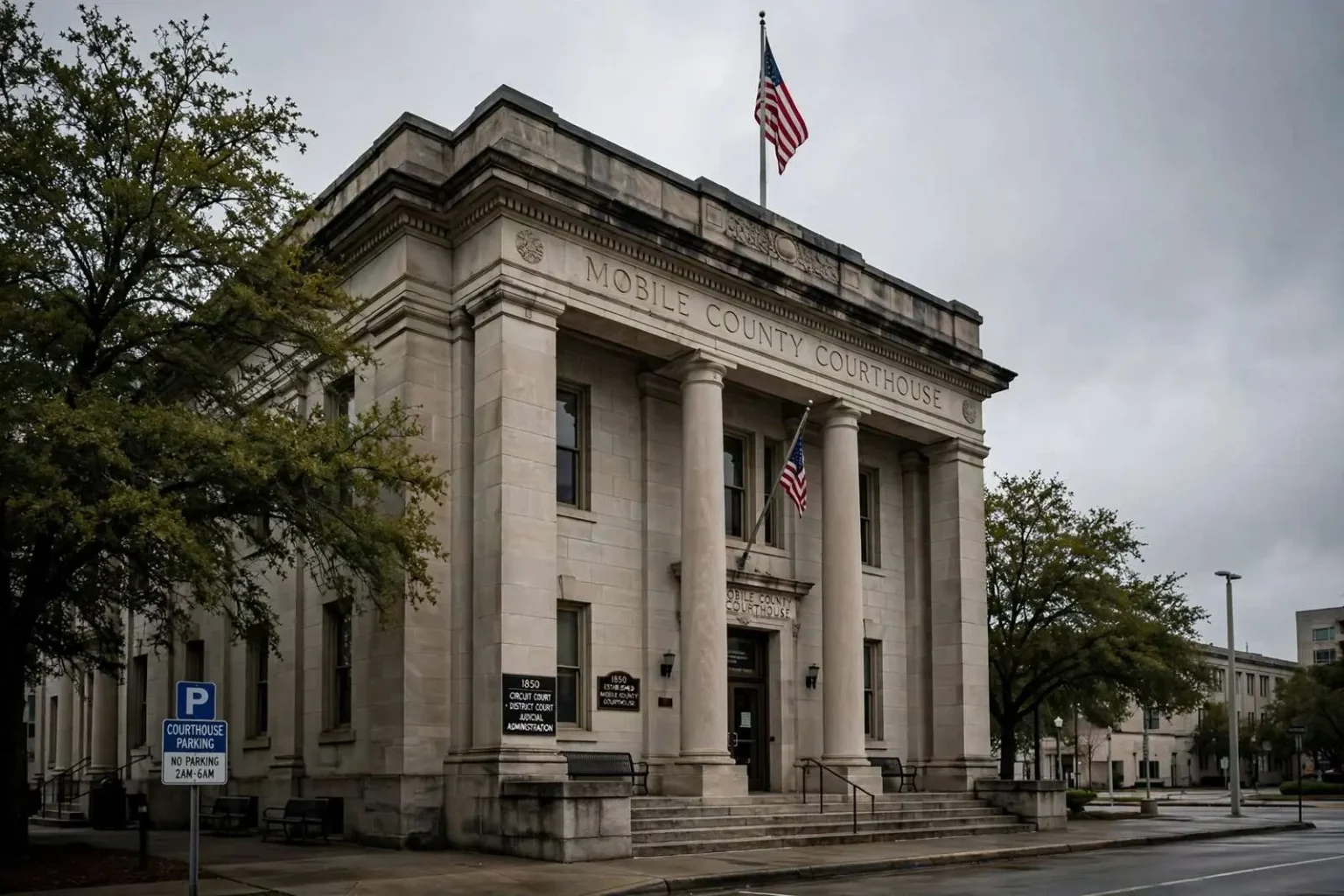
A Mobile County jury began deliberating Thursday in the murder retrial of a Prichard man accused of fatally shooting another man on Lefevre Street more than three years ago. Jordan Miller is charged with murder in the death of 24-year-old Phillip Glover, who was shot on Lefevre Street in Mobile in April 2023. The deliberations mark the latest chapter in a case that has already been before a jury once, and they bring to a head more than three years of investigation, prosecution and litigation for two families waiting on an answer.
Prosecutors allege Miller was responsible for the killing, while the defense has contested the state’s case. The retrial gives the Mobile County District Attorney’s office a second attempt to persuade a jury beyond a reasonable doubt, and it gives the defense another opportunity to press the arguments that persuaded at least one juror the first time. What has not changed is the charge itself, murder under Alabama law, which carries the most serious penalties in the state’s criminal code for anyone convicted.
This is not the first time a jury has heard the case. Last year, a Mobile County judge declared a mistrial after jurors deadlocked 11 to one in favor of acquitting Miller, prompting prosecutors to bring the charge back for a second trial. An 11-1 split is one of the most lopsided hung juries prosecutors face, and the decision to retry reflects the state’s assessment that the evidence can still win a unanimous verdict with a new panel, despite the clear division the last jury reached.
Where the deliberations stand
Jurors in the current trial are scheduled to return to the courthouse Friday morning at 9 a.m. to continue weighing the evidence, and a verdict could come as early as tomorrow. The schedule means the answer to the case will arrive roughly three years after the shooting that produced it, closing a legal process that began with the original investigation and will continue after a verdict with sentencing or, in the event of an acquittal, with the finality that brings.
As with any deliberation, the length of time jurors take can vary widely depending on the complexity of the evidence and the degree of agreement among panel members. Juries that reach quick verdicts usually signal clear agreement on the evidence, while deliberations that stretch into additional days often mean the panel is working through serious disagreements or combing through exhibits a second time. Mobile County judges give juries wide latitude on timing, checking in periodically without pressuring the panel toward either verdict.
The courthouse atmosphere around a retrial differs from the original in ways both practical and emotional. Witnesses have testified before, attorneys have argued the same evidence to a different panel, and the gallery is populated by families who have lived through one full trial already. For Glover’s family, a second trial reopens everything; for Miller’s supporters, it carries the encouragement of how close the first jury came to acquittal. Both wait on the same twelve jurors.
A case rooted in a 2023 shooting
The shooting that led to the charges occurred in April 2023 on Lefevre Street, a residential corridor in Mobile. Glover, 24, died as a result of the shooting, and investigators subsequently identified Miller, of Prichard, as a suspect. The neighborhoods involved sit in the heart of the city, and the case is one of the homicides that Mobile County’s courts have processed through the slow machinery of capital-docket justice, where cases routinely take years to move from arrest to trial.
That timeline is not unusual. Serious felony cases in Mobile County and across Alabama often spend years moving through grand jury, discovery, motion practice and scheduling before reaching a jury, particularly when the charge is murder and the potential sentence is life in prison. Delays compound for everyone involved: witnesses’ memories fade, families wait without resolution, and defendants who are out on bond or in jail await their day in court. The Miller case, heading to a second verdict more than three years after the shooting, fits that pattern.
Hung juries and mistrials, like the one that occurred in Miller’s first trial, are not uncommon in serious felony cases and do not resolve guilt or innocence. A mistrial simply ends that trial without a verdict, leaving the charge standing and the state free to decide what happens next. Prosecutors weigh several factors in that decision, including the strength of the evidence, the views of the victim’s family, the resources a second trial will require and what the first jury’s split suggests about persuadability.
The dynamics of a retrial differ from a first trial in ways that shape both sides’ strategies. Prosecutors now know which arguments produced an 11-1 split, and they typically refine their presentation accordingly, tightening witness order, sharpening exhibits and anticipating the defense’s strongest ground. Defense attorneys, meanwhile, know that a single holdout juror was enough to prevent a verdict last time, and they will build the case for reasonable doubt with that threshold in mind. Twelve new jurors, though, mean none of the first panel’s deliberations carries over, and a split that favored one side in theory can vanish entirely with a different group of people in the room.
Mobile County’s criminal courts handle the volume of cases generated by one of Alabama’s largest counties, and murder trials sit at the top of that docket in seriousness and public attention. Trials of this kind are decided by ordinary citizens summoned for jury service, residents who spend their days listening to testimony about evidence, timelines and forensic conclusions before retiring to decide a question that will define two families’ lives. The system’s demands on jurors are considerable, and the fact that hung juries emerge at all is a measure of how genuinely contested some evidence can be.
For the community where the shooting occurred, the outcome will register beyond the courtroom. Homicides leave marks on neighborhoods, and the slow pace of prosecution means residents often wait years to see whether accountability follows. A verdict, whichever way it goes, closes a chapter that has been open since April 2023, when the shots on Lefevre Street took a 24-year-old man’s life and set in motion the proceedings that reached their conclusion point this week.
The distinction between a hung jury and an acquittal is worth underscoring for readers following the case. When jurors deadlock, no finding of any kind is made about the evidence; the first trial simply produces no verdict at all, and the presumption of innocence carries forward intact into the retrial. Miller walks into his second trial legally in the same position he occupied at the first, presumed innocent, and the earlier panel’s lean toward acquittal has no formal weight in the new proceedings. Juries are not told about prior trials, and the evidence they hear is what the parties present in this one.
Prichard, Miller’s home city, borders Mobile’s northern neighborhoods and shares the county’s court system through the Mobile County District Attorney’s office, which prosecutes cases arising across the county including the municipalities. Cases that cross city lines in this way are common in the region, where municipal boundaries sit close together and events in one jurisdiction unfold against the backdrop of the whole county’s justice system. The retrial proceeding in downtown Mobile, a short distance from both the Prichard line and the Lefevre Street neighborhood, brings those threads together in one courtroom.
The law of retrial after a hung jury
Under Alabama law, prosecutors are permitted to retry a defendant after a mistrial caused by a deadlocked jury, since jeopardy does not attach when a jury fails to reach a unanimous verdict. The rule comes from longstanding United States Supreme Court precedent recognizing that a hung jury is a trial without a result, not an acquittal, and it applies uniformly in state and federal courts. Defendants in those circumstances face the same charges before a new panel, with the previous jury’s failure to convict or acquit counting for nothing legally.
That legal framework is why retrials are routine even after lopsided splits like the 11-1 vote in Miller’s first trial. Some defendants accept plea agreements at that stage to avoid the risk of a second jury, while others, like Miller, proceed to retrial and let a new panel decide. Either way, the state’s obligation remains the same: to prove guilt beyond a reasonable doubt to every juror, not merely a majority of them.
The outcome of the retrial will determine whether Miller is convicted of murder or acquitted of the charge tied to Glover’s death. If convicted, sentencing will follow under Alabama’s murder statutes, with the judge determining the term based on the verdict and the case’s circumstances. If acquitted, the double jeopardy clause bars any further prosecution for the same offense, ending the case permanently.
Southalnews.com will provide an update once the jury reaches a verdict. Until then, the case remains where it has spent most of the past three years: in the hands of the Mobile County court system, with twelve jurors holding the decision that two trials, three years and one hung jury could not yet produce.