

Marshall Franklin Barstow, the Mobile restaurateur who owned and operated Mama’s on Dauphin Street for more than two decades and helped define weekday lunchtime in downtown Mobile, has died. He was 48.
Barstow bought the Southern home-cooking restaurant at 220 Dauphin St. with his then-fiancée, Katy, around 2003. The couple opened the doors roughly eight months before their wedding, and in the years that followed, Mama’s grew from a risky bet on a then-struggling stretch of Dauphin Street into one of the most dependable lunch stops in the central business district, drawing a mix of downtown office workers, hotel guests, cruise terminal travelers and generations of loyal regulars.
A downtown institution built on home cooking
Mama’s built its reputation the old-fashioned way: plate lunches, daily specials and a dining room where the food tasted like it came out of a family kitchen. The menu ranged through the Southern canon, from fried chicken and chicken and dumplings to fish with dirty rice, black-eyed peas, fresh-fried okra, jambalaya and fried green tomatoes. Portion sizes were generous, prices were friendly, and the pace of service was geared to workers who had an hour for lunch and no patience for a wait.
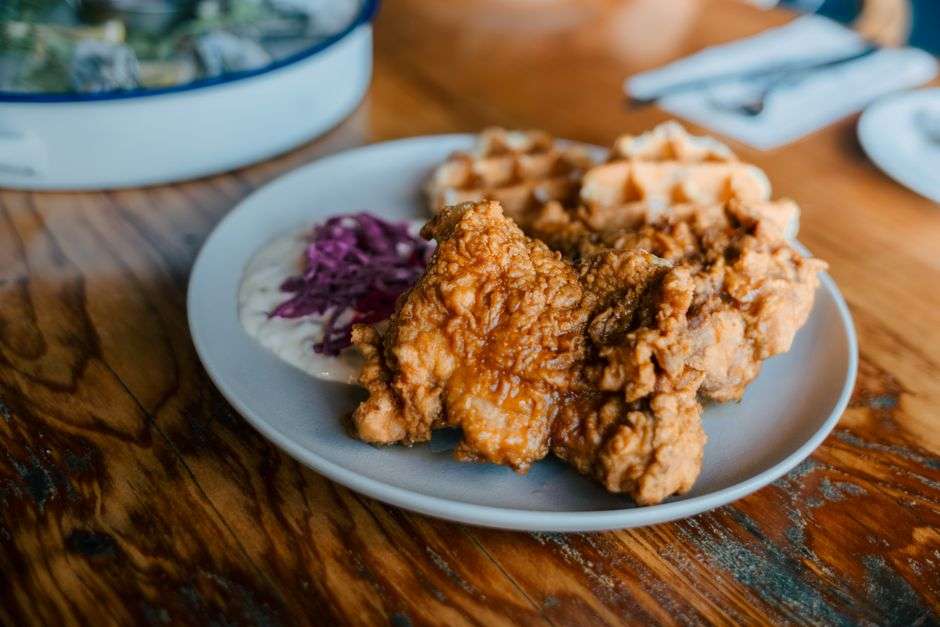
The restaurant’s signature dish was its fried chicken, which has long drawn lines on the days it appeared on the menu. The Barstows let their fresh chicken sit overnight in a brine of garlic, bay leaves and seasoning salt before it went into a heavily seasoned flour mix and the fryer. Mondays and Wednesdays, the traditional chicken days, were consistently the busiest of the week, with the dining room filling quickly after the doors opened at 11 a.m.
The space itself became part of the experience. Inside, vintage light fixtures hang over a dining room anchored by an enormous hand-painted mural depicting quintessential Mobile scenes, a nod to the city that surrounded the restaurant. On pleasant days, customers could take a seat on the sunny patio beneath the flags out front. The restaurant’s location put it within easy walking distance of several downtown hotels and the cruise terminal, and visitor reviews over the years repeatedly described the same experience: an almost empty room at opening, a full house by noon, and owners who treated first-time customers like regulars.
Recognition and expansion
Over more than two decades in business, Mama’s became a perennial presence in the Nappie Awards, Lagniappe’s readers’ choice celebration, as a multi-year finalist and winner in the Best Home Cookin’/Soul Food category. For many Mobilians, the restaurant’s name became shorthand for a certain kind of lunch: quick, hot, unpretentious and familiar.
Barstow’s ambitions were not limited to a single dining room. When GulfQuest, the National Maritime Museum of the Gulf of Mexico, opened on the downtown waterfront in 2015, Barstow took over the operation of the museum’s café, The Galley. There he brought the same approach that had worked on Dauphin Street, serving hearty plates of gumbo, pan-seared crab cakes with remoulade, shrimp and grits, and blackened seafood to museum visitors and downtown workers alike.
Fellow downtown restaurateurs remembered Barstow this week for the qualities that kept both operations running. One peer in the downtown dining scene described him simply as “an amazingly hard worker,” a sentiment that colleagues said captured the long hours and daily grind behind a lunch counter that almost never missed a service.
Part of downtown Mobile’s revival
When the Barstows opened Mama’s around 2003, the prospect of a family-run Southern lunch spot anchored to a single block of Dauphin Street was far from a sure thing. “No one thought it would work,” Marshall once told Mobile Bay Magazine, recalling the early skepticism about the location. The restaurant’s endurance, through the slow rebuilding of the LoDa entertainment district, hurricanes, a pandemic and the constant turnover of the downtown restaurant business, made it one of the quiet success stories of the city’s central business district.
Part of that staying power came from routine. Mama’s operated primarily as a weekday lunch destination, a schedule that made it a fixture of the workday for generations of downtown employees. Regulars planned their weeks around the specials board. Some customers who grew up eating at the counter returned years later with children of their own, and out-of-towners passing through Mobile on the way to New Orleans or the beaches made a point of stopping in after hearing about it from locals.
The restaurant’s staying power also reflected the Barstows’ willingness to stay put. While other downtown concepts came and went along Dauphin Street, Mama’s remained at 220 Dauphin St., serving the same core menu and the same regulars, year after year, under the same ownership.
A Mobile story
Barstow was a 1996 graduate of Baker High School in west Mobile. His path from local schools to the downtown restaurant business reflected a career spent entirely in the city, first at Mama’s and later across the water at GulfQuest. Friends and customers described a proprietor who seemed to know everyone who walked through the door, and whose willingness to talk — about food, about Mobile, about whatever was on television the night before — was as much a part of the restaurant as the menu.
The restaurant’s own telling of its story was modest. “When we started in 2003, we had no idea what would happen,” Mama’s says in its history, describing how the business grew into a fixture in the historic downtown area serving homegrown favorites to regulars and out-of-towners alike. The kitchen leaned on local suppliers, sourcing fresh vegetables from area farmers and farmers markets for the sides that came alongside the daily specials, and the restaurant’s catering operation carried the Mama’s name into office parties, weddings and gatherings across the city.
The schedule told the same story of a restaurant built around downtown’s working rhythm. Mama’s operated on weekday lunches only, opening at 11 a.m. and closing its kitchen at 2:30 p.m., with the doors shut on weekends — a format that made it a monument to the workweek and gave its daily specials board the feel of a schedule everyone in the business district knew by heart.
No cause of death has been announced. Barstow leaves behind his wife, Katy, and five children.
For the customers who made Mama’s part of their week, the restaurant he built remains what it has been for more than 20 years: a plate-lunch counter in the heart of downtown where the fried chicken still draws a crowd, the sweet tea is poured without being asked, and the door opens onto the same dining room that Mobilians have trusted with their lunch hour for two decades.