Mobile Council Backs $578,920 Design Deal for McNally Park Waterfront Improvements
The Mobile City Council approved a $578,920 design contract with Moffatt & Nichol for McNally Park waterfront improvements, including boat ramp repairs, jetty work, dredging and better fishing access.
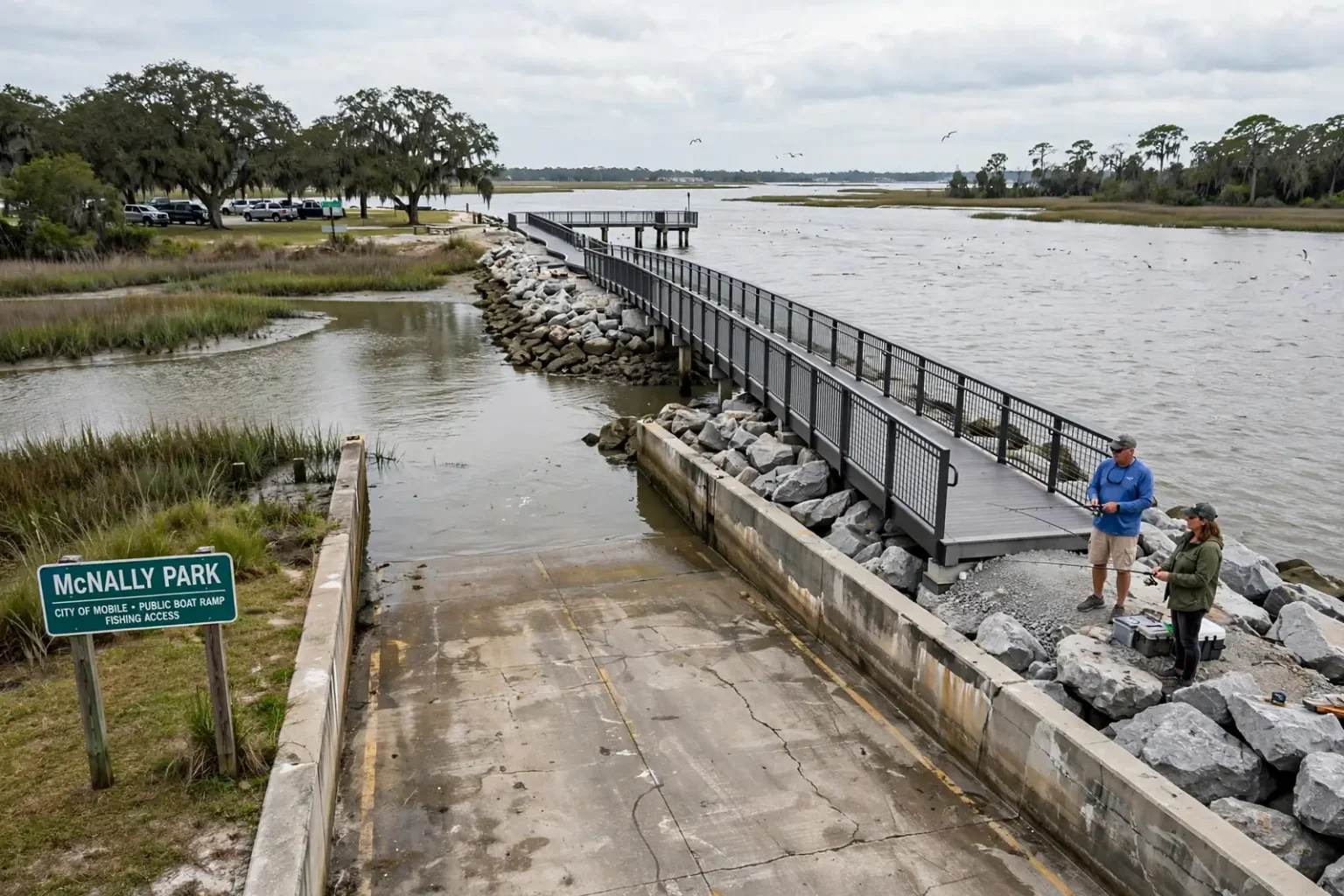
MOBILE, Ala. — The Mobile City Council on Tuesday approved a $578,920 engineering and design contract for McNally Park waterfront improvements, taking a first formal step toward repairing the park’s boat ramp, strengthening its jetties, dredging its boating channel and expanding public access for fishing.
The contract with engineering firm Moffatt & Nichol will produce the plans for the work. In a related vote during the same Oct. 20 meeting, the council also agreed to move $98,030 in unused District 3 capital improvement money into the broader McNally Park Marine Improvements Project.
Both measures were sponsored by Mayor Spiro Cheriogotis and Council President C.J. Small, who represents District 3, where the park is located.
Council president: ‘We’re just trying to make a way’
Before the council voted, Small called attention to the two McNally Park items and explained why they matter to residents of his district and the rest of the city.
Small said the goal of the improvements is to give residents more opportunities to fish without having to leave Mobile.
“We’re just trying to make a way,” Small said, referring to giving residents access “to fish inside the city.”
Small described the proposals as “some great things” happening within the city limits and in District 3.
Mobile’s City Council has seven members, each elected from a single district, and the council selects a president from among its members. Items affecting a particular district, such as park projects funded with district capital dollars, are often sponsored or championed by that district’s council member.
For many Mobile residents, fishing is a way of life. The city sits at the head of Mobile Bay, where the Mobile River and its tributaries meet the bay’s brackish waters, and the area offers both freshwater and saltwater fishing opportunities. Public access points such as boat ramps, piers and jetties give residents who do not own waterfront property, or who do not own boats, a place to cast a line close to home.
What the engineering contract covers
Under the contract, Moffatt & Nichol will design improvements in four main areas:
- Boat ramp repairs: Fixing the park’s existing boat ramp.
- Jetty improvements: Repairing and improving the protective jetties that shield the park’s waterfront.
- Channel dredging: Removing built-up sediment to keep the boating channel open.
- Public access: Improving the public’s ability to reach and use the waterfront.
The $578,920 contract covers engineering and design services only. It does not pay for construction of the improvements. The city has not yet announced a construction timeline or the total cost of building the project.
Moffatt & Nichol is an engineering firm known for its work on coastal, port and marine infrastructure. Design contracts like this one typically include site investigation, surveys, engineering analysis and the preparation of construction plans and specifications that the city can later use to seek bids from contractors.
A two-phase approach
According to city documents, the waterfront improvements are planned in two phases.
The first phase will focus on immediate maintenance needs. That work includes:
- Repairs to the existing boat ramp
- Repairs to a vulnerable section of the jetty
- Dredging to maintain access through the channel
The second phase will take on more extensive improvements to the jetties. City documents say those improvements are intended to provide better protection from waves, improve boating access and reduce the need for future dredging.
As part of the design work, engineers will also evaluate whether to add a new boat ramp. They will also study the possibility of building an ADA-accessible walkway along the top of the northern jetty, which could provide additional access for fishing and other waterfront activities.
Why jetties and dredging matter
Jetties are structures, often built from rock or other heavy materials, that extend from the shore into the water. At small harbors, marinas and boat launches, jetties help break the force of incoming waves, creating calmer water where boaters can safely launch and retrieve their vessels. They also help guide water flow and can reduce the amount of sand and sediment that settles in a channel.
When a jetty is damaged or deteriorating, it can allow more wave energy and sediment into the protected area. Over time, that can make a boat ramp harder to use and cause the channel to fill in, which then requires dredging. Dredging is the process of removing sediment from the bottom of a waterway to restore its depth so boats can pass through without running aground.
Dredging can be costly and must be repeated as sediment builds back up. That is why the second phase of the McNally Park plan focuses on improving the jetties in a way that could reduce how often the channel needs to be dredged in the future.
Coastal projects that involve dredging or work in the water also generally require environmental review and permits from state and federal agencies, which is one reason engineering and design work comes before construction on projects like this.
Accessibility for anglers of all abilities
The possible ADA-accessible walkway along the northern jetty could open the waterfront to visitors who might otherwise have difficulty reaching it. The Americans with Disabilities Act sets accessibility standards for public facilities, including requirements for surfaces, slopes and railings that allow people who use wheelchairs or other mobility aids to get around safely.
An accessible walkway on top of the jetty could give people with disabilities, older residents and families with young children a safer, more stable place to fish and enjoy the water than uneven rocks typically allow.
Fishing pier money redirected
The council’s second McNally Park vote moved $98,030 in District 3 capital improvement funds that had originally been set aside for a fishing pier at the park. That money will now go into the larger McNally Park Marine Improvements Project.
Capital improvement funds are typically used for long-term investments in public facilities, such as parks, roads and buildings, rather than day-to-day operating expenses. In Mobile, council districts have capital improvement dollars that can be directed toward projects within the district. By folding the unused pier money into the broader project, the city can apply those dollars toward the overall waterfront improvements.
City officials say the improvements are intended to make the waterfront more accessible, address existing maintenance problems and provide lasting protection for the park’s marine facilities.
What happens next
With the design contract approved, Moffatt & Nichol can begin developing plans for the McNally Park waterfront. The design process will help determine the scope of the work, including whether a new boat ramp and the accessible jetty walkway are included.
Once design work is complete, the city would need to secure funding for construction and award a construction contract. A construction schedule and total construction cost have not yet been announced.
Residents who want to follow the project can track upcoming Mobile City Council agendas, which are posted publicly before each meeting. The council typically meets on Tuesdays at Government Plaza, and meetings are open to the public.