Thomas Hospital Bat Bites: Six Patients Treated for Rabies Exposure in One Week
Thomas Hospital in Fairhope treated at least six patients for bat bites or exposures in a week, and all received rabies treatment. Doctors urge anyone with possible bat contact to seek care quickly.
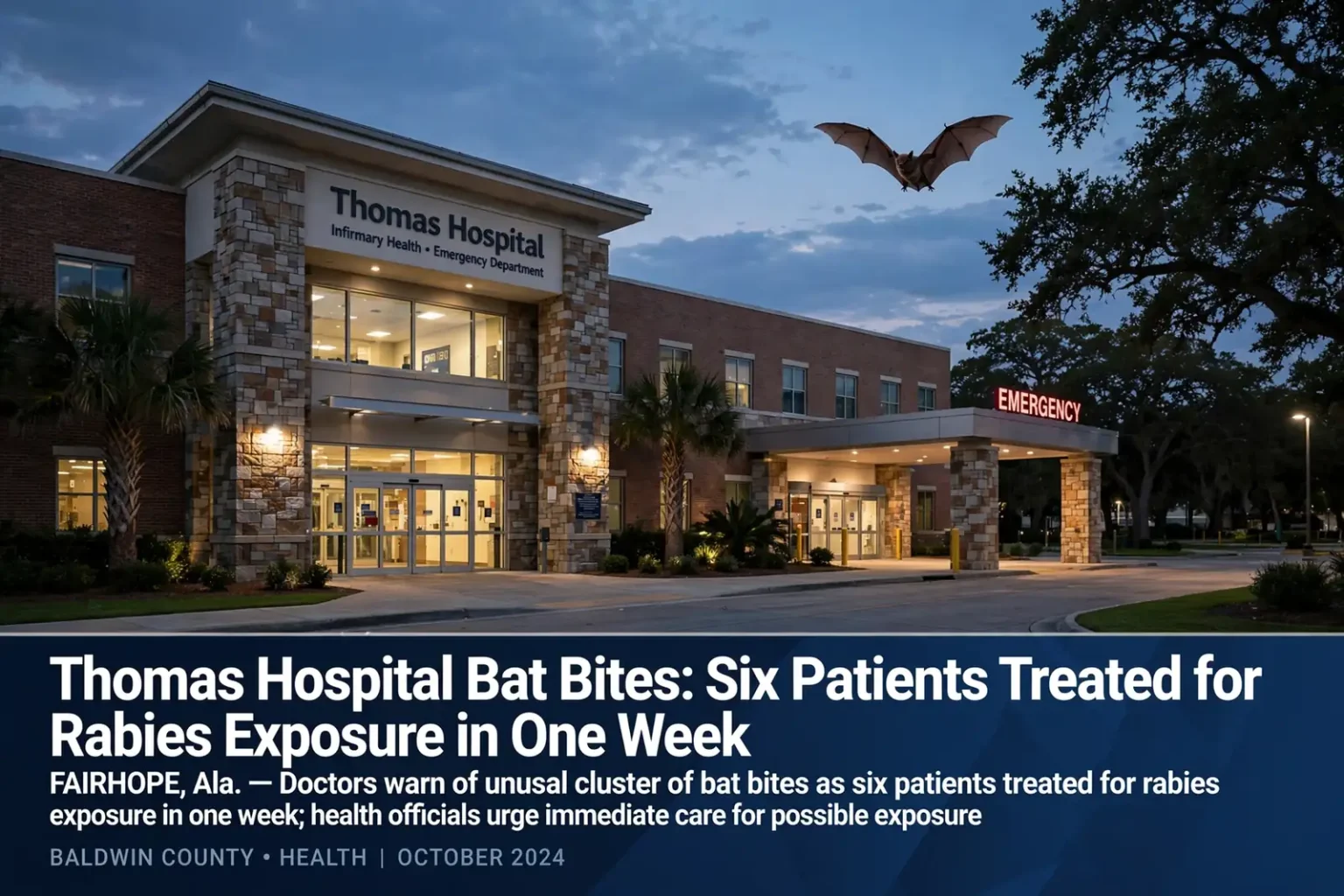
FAIRHOPE, Ala. — Thomas Hospital bat bites have doctors on alert after the emergency department in Fairhope treated at least six patients over the past week who were bitten by or exposed to bats, an unusually high number of cases in a short span that has prompted renewed warnings about the risk of rabies in Baldwin County.
All six patients were treated for rabies, according to doctors at the hospital. North Baldwin Infirmary in Bay Minette reported one additional case. Physicians and wildlife experts say they do not yet know what is behind the sudden rise in bat encounters, but they are urging anyone who believes they may have been bitten or exposed to seek care quickly.
An unusual cluster of cases
Bat exposures are not unheard of along the Gulf Coast, but emergency physicians at Thomas Hospital said the number and timing of the recent cases stood out. Several patients arrived on the same day, and they were not connected to one another.
“Having multiple patients all on the same day, and patients that didn’t really know each other, just multiple different instances was pretty unique,” said Dr. Tory Andrews, an emergency medicine physician at Thomas Hospital.
Because the cases involved separate people in separate situations, doctors said they did not appear to stem from a single bat or a single location. That pattern is part of why the hospital wanted to make the public aware.
Other hospitals in the region were also checked for similar cases. North Baldwin Infirmary in Bay Minette reported one case. So far, no other reports have come from other Baldwin County hospitals or from Sacred Heart in Pensacola.
Why a small bite can be a serious problem
Doctors stressed that bat bites are easy to underestimate. One patient’s family said he barely noticed the bite when it happened.
“Bat bites are very small,” Andrews said. “Bat mouths and teeth are extremely tiny, and sometimes you don’t even see a wound at all.”
That is what makes bats different from many other animal exposures. A dog bite or a raccoon scratch is usually obvious. A bat bite can leave little or no visible mark, and a person who is asleep may not realize contact occurred at all. For that reason, public health agencies treat certain bat encounters as possible exposures even when no wound can be found.
The concern is rabies. Andrews emphasized that the disease must be taken seriously.
“Bats are known carriers of rabies, and rabies is a life-threatening condition. So it’s important to get treatment and preventative treatment for it,” Andrews said.
What rabies is and how it is treated
Rabies is a viral disease that attacks the nervous system. It is spread through the saliva of an infected animal, most often through a bite. Once symptoms appear, the disease is almost always fatal, which is why doctors focus on preventing it before it can take hold.
After a bite, the virus does not cause illness right away. According to the CDC, the time between exposure and the first symptoms is often weeks to months. Early symptoms can resemble the flu, including fever, headache and general weakness, and some people notice discomfort, prickling or itching at the site of the bite. As the infection progresses, it affects the brain and can cause confusion, agitation and other severe neurological symptoms. By that point, treatment is rarely effective, which is why health officials urge people not to wait and see whether they become sick.
The good news is that rabies can be prevented if treatment begins promptly after an exposure. That treatment is known as post-exposure prophylaxis, or PEP. According to the U.S. Centers for Disease Control and Prevention, PEP for a person who has never been vaccinated against rabies generally includes:
- Thorough cleaning of any wound with soap and water as soon as possible
- A dose of human rabies immune globulin, which provides immediate antibodies and is given at or near the wound site when one can be identified
- A series of rabies vaccine shots given over about two weeks, typically on the day treatment starts and on days 3, 7 and 14, with an additional dose for some people with weakened immune systems
The vaccine series is given in the arm, not the stomach, a common misconception left over from older treatments decades ago. When started quickly and completed on schedule, PEP is highly effective at preventing the disease.
Andrews said timing matters.
“We recommend coming in as soon as you can, because the sooner that you’re able to start treatment, the better, more effective it can be,” Andrews said.
Bats and rabies in Alabama
Bats play an important role in the environment, eating large numbers of insects, including mosquitoes and agricultural pests. Most bats do not have rabies. But because a small percentage do, and because their bites are so easy to miss, bats are a leading source of rabies infection in people in the United States, according to the CDC.
In Alabama, the Alabama Department of Public Health tracks rabies in animals and identifies wild animals, including raccoons, bats and foxes, as the main carriers of the virus in the state. State law requires dogs, cats and ferrets to be vaccinated against rabies, which helps protect pets and creates a buffer between wildlife and people. Bats, however, can find their way into homes, garages, porches and outbuildings, which brings them into contact with people and pets.
Wildlife experts and doctors said they remain uncertain about what is causing the recent surge in local bat exposure incidents. No explanation has been offered for why several unrelated people in the area encountered bats within the same short period.
What to do if you are bitten or exposed
Doctors at Thomas Hospital offered clear guidance for anyone who believes they may have had contact with a bat. Because not every facility keeps rabies treatment on hand at all times, they recommend calling ahead before going to make sure the emergency department has the medication available, then getting checked right away.
Public health guidance from the CDC and state health officials outlines several situations in which a person should seek medical advice about a possible bat exposure:
- You were bitten or scratched by a bat, or a bat’s saliva got into your eyes, nose, mouth or an open wound.
- You woke up to find a bat in the room where you were sleeping.
- A bat was found in a room with an unattended child, a person who was sleeping, or someone who is intoxicated or otherwise unable to say whether contact occurred.
- You touched a bat with bare hands and are not sure whether you were bitten.
Other practical steps include:
- Wash any bite or scratch immediately and thoroughly with soap and water.
- Do not release a bat that may have bitten someone. If it can be done safely without touching it, health officials advise confining the bat so it can be tested, which may help determine whether treatment is needed. Use thick gloves and a container, and never handle a bat with bare hands.
- Contact your doctor, the nearest emergency department, or your county health department for advice.
- If a pet has had contact with a bat, call your veterinarian, even if the pet is vaccinated.
How to keep bats out of your home
Preventing contact in the first place is the best protection. Health and wildlife agencies recommend a few common-sense steps:
- Never touch or pick up a bat, alive or dead, and teach children to tell an adult if they see one.
- Seal small openings around roofs, chimneys, vents, windows and doors where bats could enter. Bats can squeeze through very small gaps.
- Keep window screens in good repair and keep doors closed, especially at night.
- If bats are roosting in an attic or other structure, consider contacting a licensed wildlife control professional who can remove them safely and legally.
- Keep pets’ rabies vaccinations up to date.
A bat that is active during the day, found on the ground, or unable to fly is more likely than usual to be sick and should be left alone.
What happens next
Doctors at Thomas Hospital said they want residents to take any bat contact seriously rather than wait for symptoms. While the cause of the recent spike remains unclear, the steps for staying safe are well established: avoid handling bats, seek medical care quickly after any possible exposure, and complete the full course of treatment if it is recommended.
For families, the most important message is that a bat encounter should never be shrugged off simply because there is no obvious wound. A quick phone call to a doctor or the health department can help sort out whether treatment is needed, and in a disease as serious as rabies, that call is well worth making.
Thomas Hospital, part of Infirmary Health, serves Fairhope and the surrounding Eastern Shore communities in Baldwin County. North Baldwin Infirmary serves Bay Minette and the northern part of the county. Residents with questions about a possible exposure can contact their health care provider or the Baldwin County Health Department, and those who need emergency care should call ahead to confirm rabies treatment is available before arriving.