

MOBILE, Ala. — A group of Mobile County Public School System students and recent graduates recently completed summer internships at Hargrove Engineers + Constructors, closing out the program with presentations on the projects they worked on and the skills they built along the way.
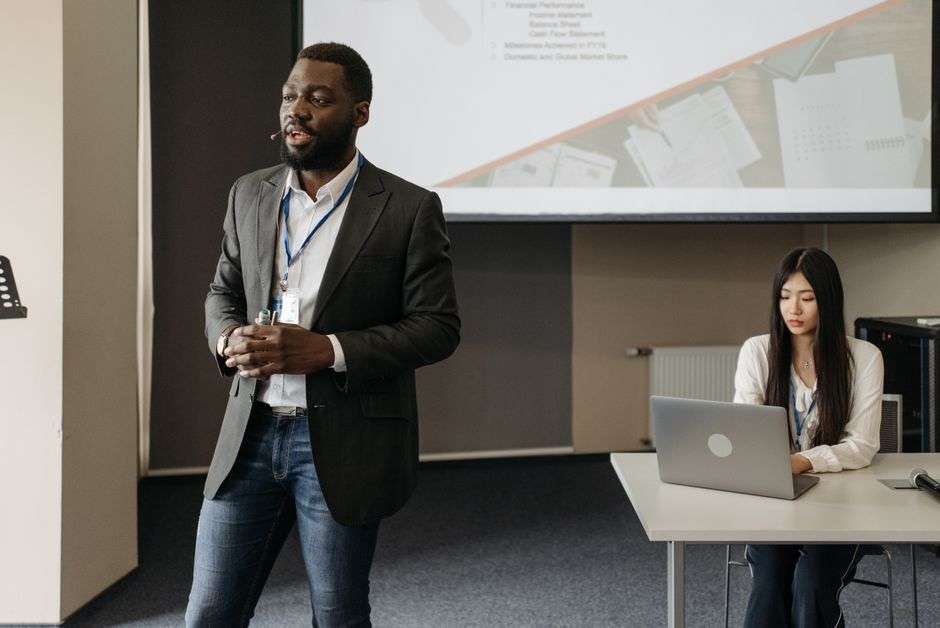
The final presentations are the capstone of the internship cycle: each student stands before mentors and company staff and walks through what they actually did over the summer — the assignments, the tools, the problems they helped solve. For students a year or two from entering the workforce or college, presenting to a professional audience is itself one of the skills the program is designed to build.
The interns
The interns included Demi Stephen of Vigor, Jake Stockert of Baker, Charlotte Milling of Davidson, Owen Ladner, Sophia Perez and Jacob Crain of Mary G. Montgomery, and Carleigh Black of Murphy — a group drawn from high schools across Mobile County.
That spread matters to the program’s design. By pulling participants from schools across the county rather than concentrating on campuses near a single employer, the internship exposes a broad cross-section of Mobile County students to professional workplaces, including students who might never otherwise set foot inside an engineering office before graduation.
Each of the named schools sits in a different corner of the county — Vigor in Prichard, Baker in west Mobile, Davidson in midtown, Mary G. Montgomery in the Semmes area and Murphy downtown — which means the group’s summer experience will travel back to classrooms and peer groups across the district.
What the program is for
Hargrove is one of several business and community partners supporting MCPSS’s Summer Internship Program, which is designed to give students hands-on workplace experience and help them clarify their career goals before graduating.
The program pairs students with employers across the region for structured summer placements, giving them a stretch of real work rather than a tour or a shadowing day. Students are treated as members of the teams they join, with assignments, deadlines and expectations, and mentors are asked to give them genuine responsibility scaled to their experience.
The career-clarification purpose cuts both ways. Some students discover that a field they were curious about is exactly what they want to pursue, and they return to school with a target — the right college program, the right certification path. Others discover early that a field is not for them, which is equally valuable: it costs far less to learn that in a summer internship than in a semester of college coursework.
Hargrove and the local economy
Hargrove Engineers + Constructors, headquartered in Mobile, has grown over more than six decades into a national engineering, procurement and construction firm with a client base that spans the chemical, pulp and paper, technology and industrial sectors. The company’s presence is a pillar of the Gulf Coast’s engineering employment base, and its growth has tracked the industrial expansion along the central Gulf Coast.
Firms like Hargrove depend on a steady pipeline of technically trained graduates, and school-industry partnerships are one of the ways that pipeline is built. Summer interns who have a good experience frequently return as co-ops, college interns and eventually full-time hires, closing the loop between the classroom and the career.
For the region, that loop matters economically. Southwest Alabama’s industrial employers — shipbuilding, aerospace, chemical processing, advanced manufacturing — all compete for the same technical talent, and programs that show local students local careers reduce the outflow of young talent to other states.
The broader MCPSS pipeline
The Summer Internship Program sits within a larger set of workforce initiatives that Mobile County Public School System has built with regional employers. The district’s academy model organizes high school coursework around career themes — engineering, health care, business, skilled trades and others — so that students move from classroom study to workplace exposure in a connected sequence.
Internships are the most advanced rung of that ladder. Students who complete academy coursework, job shadowing and workplace tours arrive at an internship with context, and the summer placement tests what they have learned in a professional setting. Partners across the region — hospitals, law firms, manufacturers, engineering companies — host students each summer under the program’s umbrella.
District officials describe the partnerships as essential to the academies’ credibility. An academy is only as strong as the employers standing behind it, and companies like Hargrove that host interns, advise on curriculum and hire graduates give the programs their real-world weight.
What students said they gained
Participants said the experience strengthened both their technical skills and their confidence heading into the next stage of their education and careers. That combination is the program’s intended outcome: technical skills without confidence rarely turn into applications and interviews, and confidence without skills does not survive the first job interview.
The final presentations made both gains visible. Students who spent the summer working on real projects had concrete material to present — not hypotheticals from a textbook, but work product with their names on it. Learning to explain that work to a professional audience, fielding questions from engineers and managers, is an experience most students do not get until well into college.
For the host company, the payoff is equally practical. Interns bring energy and fresh questions, and the mentoring process itself develops the professionals who supervise them. Companies across the region report that summer programs double as extended interviews, allowing both sides to evaluate a fit before a hiring decision ever has to be made.
Looking ahead
The students who wrapped up their internships at Hargrove return to their schools this fall with a summer of professional experience behind them, and the program’s organizers will begin the cycle again as the next school year gets underway — recruiting applicants, matching students to hosts and preparing the next group for their first professional workplace.
Students interested in future internship cycles typically apply through their school academy programs, and employers interested in hosting can connect with the district’s partnership office. The program’s growth over recent years reflects demand from both sides: students want real experience, and employers want earlier access to local talent.
For Mobile County’s schools, the presentations at Hargrove closed out another summer of students turning classroom learning into workplace experience — and for seven students from schools across the county, the summer marked the first entry on a professional record that, if the program works as designed, is only beginning.
Inside a summer at an engineering firm
An engineering and construction firm offers interns an unusually wide view of how large projects come together. Depending on their assignments, students at a company like Hargrove may see the design side — drawings, software and calculations — as well as the coordination side, where engineers, clients, vendors and construction crews have to align on scope, budget and schedule.
Summer interns typically rotate through tasks that build progressively: starting with orientation and basic support work, moving into project tasks as mentors gauge their abilities, and finishing with responsibilities that carry real weight. The arc is deliberate. Firms that host high school interns treat the placement as an introduction to professional habits — punctuality, documentation, asking questions early — as much as technical training.
The office environment itself is part of the education. Students see how a workplace runs: meetings with agendas, project management tools, dress and communication norms, and the way experienced professionals disagree productively. Teachers can describe those norms; only a workplace can demonstrate them.
The schools the interns represent
The intern group’s mix of campuses reflects the reach of the district’s program. Vigor High School in Prichard, Baker in west Mobile, Davidson in midtown, Mary G. Montgomery serving the Semmes area and Murphy in downtown Mobile each run academy programs that funnel students toward placements like this one.
Students from each school bring different coursework backgrounds — some arrive from engineering academies with CAD and robotics experience, others from health sciences or business tracks with strengths in organization and communication. Host employers value that variety, since real project teams need more than one kind of skill.
The countywide recruitment also builds a network among the students themselves. Interns from different schools who spend a summer together form peer connections that often last into college and the workforce, adding a social dimension to the professional one.
Why partners keep hosting
For the employers involved, the internship program is a long-term investment with a slow but measurable return. Students who intern before graduating college arrive as entry-level hires already familiar with the firm, its tools and its expectations, and many of the region’s largest employers trace a meaningful share of their young professionals back to high school programs.
There is a civic dividend as well. Companies that host interns in Mobile County are betting on local students staying local — building their careers where their families, schools and first employers are. Every student who takes that path strengthens the case for other companies to expand or relocate in the region, because workforce availability is the question every prospective employer asks first.
The district and its partners measure the program’s success in those terms: not just in summer placements completed, but in students who go on to technical degrees, apprenticeships and careers in the region. This summer’s group at Hargrove — seven students from five schools — is the newest cohort in that pipeline.