Former Mobile County Death Row Inmate Released After Plea Deal, 15 Years Later
A man once sentenced to death for a 2001 Mobile County killing walked free this week after accepting a plea deal for the time he already served.
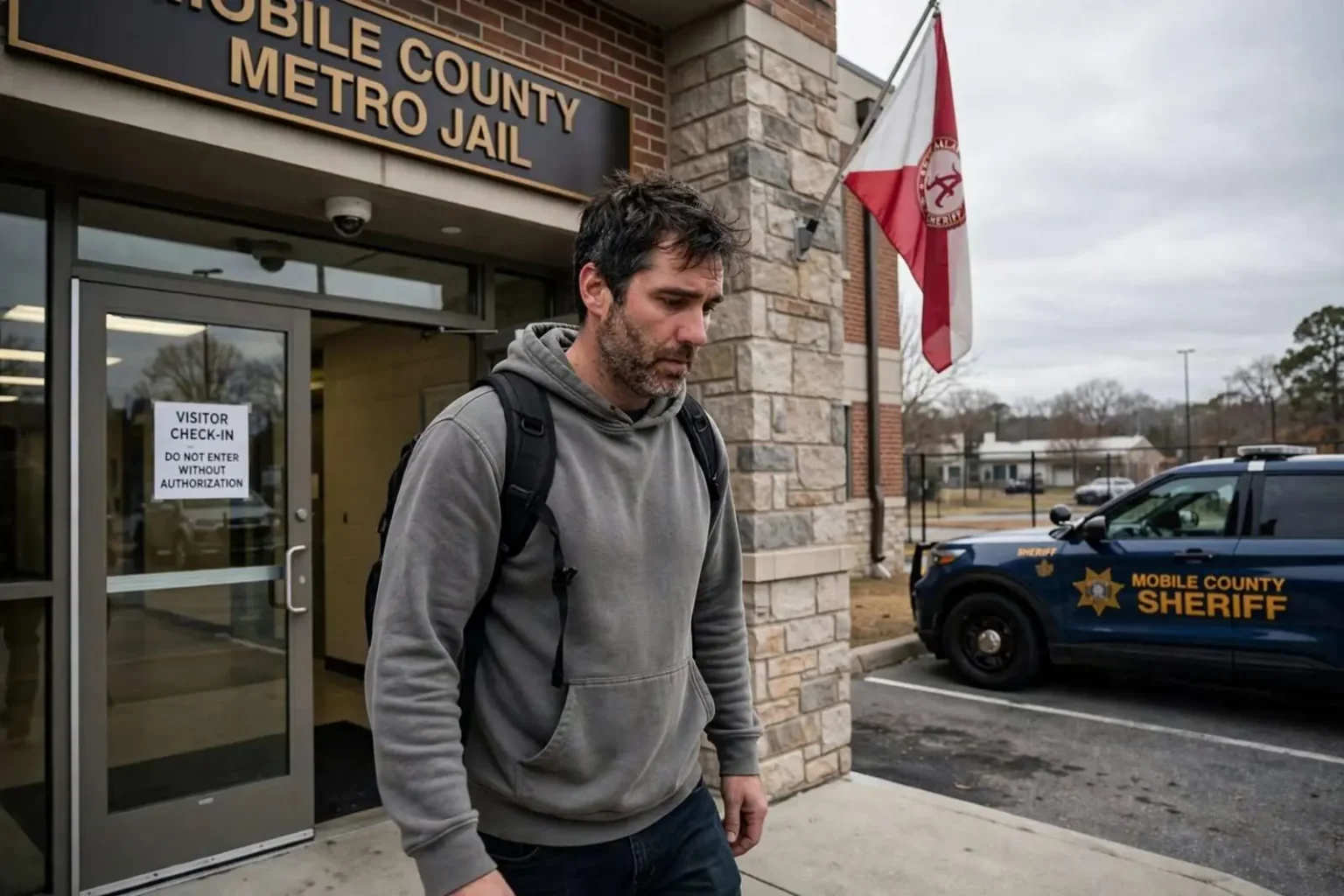
A man who spent nearly a decade and a half on Alabama’s Death Row walked out of the Mobile County Metro Jail a free man this week, becoming the second condemned inmate in the state released within a single month after his case unraveled on appeal. William Ziegler, now 39, had been awaiting execution since his 2001 conviction in the killing of Russell Allen Baker near a home in Mobile County.
The release marks an unusual turn in a case that has wound through Alabama’s courts for more than a decade. Ziegler maintained his innocence throughout his years of incarceration, and his legal team pursued every channel available to condemned inmates in the state — direct appeal, post-conviction review in the state courts and federal habeas corpus proceedings — before finding the argument that ultimately worked.
A rare legal path
After exhausting his standard appeals, Ziegler pursued a rarely successful legal avenue, taking his case directly back to the trial judge rather than through the usual appellate channels, and won a new trial roughly three years ago. The route, sometimes described as a successive post-conviction petition, requires a defendant to clear steep procedural hurdles before a court will even consider new arguments, and the vast majority of such filings are dismissed without a hearing.
The judge who reviewed the original case, though she had not presided over the 2001 trial herself, later issued an extensive written order cataloging a long list of errors and shortcomings in how the case had originally been handled, ultimately clearing the way for the conviction to be overturned. The order examined the investigation, the handling of evidence and the conduct of the original proceedings, and it became the foundation for everything that followed in the case.
Prosecutors initially signaled they intended to retry Ziegler and again pursue the death penalty, reaffirming that position as recently as last November. The District Attorney’s office maintained for years that the conviction could be proven again at a second trial, even after the order vacating the original verdict had been entered.
But this week, with a new trial looming, Ziegler instead accepted a plea agreement, pleading guilty to aiding and abetting murder rather than facing a second capital trial. Mobile County Circuit Judge Sarah Stewart sentenced Ziegler to the 15 years and 50 days he had already spent behind bars, clearing the way for his immediate release. He left the jail shortly before 4 p.m. Thursday.
The plea arrangement resolved the case without the expense and uncertainty of a retrial, which prosecutors would have had to build more than a dozen years after the original crime. Witnesses have moved, memories have faded and evidence gathered in 2001 must meet modern standards for admissibility, all of which weigh on the decision to take a capital case back to a jury.
Words from the bench
Addressing Ziegler directly from the bench, the judge urged him to recognize the rare second chance the outcome represented and cautioned him against carrying bitterness forward. She reminded him that the world he was returning to looks vastly different from the one he left a decade and a half earlier — a world of smartphones, changed neighborhoods and a city that has grown and transformed since 2001.
The victim’s aunt, who had followed the case for years, shared her reaction to the release outside the courtroom, describing the mix of emotions that come with watching a case reach an unexpected resolution after so long. For Baker’s family, the plea brought finality of a kind, though not the outcome they sought when the case began, and relatives said the years of appeals and rehearings have prolonged a grief that never truly closed.
Ziegler’s attorney and his mother also spoke publicly following the release, reflecting on the yearslong legal fight to overturn the original conviction. His mother described the difficulty of watching her son spend his adult life in a cell for a crime she always maintained he did not commit in the manner the state described, while his attorney pointed to the judge’s written findings as vindication of the defense’s long-held position.
The case adds to a small but notable wave of Death Row reversals in Alabama this year, as post-conviction challenges continue to surface long-standing questions about how capital cases were investigated and tried in the years surrounding Ziegler’s original conviction. Defense advocates argue that a generation of capital prosecutions built under older standards of evidence deserves renewed scrutiny, and judges reviewing those cases have sometimes agreed.
Alabama’s Death Row has produced a series of high-profile releases over the past decade, each following years of litigation over trial errors, suppressed evidence or inadequate defense representation. The cases have fueled a recurring debate in the Legislature over reforms to the state’s capital punishment system, though efforts to change the law have repeatedly stalled in Montgomery.
Legal observers say such direct appeals to trial judges rarely succeed, making the outcome in this Mobile County case especially unusual. The petition Ziegler won required the court to revisit the entire record of the original case, and the judge’s willingness to issue a detailed written order — rather than a brief denial — gave the defense a document prosecutors ultimately could not overcome at retrial.
What comes next
For Ziegler, release ends a confinement that began when he was in his mid-twenties and now returns him to a Mobile County that has changed substantially. Reentry after a wrongful or unwound conviction brings practical challenges — housing, employment, identity documents and the simple mechanics of a world that moved on — and advocates said former inmates in his position typically rely on family and nonprofit support in the first months of freedom.
For the local justice system, the case stands as a reminder that capital verdicts are never final until the appeals process has fully run its course. Prosecutors closed the file this week with a plea to a lesser charge and a sentence of time served, closing a chapter that opened with a killing near a Mobile County home in 2001 and ended fifteen years later on the sidewalk outside the Metro Jail.
The Ziegler case has drawn attention from defense attorneys and reform advocates across the state, who said the detailed findings in the trial judge’s order illustrate how much can change when a capital case receives the kind of searching review that post-conviction proceedings are designed to provide. The order examined issues raised from the earliest days of the case, and defense lawyers said the outcome shows why condemned inmates and their families continue to press for years even when the odds appear hopeless.
Mobile County prosecutors, for their part, said the plea resolution guaranteed a conviction on the record while sparing Baker’s family another capital trial. District attorney staff who worked the case noted that re-trying a fifteen-year-old capital case presents enormous evidentiary challenges, and the agreement ensured the defendant would stand convicted of a serious homicide rather than walk away with no conviction at all.
Judge Stewart, who handled the case in its final stages, has presided over other capital matters since joining the Mobile County circuit bench, and lawyers in the courthouse described her handling of the Ziegler matter as measured and thorough. Her courtroom was crowded for the plea hearing, with reporters, family members from both sides and court observers filling the benches.
The release also resonated beyond Mobile. statewide, capital punishment researchers noted that the month’s second release of a condemned inmate is a rare event in any state, and the concentration of reversals in Alabama this year has drawn scrutiny from national observers who track how the death penalty is applied in the South. Each release renews questions about reliability that lawmakers and courts continue to weigh.
The road to Thursday’s release began with the original 2001 prosecution, which ended in a capital conviction and a death sentence after a trial that stretched over multiple weeks. Ziegler was one of several defendants charged in connection with Baker’s death, and the case drew heavy local coverage at the time because of the circumstances surrounding the killing near a Mobile County home.
Over the following decade, the case moved through the standard appellate ladder: a direct appeal to the Alabama Court of Criminal Appeals, review by the Alabama Supreme Court, and a round of state post-conviction litigation before the case reached the federal courts. Each step narrowed the issues under review, and by the time the standard options were exhausted, Ziegler’s remaining hopes rested on the difficult path of returning to the trial court with new arguments.
That path succeeded where most fail. The trial judge’s review produced a written order detailing problems with how the case was investigated and tried — findings that reshaped the legal landscape of the case and, three years ago, produced the grant of a new trial. From that point forward, prosecutors faced the prospect of rebuilding a capital prosecution from scratch, with all of the evidentiary burdens that a fresh trial imposes.
The intervening years of litigation also changed the people involved. The original prosecutors and defense attorneys moved on, the trial judge who heard the first case was no longer on the bench, and Judge Sarah Stewart drew the matter in its renewed phase. By the time the plea hearing arrived this week, both sides had spent years preparing for a trial neither wanted to fight again.