No Injuries After Mobile County Deputy’s Patrol Vehicle Is Struck on Half Mile Road in Irvington
A Mobile County Sheriff's Office patrol vehicle was disabled in a two-vehicle crash on Half Mile Road in Irvington Thursday night. No one was injured, and a second crash followed nearby.
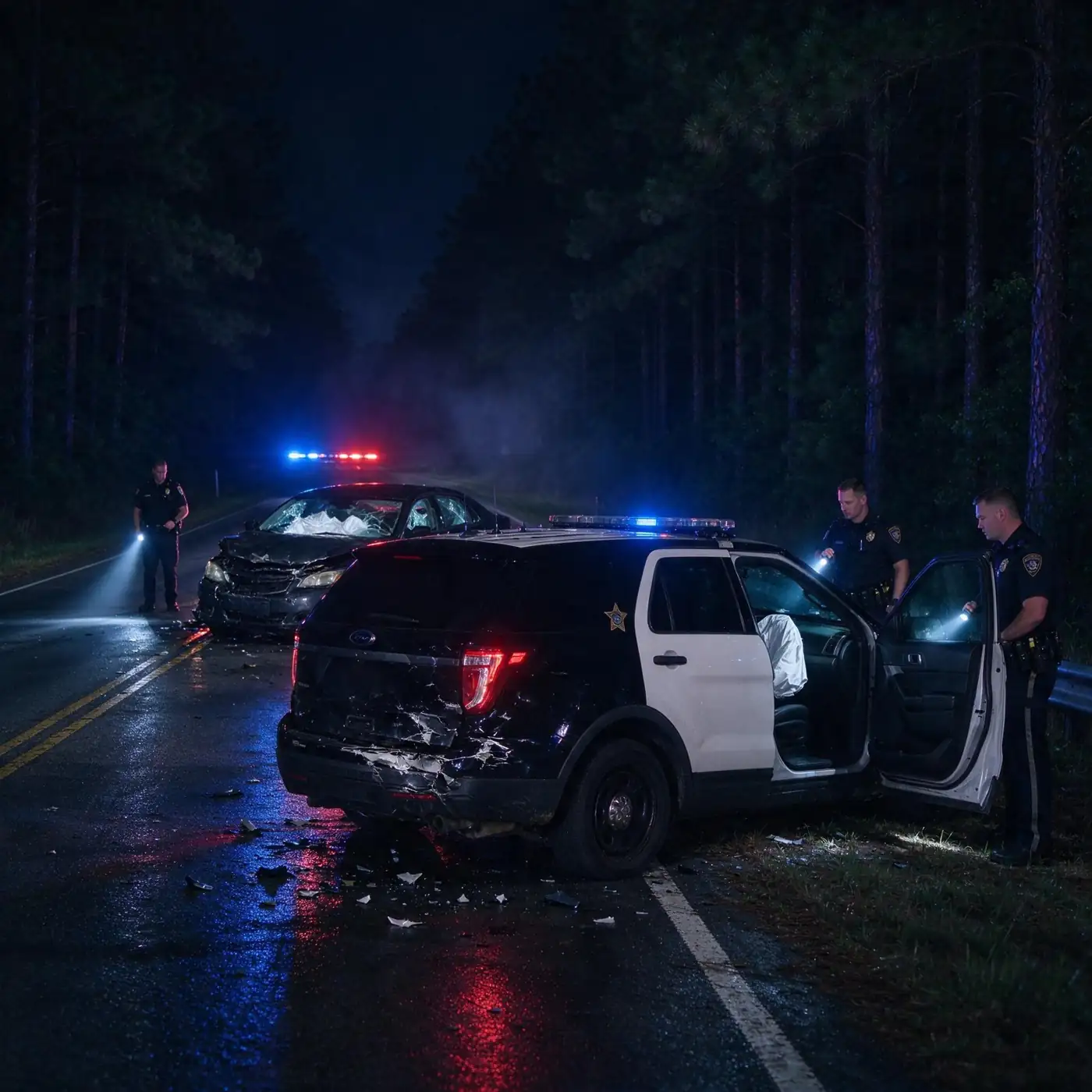
IRVINGTON, Ala. — No one was hurt Thursday night, Nov. 19, after a Mobile County Sheriff’s Office patrol vehicle was struck in a two-vehicle collision on Half Mile Road in Irvington, the sheriff’s office said. The impact was strong enough to set off the deputy’s airbags and left the patrol unit unable to be driven, but no one involved had to be taken to a hospital.
Moments after the first collision, a second crash involving two more vehicles happened nearby, according to the sheriff’s office. Troopers with the Alabama Law Enforcement Agency came to the scene and helped with cleanup.
What We Know
- When: About 9:30 p.m. Thursday, Nov. 19, 2026
- Where: Half Mile Road in Irvington, in south Mobile County
- Vehicles: A sheriff’s office patrol unit and one other vehicle in the first crash; two vehicles in a second crash that followed
- Injuries: None reported; no one was transported for treatment
- Damage: Airbags deployed in the deputy’s vehicle, which was disabled
- Assisting agency: Alabama Law Enforcement Agency
Two Descriptions of the Impact
Information released by the sheriff’s office Thursday night described the first collision in more than one way. One account placed the crash at Half Mile Road and County Road 39 and said the deputy’s vehicle was hit broadside, the kind of side impact commonly called a T-bone collision. Another account from the sheriff’s office placed it on Half Mile Road near Padgett Switch Road and said the patrol vehicle was rear-ended by accident.
Both versions agree on the points that matter most to the public: the deputy’s vehicle was the one struck, and no injuries were reported. The sheriff’s office has not said what the deputy was doing at the time of the crash, and no information has been released about whether anyone was cited.
A Second Crash Right Behind the First
The sheriff’s office said another two-vehicle crash took place right after the collision involving the deputy. No further details were released about that wreck, including whether it was connected to the slowdown created by the first crash.
Secondary crashes are a well-known hazard at any roadside emergency. When drivers approach an unexpected scene at night, with emergency lights, stopped vehicles and debris in the road, sudden braking and distraction can quickly lead to another collision. Traffic safety officials regularly cite back-to-back crashes as a reason to slow down well before reaching flashing lights.
Why State Troopers Were There
The Alabama Law Enforcement Agency, or ALEA, includes the state’s Highway Patrol, whose troopers handle crash investigations on many roads in unincorporated areas. When a crash involves a vehicle from a local law enforcement agency, it is also common for another agency to take part in the response, which helps keep the review of the crash independent. In this case, the sheriff’s office said ALEA was on hand assisting with cleanup.
Any formal crash report would typically include the agencies’ findings on how the collision happened, which may help clarify the differing descriptions released Thursday night.
About the Area
Irvington is an unincorporated community in southern Mobile County, southwest of the city of Mobile and north of Bayou La Batre. Like many county roads in south Mobile County, it has long, dark stretches and intersections without traffic signals, conditions that call for extra caution after sunset.
Because Irvington lies outside city limits, the Mobile County Sheriff’s Office is the primary local law enforcement agency there. Deputies patrol a large territory that stretches from the coast to the northern end of the county, and they spend much of each shift on the road.
The Risks Officers Face Behind the Wheel
Patrol work keeps deputies in their vehicles for hours at a time, often at night and often while stopping, turning or pulling onto shoulders. That exposure makes traffic crashes one of the most common ways officers are hurt on the job nationwide. Airbags, seat belts and modern vehicle design have greatly reduced the severity of many of those collisions, and Thursday’s crash, in which the airbags deployed and no one was hurt, is an example of that protection working as intended.
Safety Reminders for Drivers
The sheriff’s office crash is a reminder of steps every driver can take when approaching a crash scene or an emergency vehicle:
- Slow down early when you see flashing lights ahead, especially at night or on unlit roads.
- Move over when it is safe. Alabama’s Move Over law requires drivers to change lanes away from stopped emergency and service vehicles displaying flashing lights when they can safely do so, or to slow down if they cannot.
- Leave extra following distance so you have room to stop if traffic ahead brakes suddenly.
- Put the phone down. Gawking at a crash or reaching for a device are common triggers for secondary collisions.
- Use extra care at intersections on rural roads, where cross traffic may be hard to see after dark.
If You Are Involved in a Crash
Thursday’s collisions ended without injuries, but they are a useful prompt to review what to do if you are ever in a wreck:
- Check for injuries first and call 911 if anyone is hurt or if vehicles are blocking traffic.
- Get to safety. If the vehicles can be moved and no one is injured, pulling onto the shoulder or a nearby lot can prevent a second crash. Turn on hazard lights.
- Stay at the scene until law enforcement arrives or tells you that you may leave.
- Exchange information with the other driver, including names, phone numbers, insurance details and license plate numbers.
- Document what you can with photos of the vehicles, the roadway and any signs or signals, as long as it is safe to do so.
- Contact your insurer promptly and ask the investigating agency how to get a copy of the crash report.
When Airbags Deploy
Airbags are designed to inflate in collisions forceful enough that occupants could be seriously hurt by striking the steering wheel, dashboard or side of the vehicle. Their deployment in the deputy’s patrol unit signals a significant impact, even though no one needed hospital care. Anyone in a crash where airbags go off should pay attention to soreness, headaches or other symptoms in the hours and days afterward, because some injuries are not obvious right away, and seeking a medical evaluation is a reasonable precaution.
Getting a Crash Report
People involved in a wreck often need an official crash report for insurance claims or repairs. Reports are generally requested from the agency that worked the crash, and it can take several days for a report to be completed and made available. Drivers should ask the responding officer or trooper for a case number at the scene, which makes the request process faster later on.
What Happens Next
The sheriff’s office has not announced any charges or citations, and no additional details about the drivers or the second crash were released Thursday night. With no injuries reported, the main lasting effects appear to be vehicle damage and the time needed to clear the roadway.