Mobile County and SouthBARK Settle Long-Running Animal Shelter Dispute
A federal judge dismissed a lawsuit between Mobile County and rescue group SouthBARK after the two sides reached a settlement over shelter access.
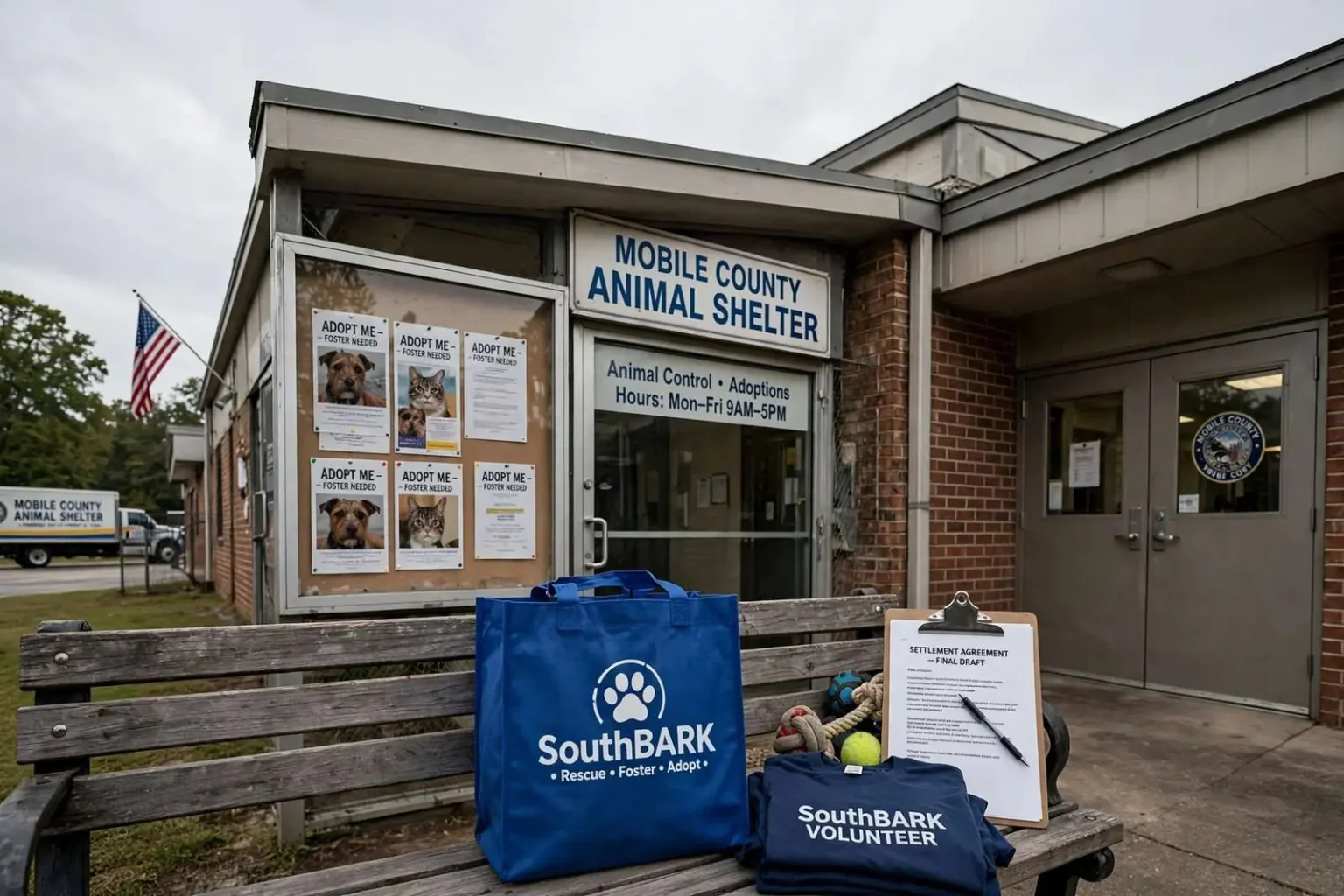
MOBILE, Alabama – A years-long legal dispute between Mobile County and the animal rescue group SouthBARK has come to a close after a federal judge dismissed the lawsuit following a settlement between the two sides. U.S. District Judge Kristi DuBose gave both parties 30 days to finalize the terms of the agreement, closing a case that began as a fight over shelter access and grew into one of the more closely watched animal welfare disputes in the region.
Attorneys representing the county and SouthBARK both declined to discuss specifics of the settlement publicly, and the terms were not released. What is clear from the court record is that a lawsuit that once carried a half-million-dollar damages claim and an unusual cast of animal plaintiffs will now end in settlement rather than a verdict.
The dispute traced back to 2012, when Mobile County barred SouthBARK from continuing its volunteer work inside the county animal shelter, citing concerns over the organization’s fundraising and outreach tactics. Up to that point, rescue volunteers had played a significant role in supplementing the shelter’s operations, helping publicize animals available for adoption, arranging foster placements, and raising money for veterinary care that the shelter’s own budget could not always cover.
SouthBARK later filed suit, seeking reinstatement of its shelter access along with $500,000 in damages it said reflected lost donations and adoption fees tied to no longer being allowed to operate inside the facility. The original lawsuit also took the unusual step of naming shelter animals themselves as plaintiffs and asked the court to bar the shelter from euthanizing animals — a legal theory that drew attention well beyond Mobile County.
Judge DuBose ruled early in the case that she lacked authority to prohibit euthanasia at the shelter or to force the county to reinstate SouthBARK’s access, but she allowed the remaining claims in the lawsuit, including the damages claim, to move forward toward the settlement reached this week. That early ruling shaped the entire course of the litigation, narrowing the fight to questions of money and access rather than the broader policy question of whether the shelter should continue euthanizing animals.
How the dispute began
At the center of the county’s original decision to cut ties with the group was SouthBARK’s use of social media to promote shelter animals, frequently describing them as being “on death row” or in imminent danger of euthanasia to drive donations and encourage foster placements. County officials argued those messages were misleading and emotionally manipulative, and said the tactics led to a wave of harassing phone calls directed at shelter staff.
County officials further alleged that SouthBARK volunteers made insulting and, in some cases, borderline threatening comments about shelter employees on the organization’s social media accounts. Those allegations — disputed by the group — turned what might otherwise have been a routine disagreement over access policies into a personal conflict between the county employees who run the shelter and the volunteers who once worked alongside them.
SouthBARK, for its part, maintained that its urgent messaging style was necessary to mobilize the volunteer and donor support that helps reduce euthanasia rates at high-intake shelters, a tension common to animal welfare organizations that rely on emotionally charged appeals to drive action. Advocates for rescue groups have long argued that shelters with high euthanasia rates depend on outside volunteers to move animals out quickly, and that urgency in public appeals is what generates the fosters, adopters, and donations that make that possible.
The disagreement reflected a broader national debate over how public shelters and private rescue organizations should interact. Volunteer programs vary widely from jurisdiction to jurisdiction, with some shelters welcoming outside groups into their facilities and setting clear rules for photography, messaging, and fundraising, and others keeping tight control over how animals are portrayed. Mobile County’s shelter sits somewhere in the middle of that spectrum, and the 2012 decision to bar SouthBARK was, in the county’s telling, an effort to reclaim control over its own public messaging.
A case with unusual plaintiffs
From the moment it was filed, the lawsuit attracted attention for its structure. Naming animals as plaintiffs was a creative attempt to give the court a path to restrict euthanasia practices, since the animals themselves were the parties with the most direct stake in the outcome. Federal courts, however, require human parties capable of pursuing litigation, and Judge DuBose’s early ruling made clear that the court would not entertain claims on behalf of the shelter’s animals or order the county to change its euthanasia practices.
What survived that ruling was the damages claim and the broader dispute over the county’s treatment of the organization. As the case moved through years of filings, the practical stakes shifted: SouthBARK continued operating as a rescue group in the community, the shelter continued to rely on whatever volunteer support the county permitted, and the litigation itself became the main battlefield between the two sides.
The settlement closes out one of the more contentious chapters in the relationship between Mobile County’s animal control operations and the network of volunteer rescue groups that have historically supplemented the county shelter’s capacity. It remains unclear from court filings whether the settlement includes any provision for SouthBARK to resume working directly inside the county shelter going forward.
Under typical volunteer programs, volunteers photograph animals for adoption listings, walk dogs, socialize cats, transport animals to veterinary appointments, and staff off-site adoption events. The work fills gaps that paid shelter staff rarely have time to cover, and shelters that lose their volunteer base often see adoption numbers fall as animals become less visible to the public. That dynamic was at the heart of the damages claim: SouthBARK argued that its exclusion from the shelter cost it the donations and adoption fees that flowed from its on-site work.
Why shelter disputes land in federal court
Cases of this kind typically reach federal court through civil rights claims, because a county government and its employees are involved and the disputed conduct — barring a group from public facilities — raises constitutional questions about access and speech. Once such claims are filed, related state-law claims over damages are often heard in the same federal proceeding, which is how a dispute over volunteer access at a county shelter ends up before a U.S. district judge rather than a state court.
Judge DuBose, who has served on the federal bench in the Southern District of Alabama, has overseen a number of high-profile cases from the Mobile area. Her role in this dispute spanned from the early rulings that trimmed the lawsuit’s most ambitious claims to the final dismissal that followed the negotiated settlement. The 30-day window she gave the parties allows time for the paperwork finalizing the agreement to be completed and filed before the dismissal takes full effect.
Settlements in disputes like this one often include mutual releases and agreements not to litigate similar claims in the future, but because both sides declined to discuss the terms, residents who followed the case are left without a public accounting of what the county may have paid or promised, and whether the group’s volunteers will return to the shelter in any capacity.
What it means for the shelter and its animals
For the animals housed at the Mobile County shelter, the practical effect of the settlement may be limited. The court never reached the question of euthanasia practices, and no ruling required the county to change how it operates. The shelter’s outcomes depend on the same factors that existed before the lawsuit: adoption traffic, foster participation, rescue group partnerships, and the resources the county commits to animal control.
For the wider rescue community, the case serves as a reminder that the relationship between public shelters and private advocates is governed by access policies that counties can set and enforce. Groups that hope to work inside public facilities must operate within those rules, even when they disagree with shelter leadership about messaging or practices. Where those relationships break down entirely, animals can lose the network of fosters and donors that volunteer groups provide.
SouthBARK’s work in the community did not stop with the 2012 bar. Rescue organizations of this kind typically continue pulling animals, arranging fosters, and fundraising independently of any single shelter’s policies. The question left open by the settlement is whether one of the area’s most active advocacy groups will again have a formal role inside the facility it once helped staff — an answer that, for now, neither side is giving.
Neither the county nor the group has announced any change in how the shelter will operate day to day, and shelter staff continue to manage intakes, adoptions, and the animal control responsibilities that fall to the county. Whatever comes of the relationship going forward, the courtroom fight that defined the past several years is over.
With the judge’s deadline set and both sides committed to finalizing the agreement, the long-running dispute moves at last toward its formal end, years after the initial decision to bar the group set it in motion.