A Dachshund mix dog looking at the camera, illustrating Tinker, available for adoption at the Mobile SPCATinker is a 7-year-old Dachshund mix available for adoption at the Mobile SPCA.
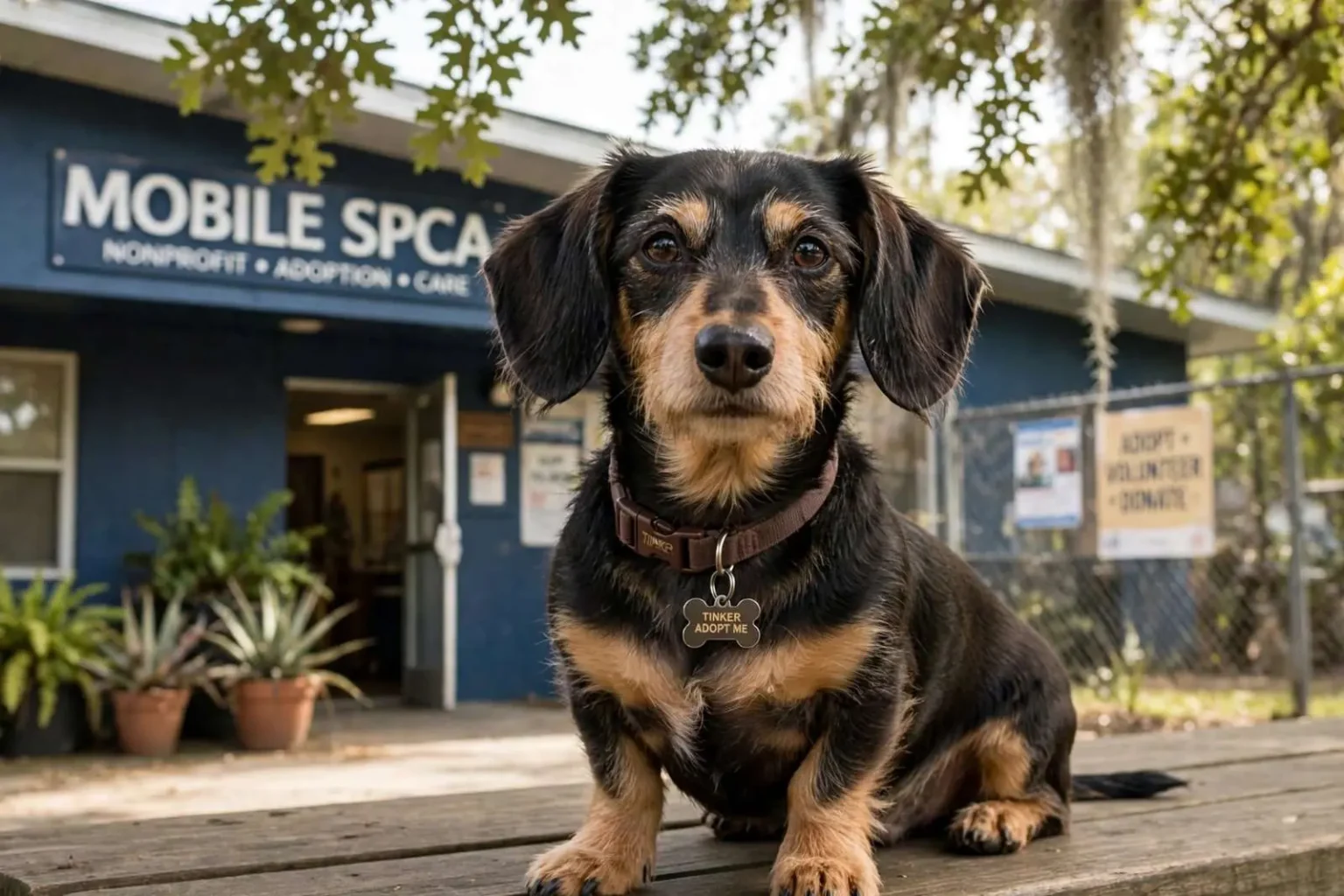
Tinker did not do anything wrong. The 7-year-old Dachshund mix is at the Mobile SPCA because her owner could no longer care for her — the single most common reason an adult dog ends up in a shelter, and the one that has nothing to do with the dog.

Her relocation to the shelter is a familiar story along the Gulf Coast. Life changes — a move, an illness, a death in the family, a landlord who suddenly bans pets — leave thousands of responsible dog owners each year unable to keep a beloved animal. The dog is not the problem. The circumstances are. Tinker’s case is the quiet, ordinary version of that, and it is precisely the version that fills shelter kennels with good dogs who simply ran out of luck.

Her Condition

She arrived with a bad ear infection. She has been treated, and she is doing great now. Ear infections are common in Dachshunds and Dachshund mixes — the long, drop ears trap moisture and restrict airflow, creating conditions bacteria and yeast are happy to exploit. Left untreated, they are painful and can damage hearing. Treated, as Tinker’s was, they resolve.

The ear infection is worth pausing on, because it illustrates something prospective adopters should understand about shelter medicine. When a dog arrives at the Mobile SPCA, it receives a veterinary evaluation and any urgent medical needs are addressed before the dog is made available. That means an adopter taking Tinker home is not inheriting an untreated problem — the shelter has already handled it. Breeders and retail sellers do not always offer that same level of pre-adoption care, which is one reason many animal-welfare advocates steer first-time dog owners toward adoption rather than purchase.

What She’s Like

By the shelter’s account, Tinker is sweet and calm. She is crate-trained and most likely house-trained. She loves to ride in the car. That is, frankly, a resume most adopters are actively looking for and most do not expect to find.

The Dachshund — a breed whose name is German for “badger dog” — was developed centuries ago in Europe to burrow into dens and flush out burrowing animals. That heritage explains both the long body and the drop ears, and it also explains a temperament that is often bold, loyal and stubborn in roughly equal measure. A calm, crate-trained adult of the breed, comfortable in a vehicle, is a companion well suited to an older owner, a quieter household, or someone who simply wants a small dog without the chaos of puppyhood.

See also  Beer Flights and Rare Drafts: Inside LoDa Bier Garten's 100-Tap Lineup

The Case for the Middle-Aged Dog

Adult dogs are consistently the hardest population to place. Puppies move quickly. Seniors attract a devoted subset of adopters who take them specifically. Dogs in the middle — five, six, seven years old — sit longest. This is one of the more irrational patterns in animal sheltering, because a dog like Tinker is arguably the easiest possible adoption.

She is past the destructive chewing stage. She is past house-training accidents. She has settled into her actual personality, which means what the shelter tells you about her temperament is what you are going to get — unlike a puppy, whose adult disposition is a genuine gamble. A calm, crate-trained, house-trained 7-year-old who rides well in the car is a dog that will fit into a household in about a week.

The “teenage” years of a dog’s life — roughly one to three years old — are when most behavior problems surface and when many dogs are surrendered. By age seven, that window has closed. What Tinker is now is what Tinker will be, and the shelter’s description of her as sweet and calm is a reliable forecast rather than a hope.

How to Meet Her

Tinker is available now at the Mobile SPCA. Prospective adopters can contact the shelter directly to arrange a meeting or to ask about her adoption fee and medical records. Anyone not in a position to adopt can still help.

Shelters in Mobile and Baldwin counties consistently need fosters, volunteers and donations of food and supplies, and foster homes in particular free up kennel space for the next animal that needs it. Fostering is often the single highest-leverage way to help: a dog in a foster home is a dog not occupying a kennel, and a dog in a home also reveals its real personality more clearly than a dog in a run, which makes the eventual adoption a better match for everyone.

The Mobile SPCA, like animal-welfare organizations throughout Alabama and the Gulf Coast, operates on a mix of adoption fees, donations and volunteer labor. The staff and volunteers who evaluate, treat and care for dogs like Tinker are the reason a 7-year-old with a bad ear infection can arrive one week and be ready for a new home the next. For residents of Mobile and the surrounding counties, adopting or fostering through a local shelter is also a way to keep community resources working close to home — the dog you meet there is almost always a dog from right here.

See also  Crews Finish Rapid Repairs to Mobile's 'Dolly Parton Bridge' Ahead of Schedule

Tinker’s story is unremarkable only in the sense that it is common. A good dog, a changed circumstance, a shelter that caught her ear infection and got her healthy, and now a waiting list of one for the right person to come meet her. For anyone in South Alabama thinking about adding a dog to the household, a calm 7-year-old who loves car rides is a strong place to start.

What to Expect When You Adopt

For those considering Tinker or any shelter dog, the adoption process at most Gulf Coast facilities follows a similar shape. An application and a meet-and-greet come first, giving both the dog and the prospective family a chance to size each other up. Many shelters also check that existing pets in the home are up to date on vaccinations and will get along with a newcomer. The adoption fee, modest compared with the cost of buying from a breeder, typically covers spaying or neutering, core vaccinations, a microchip and the veterinary care the dog received while in the shelter’s care — the ear infection Tinker arrived with, for instance, would have been part of that covered care. The paperwork is the small price of taking home a dog that has already been evaluated, treated and vetted, which is more than can be said for many dogs sold online or in informal transactions where medical history is unknown.

The Mobile SPCA and its counterparts across Baldwin County and the wider Alabama Gulf Coast lean heavily on that transparency. A prospective adopter who meets Tinker learns her real history, her real temperament and her real medical status — not a sales pitch. That honesty is the backbone of responsible animal welfare, and it is the reason a dog like Tinker, recovered from a painful infection and settled into a calm routine, can move from a shelter kennel into a car seat for a lifetime of rides.

The Mobile SPCA, the Society for the Prevention of Cruelty to Animals, has operated in Mobile for more than a century. The organization operates a shelter that takes in surrendered, abandoned and stray animals from across Mobile County and works to find permanent homes for them.

Pet adoption events in coastal Alabama typically draw a mix of potential adopters looking for specific breeds or ages and families looking for the right companion animal. The Mobile SPCA’s adoption process includes a screening to make sure the match between the animal and the new family is a good one.

See also  Trinity Gardens Comes Home: MOB JAMFEST 3 Pairs Indie Film with Live Music This Saturday

Tinker, the seven-year-old dog in the profile, is one of many animals currently in the Mobile SPCA’s care. The shelter depends on volunteers, donations and adoption fees to maintain its operations and to provide medical care for the animals in its custody.

Local governments and community partners are working through the implications of the situation, and several follow-up meetings have been scheduled for the coming weeks. Members of the public who want to weigh in on the matter can find the meeting dates on city and county websites, and written comments can be submitted through the standard channels used by the relevant agencies. Local news outlets will continue to cover the story as it develops.

Across south Alabama, similar issues are being addressed in other communities, and the lessons learned here are likely to inform how those communities approach their own challenges. Local officials have indicated they are in regular contact with counterparts in neighboring cities and counties, and they expect to share best practices as the situation continues to evolve.

The agencies involved in the matter have committed to keeping the public informed as the work progresses, and residents who want to receive updates directly can sign up for email or text alerts through the relevant city or county websites. Local community organizations have also agreed to share information as it becomes available, and several have scheduled public forums in the coming weeks to give residents a chance to ask questions of the officials involved.

For background, readers can consult the official websites of the relevant agencies, the local newspapers that have covered the story, and the public-meeting archives that document the prior deliberations on related topics. The combination of those resources should give residents a thorough understanding of how the current situation developed and how the agencies and elected officials are approaching the decisions that remain.