

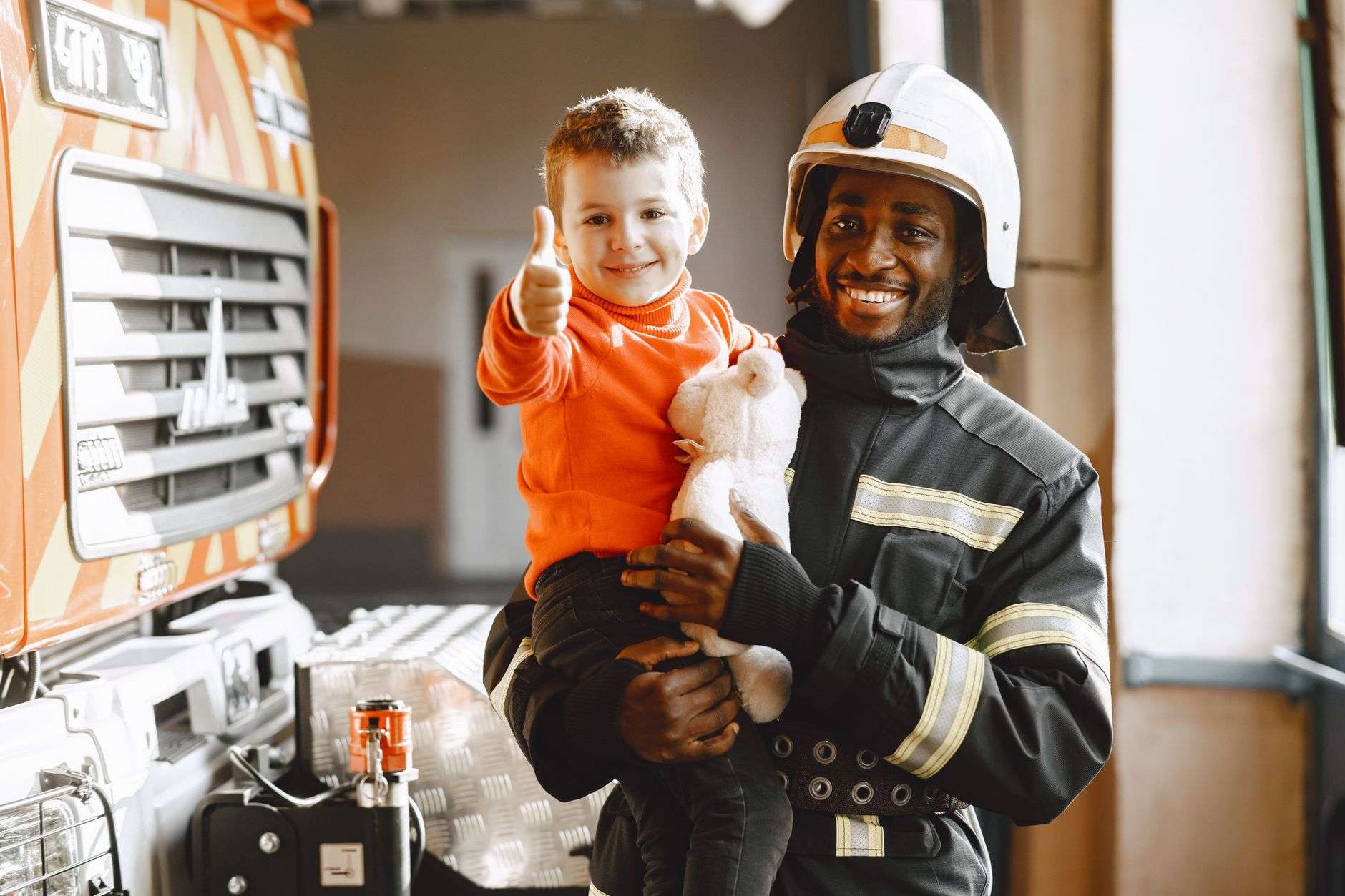
Mobile residents got an up-close look at the vehicles and personnel behind the city’s emergency response system Saturday, as the Mobile Fire Rescue Department, the Mobile Police Department and the city’s Department of Public Safety hosted a Touch-a-Truck event at the Whataburger on Schillinger Road. The community event gave families the chance to walk around and climb into fire engines and police vehicles, ask questions of the firefighters, officers and other personnel on hand, and get a firsthand look at the equipment used across Mobile’s public safety agencies.
The setting made the event easy for families to fold into an ordinary Saturday. The Whataburger on Schillinger Road sits along one of west Mobile’s busiest commercial corridors, an area of shopping centers, restaurants, and neighborhoods stretching toward the city’s western edge, and a business partner willing to host a public safety display in its parking lot removes the barrier of having to seek out a fire station or a police precinct. Parents running errands could pull in, let the children explore the trucks, and be on their way, which is precisely the kind of casual access community outreach events are designed to create.
For the children in attendance, the appeal was immediate: flashing lights, horns, and the rare permission to touch the machinery they usually only see passing in traffic. For the adults, the event offered something quieter but equally valuable — a low-stakes conversation with the people who would respond if their home caught fire or their family needed help.
More Than Trucks and Squad Cars
Beyond the trucks and squad cars on display, two specialized units within the Mobile Police Department also took part: the Family Intervention Team and the Victim Services Unit. Their presence gave attendees a chance to learn about resources available to residents beyond routine law enforcement response, including support services for families and crime victims.
Those two units represent a side of police work most residents never encounter until they need it. Family intervention teams focus on households in crisis, working to connect families with services before situations escalate, while victim services personnel guide residents through the aftermath of crime, from navigating the court process to finding counseling and financial assistance. At a busy parking-lot event, officers assigned to that work had a chance to explain those roles in plain terms, and many parents left with a better understanding of what is available to them beyond the emergency number they already know.
The event also showcased the range of the Mobile Fire Rescue Department, which stands among the largest fire departments in Alabama. The department operates fire stations spread across the city, responds to far more emergency medical calls than structure fires, and fields specialized units for hazards ranging from hazardous materials to water rescues along Mobile Bay and its rivers. A fire engine on display in a parking lot is a small window into that operation, but firefighters stationed beside it can explain what a crew actually carries, how a shift runs, and what happens when the tones sound.
The Case for Community Policing Events
Touch-a-truck style events have become a popular way for fire and police departments around the country to build relationships with the communities they serve, offering a low-pressure setting for children and adults alike to interact with first responders outside of an emergency situation.
The logic behind the format is straightforward. When a resident’s only contact with a uniformed responder comes during a crisis, the relationship starts under stress on both sides. Events like Saturday’s invert that dynamic: children meet firefighters and officers while the stakes are zero, climb into the apparatus, and grow up seeing public safety personnel as neighbors rather than strangers. Departments across the country have found that familiarity built at a touch-a-truck pays dividends years later, in everything from school career days to the willingness of residents to cooperate during investigations.
The format benefits the agencies in practical ways as well. Personnel staffing the event hear directly from residents about neighborhood concerns, from traffic problems to questions about emergency response times, and families learn basic safety information — smoke alarm maintenance, severe weather preparation, when to call versus when not to — that departments otherwise struggle to distribute. Mobile’s combination of fire, police, and the Department of Public Safety at a single event let attendees see how the pieces of the city’s emergency system fit together rather than encountering each agency separately.
Saturday’s event was held at the Whataburger location on Schillinger Road, a busy commercial corridor in west Mobile. The corridor’s steady traffic all day long made the event visible to passersby who had not planned to attend, and a number of families stopped in on the spur of the moment — exactly the incidental reach that a station open house or a downtown event would not achieve.
West Mobile’s Growing Footprint
The choice of west Mobile as the venue reflects where the city’s population has been heading for decades. Neighborhoods along and beyond Schillinger Road have grown steadily as the city expanded westward, bringing new subdivisions, schools, and retail development to what was once rural land. Growth on that scale brings demand for public services along with it, and the fire stations and police resources serving west Mobile have expanded to cover one of the fastest-developing parts of the city. Hosting an outreach event inside that growth corridor puts the agencies directly in front of residents who may be newer to the city and less familiar with how its public safety system works.
The business community’s role deserves note as well. Restaurant and retail locations along Schillinger Road and other Mobile corridors have increasingly opened their parking lots to school supply drives, blood drives, trunk-or-treat events, and first responder outreach, and those partnerships cost the agencies nothing while giving the businesses steady goodwill in the neighborhoods they serve. A national burger chain’s local franchise providing the space for a fire engine and a pair of police cruisers is a small logistical matter with an outsized community payoff.
What Families Took Away
For the families who attended, the takeaways went beyond photographs beside a fire truck. Children who climb through the cab of an engine and hear a firefighter explain the equipment tend to retain the safety messages that come with it, and the parents circulating between vehicles picked up practical information about everything from disaster preparedness — no small matter in a hurricane-prone coastal city — to the victim support services the police department provides.
The event also served as an informal recruiting showcase. Departments across Alabama and the country have worked in recent years to rebuild applicant pipelines, and events where children and teenagers meet working first responders in a friendly setting plant early seeds. A middle schooler who spends half an hour asking a firefighter about the job on a Saturday afternoon is a potential applicant a decade from now, and departments know it.
Mobile’s public safety agencies have made community outreach a recurring feature of their calendars, appearing at school events, neighborhood association meetings, church gatherings, and festivals across the city throughout the year. Saturday’s Touch-a-Truck fit that pattern, and its west Mobile location ensured the effort reached a part of the city that does not always host downtown-centric events.
For the residents who stopped by the Whataburger parking lot, the morning offered an unhurried hour with the people and machines behind the city’s emergency response — and for the departments, another block of familiarity built in the neighborhoods they serve, one fire truck climb at a time.
A Model That Keeps Working
There is a reason the touch-a-truck format has spread so widely among departments of every size. The events require little more than the vehicles the agencies already own, the personnel already on shift, and a partner willing to provide a parking lot, yet they consistently draw the family audience that traditional town halls and safety lectures struggle to reach. Children bring the parents, the parents stay for the conversations, and the department walks away having communicated more in two casual hours than a month of formal channels would accomplish.
The multi-agency approach Mobile took Saturday amplifies that effect. A resident who has a question about a burn ban can ask a firefighter directly; a parent curious about school resource officers can ask an officer; and someone wondering how the Department of Public Safety coordinates it all can hear the answer on the spot. Breaking down the walls between agencies and residents in this way builds the kind of everyday trust that shows its value only when the sirens are running.
For a growing corridor like Schillinger Road, the event also served as a soft introduction to the services residents there will depend on as the area continues to fill in — where the nearest fire station is, how response coverage works in the western part of the city, and which officers patrol their neighborhoods. Those details rarely make it into everyday conversation, and a parking-lot Saturday is a natural place for them to surface.
As Mobile continues to grow westward, events of this kind are likely to remain a fixture of the city’s public safety outreach, and families who missed this one can expect departments to bring similar displays to other corridors and neighborhoods in the months ahead. For one Saturday, though, the city’s fire engines, squad cars, and specialized units traded the urgency of their daily work for something slower and just as important: neighbors meeting the people behind the lights and sirens.