

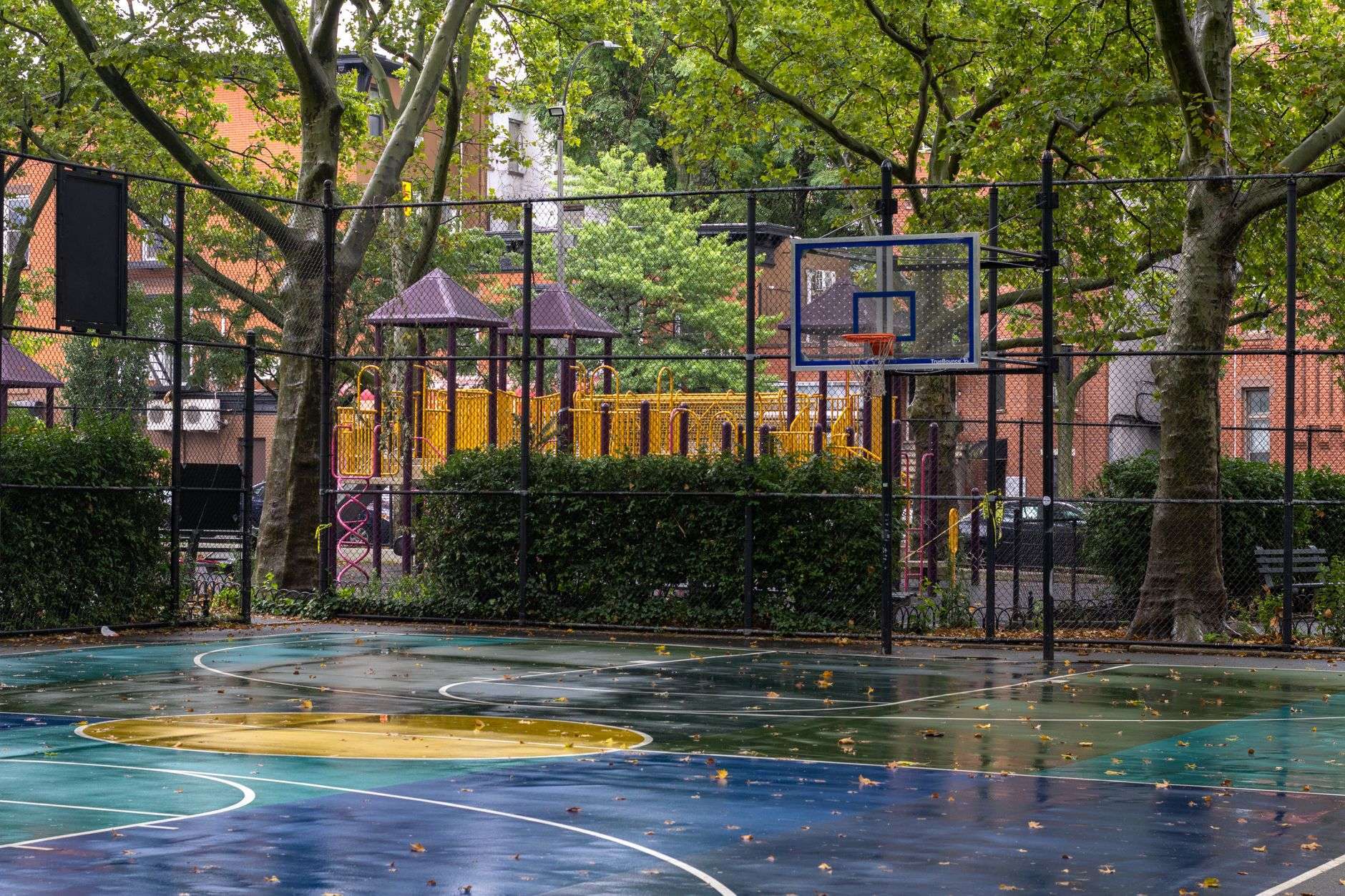
The City of Mobile Department of Public Safety is inviting residents to Figures Park on Thursday, July 30, for a community event pairing youth engagement with a message about preventing gun violence, according to city officials. The event, called Figures Park Community Day, is scheduled to begin at 5:30 p.m. at the park, located at 658 Donald Street C in Mobile, and organizers are expecting neighborhood families, city officials and first responders for an evening built around connection rather than confrontation.
Organizers describe the gathering as centered on “community engagement, youth empowerment, and gun violence prevention” — three threads that city public safety officials have increasingly woven together in their programming. The format is deliberately informal: no podium-and-microphone ceremony, but an open park evening where residents can talk with the people who answer their 911 calls, where children can play, and where the subject of violence can be addressed without a single lecture dominating the night.
A Basketball Game With a Purpose
A centerpiece of the evening will be a friendly basketball competition between Figures Park Youth and members of the Mobile Fire-Rescue Department, an informal matchup designed to build rapport between young people in the neighborhood and the city employees who serve them. The game puts firefighters and young players on the same court as teammates and opponents rather than as officials and constituents, and it gives bystanders something to cheer for together.
Pairing recreational activities with first responders has become an increasingly common approach for cities looking to build trust between public safety agencies and the communities they serve, particularly among younger residents. A child who has laughed with a firefighter over a missed layup is more likely to see that uniform as a helper rather than a threat, and the officer or firefighter who spends an evening in a neighborhood park learns the streets and the families on them in a way no briefing document can teach.
The approach also costs little. A court, a ball, and a few off-duty hours of staff time purchase a kind of goodwill that formal outreach campaigns struggle to match. Departments across the country have borrowed the model in recent years, from police-vs-youth football games to fire department cookouts, and research on community policing consistently points to informal, repeated contact as one of the more reliable ways to improve how residents view the agencies that serve them.
Survivor Voices Take the Stage
Davon Williams, a survivor of gun violence who now advocates against it, will be a featured speaker at the event. His presence gives the evening its emotional center: a person who has lived through the aftermath of a shooting, standing in a park where children play, telling young people what the street-level reality of gun violence actually costs.
Survivor-led advocacy has become a prominent component of community violence intervention efforts in cities across the country, with organizers often citing firsthand testimony as a way to reach young people more effectively than statistics or lectures alone. The credibility of a survivor cannot be manufactured by a training program, and intervention workers say that is precisely the point — a young person weighing the expectations of his peers will listen differently to someone who has been shot than to anyone reciting numbers.
Advocates like Williams also model a future beyond victimhood. Their message is not only about the danger of violence but about what recovery, purpose, and public service look like on the other side of it. For the teenagers in Thursday’s audience, seeing an adult who survived and came back to speak in their own neighborhood expands the range of what they can imagine for themselves.
Community Days as Public Safety Strategy
Community Day events like Thursday’s gathering are typically organized as part of broader public safety strategies that pair traditional law enforcement with community-based prevention programs. Cities including Mobile have increasingly leaned on neighborhood-level events, recreational programming and mentorship opportunities as part of a layered approach to reducing violence, particularly among youth.
The logic behind that layering is straightforward. Enforcement alone addresses violence after it happens; prevention work aims at the conditions that allow it to start. Summer evenings are a focal point for that work because unsupervised hours after school and during break are when young people are most at risk of both committing and becoming victims of violence. A park full of families, coaches, firefighters, and mentors on a Thursday night is, in the language of violence prevention, a protective factor.
Mobile’s Department of Public Safety has embraced that framing, treating its community engagement calendar as part of the department’s core mission rather than a public relations sideline. Events like the Figures Park gathering put the city’s prevention message in front of residents who might never attend a town hall, and they create the personal relationships that make future cooperation — tips, testimony, mentorship referrals — more likely when it matters.
For the neighborhood itself, the event signals attention. Residents who feel forgotten by city government often measure its commitment by whether officials show up where people actually live, and a July evening on Donald Street carries more meaning than a statement issued from Government Plaza. City officials expected at the gathering will get an unfiltered look at the park, the kids, and the conditions on the ground.
Figures Park and Its Neighborhood
Figures Park has served as a recreational hub for the surrounding Mobile neighborhood for years, offering green space, play areas, and courts in a dense residential part of the city where backyard space is limited and the park functions as a shared yard for the blocks around it. Parks like Figures anchor their neighborhoods: they are where children learn to ride bikes, where leagues practice, where families gather on weekends, and where the informal supervision of watchful residents keeps an eye on the community’s young people.
The park’s Donald Street address places it in one of Mobile’s older residential districts, a grid of modest homes where generations of families have stayed close and where the city’s investments in recreation are felt immediately. Community events held at neighborhood parks draw a different crowd than those held downtown — people who can walk over, who know each other by name, and who will still be on those blocks long after the event’s organizers have gone home.
Investing in that kind of space has measurable public safety value. Vacant, underused parks tend to attract trouble; active ones displace it. Cities that have renovated neighborhood parks and programmed them consistently report fewer incidents on and around the grounds, and the presence of engaged adults is the cheapest security system a park can have. Thursday’s event doubles as a reminder to the neighborhood that the park is being watched over — and to anyone who would bring violence there that they will not go unnoticed.
What to Expect Thursday Evening
Organizers have set the gathering for 5:30 p.m., an early start that lets school-age children attend and get home at a reasonable hour. Admission is free, and the event is open to residents of the surrounding neighborhood and beyond. Families are encouraged to bring the kids; the basketball game and the speaking program are designed to be experienced together, not apart.
Beyond the game and the featured speaker, attendees can expect the usual texture of a city community day: representatives from city departments on hand to answer questions, first responders meeting residents face to face, and information about programs available to young people in the area. The evening’s schedule is built to keep children engaged while the adults connect with the officials and advocates present.
City officials have framed events of this kind as investments rather than appearances, and the measure of that investment is what happens afterward. Community days succeed when the relationships formed on the basketball court carry into the fall — when a teenager who met a mentor at the park calls on him months later, or when a parent who met a city representative follows up about a program. Organizers of Thursday’s gathering are betting that an evening of trust-building on Donald Street will pay dividends that no enforcement action can.
A Message Aimed at the Young
Underneath the festivities, the event carries a deliberate message for Mobile’s young people: the city is paying attention to them, their lives matter, and the adults in uniform are on their side. Gun violence prevention programming works hardest at exactly this audience — the adolescents and teenagers who are old enough to be recruited into trouble and young enough to be redirected away from it.
Mobile, like cities across the country, has wrestled in recent years with gun violence and its toll on young residents, and officials have repeatedly emphasized that no single program will reverse it. The strategy instead is accumulation: mentoring, recreation, intervention, enforcement, and community events like the one planned at Figures Park, each reinforcing the others. Thursday’s gathering is one evening on the calendar, but it is part of a much longer game.
Residents who want to attend can simply show up at Figures Park, 658 Donald Street C, by the 5:30 p.m. start. Organizers expect the basketball game, the survivor testimony, and the crowd itself to do what such evenings do best — turn a city park, for a few hours, into the center of a neighborhood’s shared life, and remind everyone present that preventing violence is work the whole community shares.
The wider Mobile community has a stake in evenings like this one as well. Every young person who finds belonging on a basketball court or in a mentor’s attention is a young person with one fewer reason to drift toward the street conflicts that end in ER visits and courtrooms. Prevention advocates often describe the work as filling a calendar: an evening activity here, a summer job there, a trusted adult everywhere. Thursday’s Community Day adds its block of time to that calendar at no cost to the families it hopes to reach.
City officials have not said whether the Figures Park gathering will become a recurring series, but events of this kind tend to grow roots when they draw a crowd. Neighborhood associations and public safety crews often repeat what works, and a strong turnout on Donald Street would make the case for bringing the format back — with the scoreboard reset and the conversation continuing where it left off.
For now, the invitation stands for Thursday, July 30, at 5:30 p.m. Families in the area are encouraged to come early, stay for the game, and hear a survivor make the case, in person, that the cycle of gun violence can be broken. The park will supply the setting; the city and the neighborhood will supply everything else.