Mobile Home Day Care Operator Seeks Council OK to Nearly Double Enrollment Despite Councilman’s Objection
A longtime Mobile home day care operator is seeking City Council approval to nearly double her enrollment, despite objections from her district councilman.
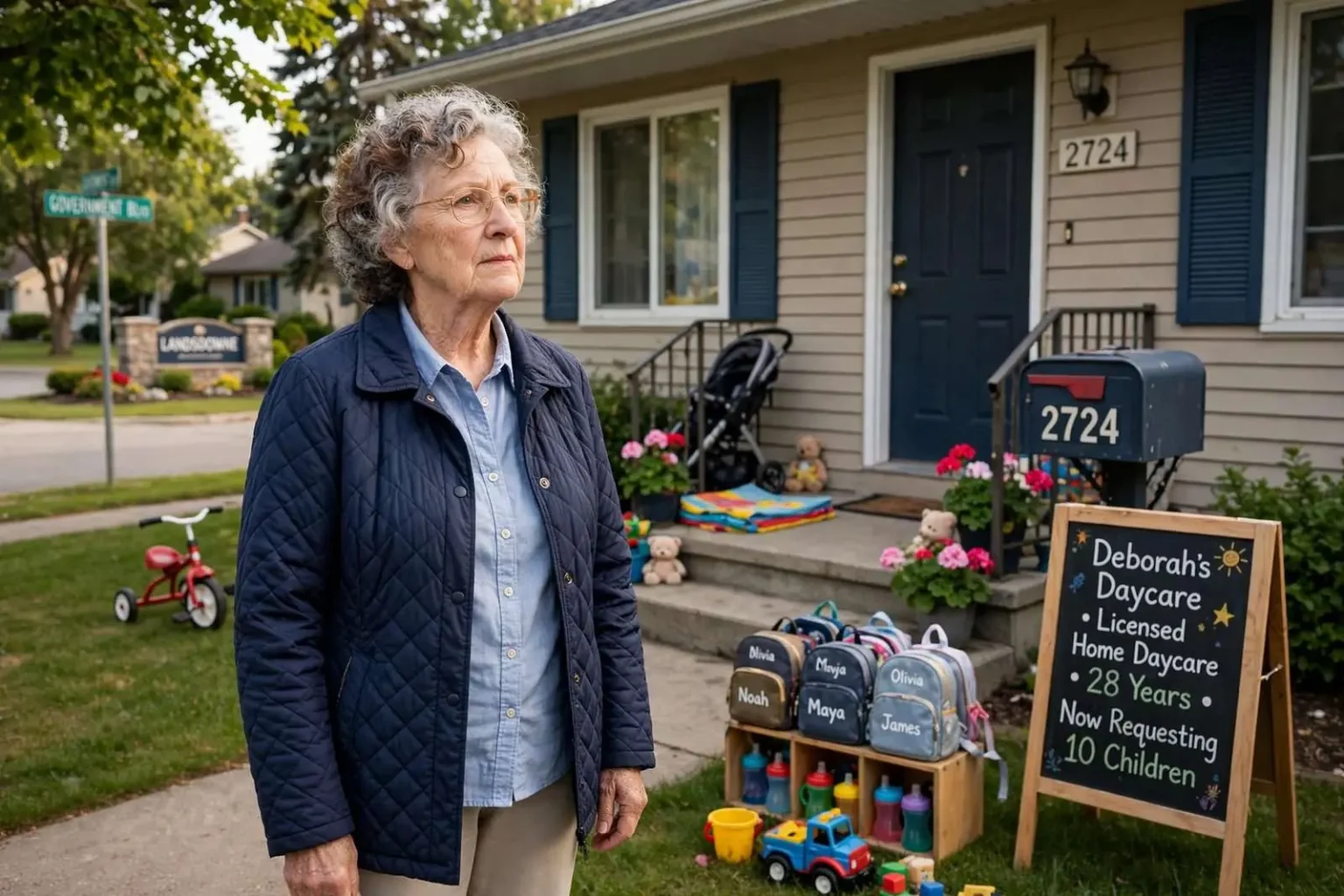
A Mobile woman who has run a day care out of her home for nearly 28 years has the backing of her neighbors, her homeowners association and her clients as she seeks permission to nearly double the number of children she cares for. But she does not have the support of one key figure: her own city council member.
Deborah May has applied to increase her home-based day care’s capacity from five children to 10 at her house on Government Boulevard in the Landsdowne subdivision. The Mobile Planning Commission has already signed off on her application, but the final decision rests with the City Council.
Under the city’s current rules, home-based day cares are capped at five children. Mobile updated its zoning ordinance in 2022 to allow operators to request an increase beyond that cap, provided they meet a series of additional requirements. May’s application is among the first real tests of how the city handles those requests — and of whether the new pathway, written to give operators room to grow, will actually function when it meets neighborhood politics.
District 4 Councilman Ben Reynolds said he is wary of expanding what he considers essentially a commercial operation inside a residential neighborhood. “We want it to stop short of being a commercial operation. Basically, you got to convert your house in a residential neighborhood to business,” Reynolds said.
Several residents spoke in favor of May’s request at a public hearing this week, and no one spoke in opposition. If the council approves the request, May said she would care for the additional children with help from her daughter.
The Councilman’s Objection: Precedent
Reynolds said he believes May runs an excellent day care and does not doubt her operation specifically. His concern, he said, is precedent — both because the conditional use permit would carry over to future owners of the property, and because approving it could make it harder for the city to say no to similar requests elsewhere.
“Allowing this commercial operation to exist in a neighborhood will, in fact, create changing conditions for the neighborhood, to make it easier for the next person to come along to say, ‘Well, you did it for them, so why can’t you do it for us?’” Reynolds said.
He added that he does not believe the expanded model is appropriate for residential areas with small lots. The argument is a familiar one in zoning disputes: conditional use permits are designed to be granted case by case, but each approval builds a record that applicants in the next case will cite, and neighbors who object to the first one are effectively objecting to all that follow.
The run-with-the-land feature of conditional use permits is central to his worry. Unlike an operating license tied to a specific person, a conditional use permit attached to a property passes to whoever owns it next, meaning the council is not only judging May’s operation but setting the rules for an unknown future operator of the same house.
Home day care occupies a peculiar place in American zoning. It is simultaneously one of the most requested home occupations and one of the most tightly capped, because it combines two things ordinances struggle to balance: a service families desperately need within walking distance, and traffic, noise and parking that neighbors fear will compound if every third house becomes one. Cities nationwide have wrestled with the same question Mobile faced in its 2022 rewrite, and most have landed somewhere between an outright cap and a light-touch permit process.
What makes May’s case unusual is the alignment of support behind it. Home occupation requests typically split neighborhoods; this one arrived with the homeowners association, immediate neighbors and current clients on record in favor, a planning commission recommendation, and opposition from a single elected official. That lineup — everyone affected supporting, the official representing them objecting — is why the hearing drew attention well beyond District 4.
May’s Case: Demand and Scale
May pushed back on the idea that her business would ever grow into a full commercial center, saying the overhead costs and additional staff a licensed center would require make that impossible for her. “If I get a center, I could not afford to pay,” she told council members.
She also stressed how much local demand there is for more child care slots in her neighborhood. “I’ve had repeated phone calls with children that needed child care,” May said. “I have a mother right now that is enrolled, that is actually delivering her (new) child today. And she has no place to put it.”
The economics she described are the ones that shape home-based child care across Alabama. Licensed day care centers carry commercial lease costs, staffing ratios and insurance that push tuition up and margins down; home operators survive by keeping overhead near zero. For a 28-year operator, the choice is not between a home day care and a big center — it is between five children and ten, in the same house, with help from family.
May’s attorney, Wanda Cochran, argued the day care’s presence has been unobtrusive for nearly three decades. “Until she put out the notices that this hearing was today, none of her neighbors even knew there was a day care operating here,” Cochran told the council.
Her daughter’s role in the expansion also answers the staffing question that arises with any ten-child operation. Alabama’s licensing ratios for home day cares are less demanding than center ratios, but doubling enrollment still means more children to supervise, feed and teach at once — a burden family help absorbs in a way hired staff at commercial rates could not, at fees that stay affordable for the neighborhood’s families.
Cochran also questioned some of the additional zoning requirements the city imposes on expanded home day cares, including a rule requiring May to maintain six parking spaces on her property. “I found it quite interesting the zoning ordinance requires her to have six parking spaces,” Cochran said during the hearing. “Infants don’t drive.”
The parking requirement illustrates the friction between ordinances written for commercial uses and the realities of home-based ones. Six off-street spaces is a reasonable ask for a storefront business with employees and customer traffic; it is a stranger demand for a residence where parents drop off children at the door for a few minutes, twice a day.
Michelle Raybon, executive director of the Alabama Partnership for Children, told the council that operators like May are exactly what the state needs more of. “There’s a shortage of child care across Alabama and, specifically, for infants and toddlers,” Raybon said. “And this issue is just not about child care. It’s also a workforce issue. If parents, working parents, particularly, do not have a place for their children to go, there’s going to be absenteeism at businesses.”
Raybon’s testimony placed the dispute in the statewide context that has made child care a policy issue in Alabama over the past several years. Economists and business groups have documented the arithmetic: when a parent loses child care, an employer loses a worker, and the shortage of infant and toddler slots is the tightest part of the market because ratios require more staff per child.
Infant care is where May’s proposal would matter most. A mother due to deliver a child with nowhere to send a newborn is the concrete version of a shortage statistics usually describe abstractly, and in neighborhoods like Landsdowne — established, residential, far from commercial child care corridors — home operators are often the only providers within a short drive.
What the Council Must Weigh
The decision before the City Council is narrower than the rhetoric around it. The Planning Commission, the body that reviews zoning matters first, has already endorsed the request, which means the professional staff who evaluate traffic, parking and neighborhood impacts found the expansion compatible with the property. The council’s job is to decide whether the political concerns Reynolds raised outweigh that recommendation.
The structure of Mobile’s 2022 ordinance was supposed to simplify exactly this kind of case. By writing conditions for expanded home day cares — additional requirements on top of the five-child cap — the city created a predictable pathway for operators to follow rather than a case-by-case exception. May’s application, filed with the commission’s blessing and her neighborhood’s support, is the pathway working as designed.
The counterargument Reynolds offers is that predictability cuts both ways: a rule that lets one operator expand lets every operator expand, and the character question — how much commercial activity belongs on a residential street — does not disappear because the process was followed. That tension between uniform rules and neighborhood character is the oldest problem in zoning, and the council will resolve it here the way councils always do, one property at a time.
The Mobile City Council is expected to take up May’s request in the coming week. Whatever the outcome, the vote will be watched by home day care operators across the city, who now have twenty-eight years of precedent from one of their own — and a clear picture of what the city’s new rules are worth in practice.