Pensacola Man Suspected in Mobile Photography Studio Double Homicide Takes Own Life
A Pensacola man suspected of killing a mother and son at a Mobile photography studio took his own life as deputies approached his home. Police say the case is
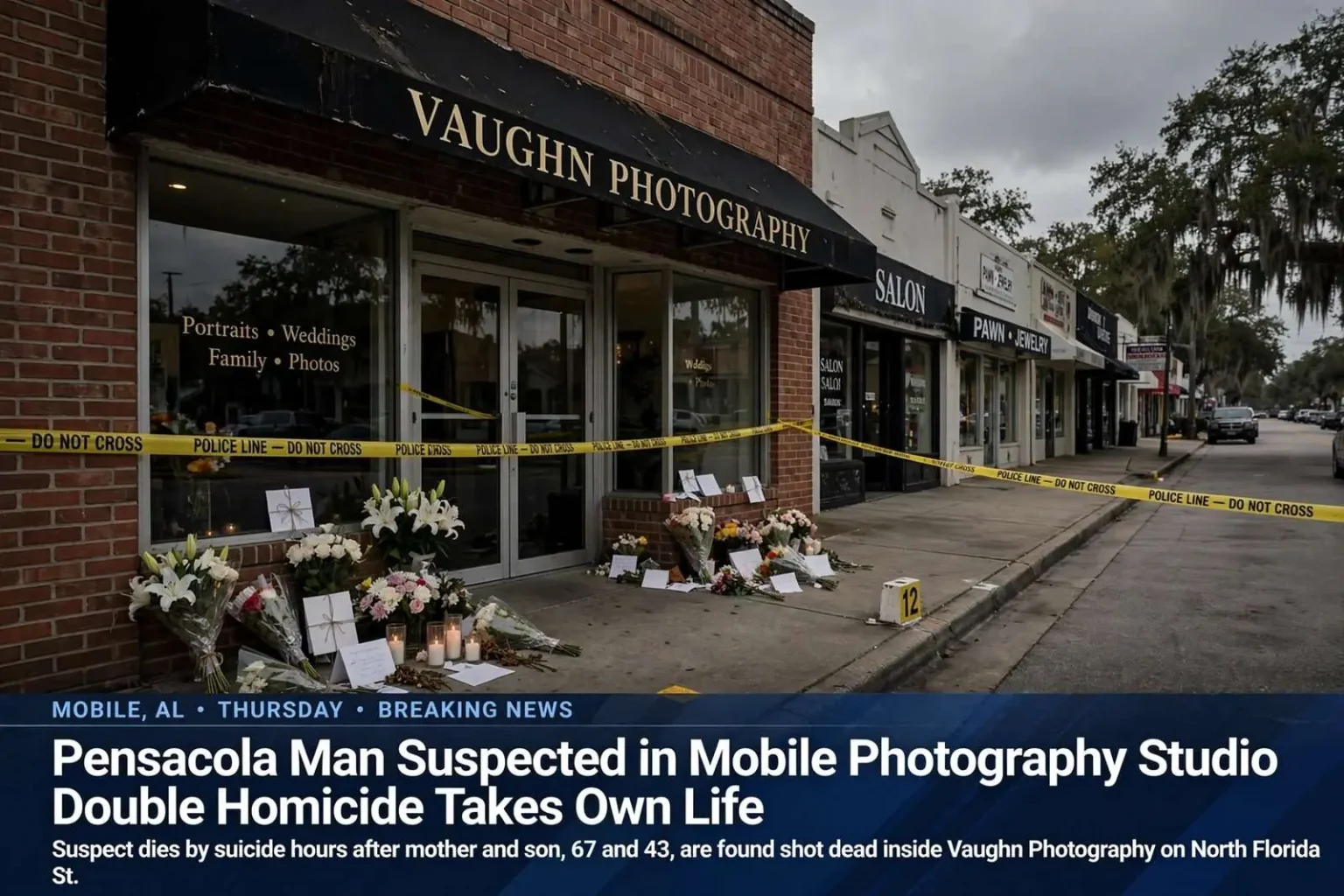
A Pensacola man suspected of killing a mother and her adult son inside a Mobile photography studio took his own life hours later as law enforcement moved in to question him, closing out a case that stunned the small business community along North Florida Street. The swiftness of the sequence — from the discovery of two bodies in Mobile to a cross-state pursuit ending in Pensacola within the same day — left investigators with little time to process the scene before the case shifted from a manhunt to a death inquiry of its own.
Mobile police say Rosa Vaughn McGahagin, 67, of Spanish Fort, and her son, Daniel Herbert Vaughn, 43, of Mobile, were found dead of gunshot wounds inside Vaughn Photography around 3:45 p.m. on a Thursday afternoon. The business, which the family had operated for years, sat along North Florida Street in Mobile, a corridor lined with small shops, service businesses and neighborhood storefronts just minutes from downtown. Responding officers secured the scene as detectives began canvassing the area for witnesses and reviewing whatever recordings might have captured activity around the studio.
Investigators soon identified Terry Walton, 56, as the suspect in the killings. Police believe Walton shot and killed both victims before fleeing the scene and returning to his home in Pensacola, crossing the Florida state line roughly an hour east of Mobile. The identification set in motion a coordination effort between two states, with Mobile detectives relaying suspect information to counterparts in the Panhandle while patrol units in both jurisdictions were alerted to be on the lookout.
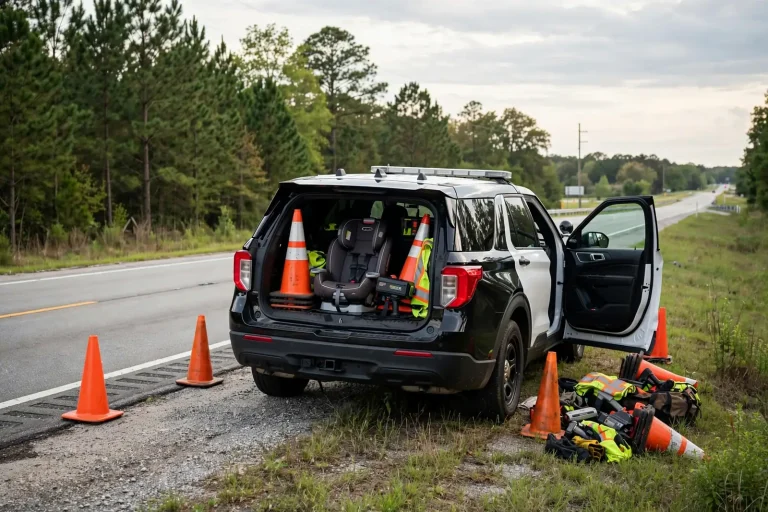
As Escambia County, Florida, sheriff’s deputies arrived at Walton’s residence and attempted to make contact with him, he turned a gun on himself inside the home, according to authorities. Deputies had not forced entry into the residence, and authorities said the deputies did not fire their weapons during the encounter. The confrontation ended within hours of the Mobile shootings, leaving investigators on both sides of the state line to reconstruct a timeline that had compressed an entire homicide investigation, a multi-agency pursuit and a fatal confrontation into a single afternoon and evening.
Two Victims With Deep Local Roots
McGahagin lived in Spanish Fort, one of the fast-growing cities in Baldwin County across Mobile Bay, while her son resided in Mobile. The two were found together inside the studio, and the family connection meant the deaths struck a single family with a double loss while extending grief across two counties and two states. Friends and relatives of the victims faced the added strain of learning that the person suspected in the killings was dead as well, foreclosing any courtroom accounting of what happened and why.
The Vaughn family had operated the photography business for years, a span long enough that the studio had become embedded in the life of the surrounding blocks. Family-run studios along corridors like North Florida Street typically build their clientele through weddings, portraits and community events, and their owners become familiar faces to neighbors and repeat customers. That familiarity is part of what made the violence so jarring to those who knew the business: the studio was regarded as a quiet, long-standing part of the neighborhood rather than a place associated with conflict or danger.
A Relationship Investigators Knew Existed
Mobile Police Department spokesperson Ashley Rains said investigators determined that Walton and Vaughn knew each other, though officials did not immediately detail the nature of their relationship or offer a specific motive for the shooting. That refusal to speculate is standard practice in the early hours of a homicide investigation, when detectives are still sorting verified information from assumption. In this case, the unanswered questions were destined to stay unanswered in a public way, because the criminal process that normally surfaces motive and circumstance — arrest, charging documents, trial testimony — would never take place.
With Walton’s death, police said the case was considered closed, since the sole suspect was no longer alive to face charges. Prosecutors had no defendant to charge, and no grand jury review was expected. Investigators closed the criminal file with the identification of the suspect, the recovery of evidence from the scene and the account of the fatal encounter in Pensacola, and Mobile police did not release additional details about a possible motive. With the investigation considered closed following Walton’s death, few additional facts about the case were expected to come to light through the criminal justice system.
How Cross-State Cases Move So Quickly
The rapid sequence of events required close coordination between Mobile police and law enforcement agencies in neighboring Escambia County, Florida. Such interstate cooperation is not unusual in cases where a suspect flees across the state line — the Mobile area sits directly on the Alabama-Florida border, and the drive between downtown Mobile and Pensacola takes less than an hour along the Interstate 10 corridor. But the compressed timeline in this case meant investigators had to move quickly to prevent additional harm, relaying suspect descriptions, vehicle information and address details to deputies in Florida while Mobile detectives were still working the scene on North Florida Street.
Agencies along the Gulf Coast maintain established channels for exactly this kind of situation. When a suspect crosses from Alabama into Florida, local police typically notify the sheriff’s office of the destination county, and deputies conduct a welfare check or attempt a probationary contact before any attempt at an arrest warrant catches up with the fugitive. That attempt to make contact is what brought Escambia County deputies to Walton’s door. The speed of the notification mattered: in cases where a suspect has just committed a violent act, authorities treat the first hours as the window in which the person is most likely to be located — and, if armed and in crisis, most dangerous to themselves and others.
The outcome — a suspect taking his own life rather than surrendering — is a scenario law enforcement officials across the region describe as among the most difficult endings to manage. Deputies arrive with the goal of a peaceful resolution and an arrest that allows a case to move through the courts. When a suspect instead dies by suicide, the case closes without answers for the victims’ families, and the responding deputies themselves become part of a separate administrative review examining how the encounter unfolded.
The North Florida Street Business Corridor
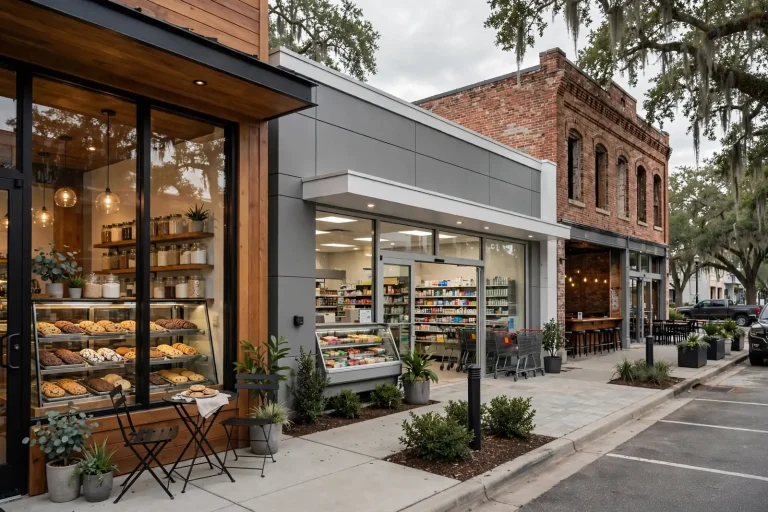
The shooting rattled a stretch of Mobile that has long depended on its small businesses. North Florida Street and the surrounding corridors are home to family-owned shops, salons, studios and service providers that serve nearby residential neighborhoods. Businesses of this kind operate on repeat relationships rather than foot traffic alone, and the loss of a longtime proprietor — and, in this case, two members of the same family — reverberates through the customer base in ways that a corporate closure does not.
The deaths shocked neighbors and customers of the family-run photography studio, a fixture in the North Florida Street corridor. Friends and clients described the business as a quiet, long-standing part of the neighborhood, making the violence that unfolded there especially jarring for the surrounding community. Residents reported learning of the deaths through the afternoon as police activity drew attention to the block, and the questions that followed — who, and why — went largely unanswered as officials declined to elaborate on the relationship between the suspect and the victim.
For small business owners along the corridor, the case underscored concerns that many already carried about isolated commercial blocks, where parking lots and side entrances can leave staff working alone with customers they may not know well. Community groups and business associations in Mobile have in recent years encouraged merchants to look out for one another and to report suspicious activity, and cases like this one tend to renew those conversations, even when authorities describe the underlying circumstances as personal rather than random.
When the Justice System Never Gets Its Day
The closure of the case through the suspect’s death left the community without the public accounting that a prosecution provides. Court proceedings, for all their expense and difficulty, produce a record: charging documents that describe what investigators believe happened, testimony that establishes a timeline, and a verdict that formally assigns responsibility. When a suspected killer dies before arrest, none of that record exists, and families are left to assemble their understanding from the limited statements authorities release.
Victim advocates note that this absence of process creates a distinct form of grief, sometimes described as a loss without resolution. Loved ones of victims in cases that end this way do not attend sentencing hearings, do not hear a motive read into the record, and do not see accountability delivered by a court. Support services in the Mobile area — including grief counseling coordinated through law enforcement victim services and faith communities — often become the primary source of support for families navigating that gap.
Mobile police did not release additional details about a possible motive, and with the investigation considered closed following Walton’s death, few additional facts about the case were expected to come to light through the criminal justice system. For the neighborhoods around North Florida Street and for the family spread between Spanish Fort and Mobile, the case closed not with a verdict but with a ledger of losses: two lives taken in a family business, a third lost across the state line, and a set of questions that the formal process will never answer.