Mobile Officials, Pastors to Hold Closed-Door Meeting on Police-Community Relations
Mobile police, federal officials and local pastors plan a private meeting on preventing unrest like that seen in Ferguson.
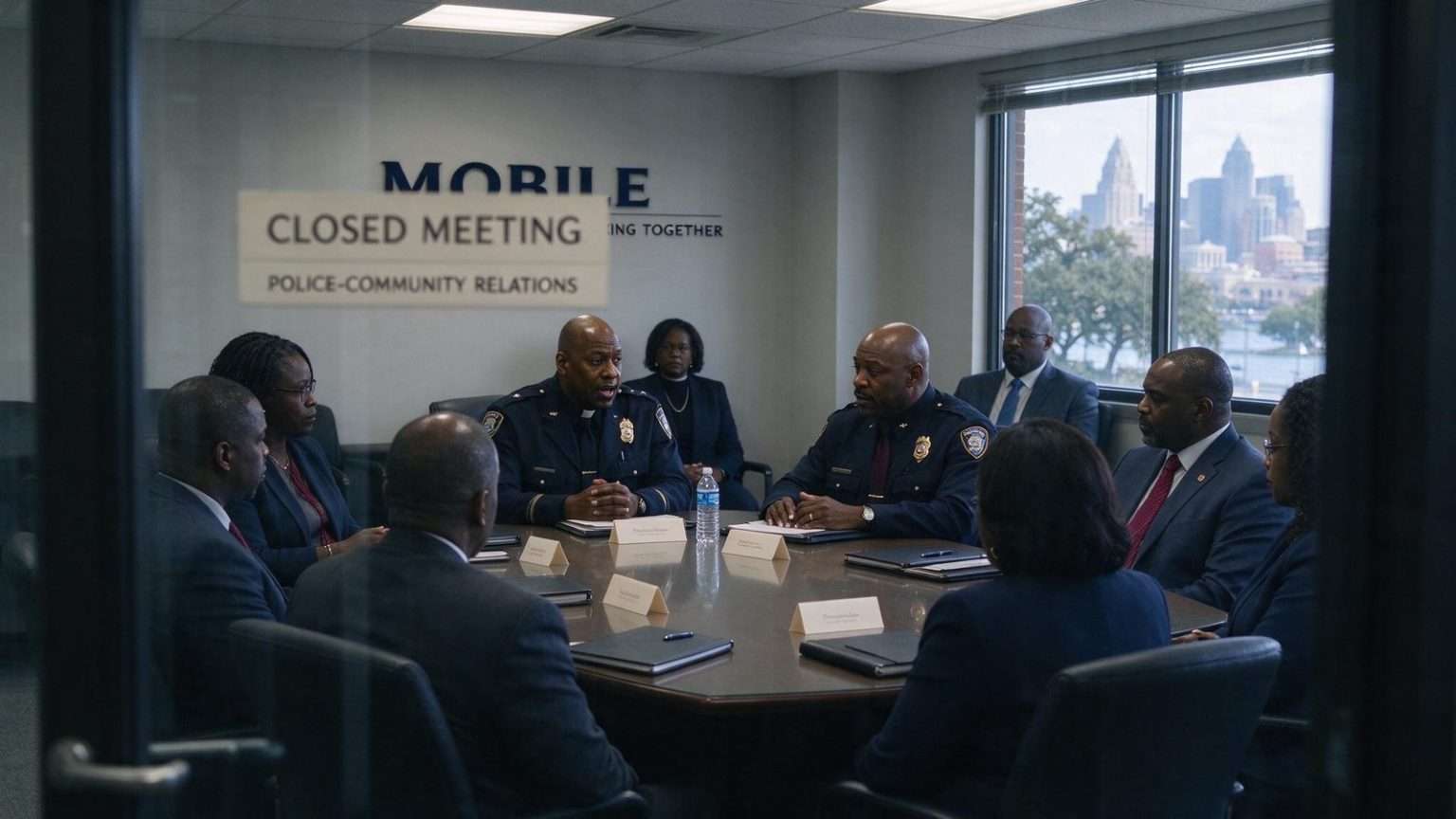
Mobile Police Chief James Barber, U.S. Attorney Kenyen Brown and a group of local pastors are set to meet privately this week with federal officials to discuss steps aimed at avoiding the kind of civil unrest that erupted in Ferguson, Missouri, earlier this year.
The Thursday evening session will bring together community leadership and Department of Justice representatives for a roundtable discussion on policing practices, according to Barber. The goal, he said, is to evaluate whether Mobile’s current approach to community policing is sufficient to prevent the kind of tension that followed the August shooting of 18-year-old Michael Brown in the St. Louis suburb, an incident that triggered weeks of protests and unrest after Brown, who was black, was killed by Darren Wilson, a white police officer.
“It’s a roundtable discussion with community leadership and the Department of Justice to see if what we are doing can prevent what has occurred in Ferguson,” Barber said.
Authorities nationwide, including in Mobile, have been closely watching for the fallout from an upcoming grand jury decision in the Ferguson case, with many law enforcement agencies bracing for the possibility of renewed unrest depending on the outcome. Barber confirmed that Thursday’s meeting is closed to the public and was designed from the outset as an internal discussion among law enforcement, federal officials and faith leaders rather than a public forum.
News of the meeting became public during a Mobile City Council session, which included discussion of concerns raised by resident Sharon Perry regarding how black youths in the city are treated by police. Perry, who was expected to address the council about a ticket issued to a family member, did not attend the meeting where the topic was raised.
Barber said he wasn’t entirely clear on the specifics of Perry’s complaint but acknowledged there appeared to be friction between his department and the family in question. Councilman C.J. Small said Perry’s concerns weren’t new and noted that he has encouraged residents with similar complaints to bring them before the full council rather than address them informally.
Barber indicated he intends to discuss publicly some of the issues that arise from Thursday’s closed-door session once it concludes, saying residents deserve some understanding of the challenges facing the department.
What happened next
On Nov. 24, 2014, the St. Louis County prosecutor announced that the grand jury in the Ferguson case had decided not to indict Wilson.