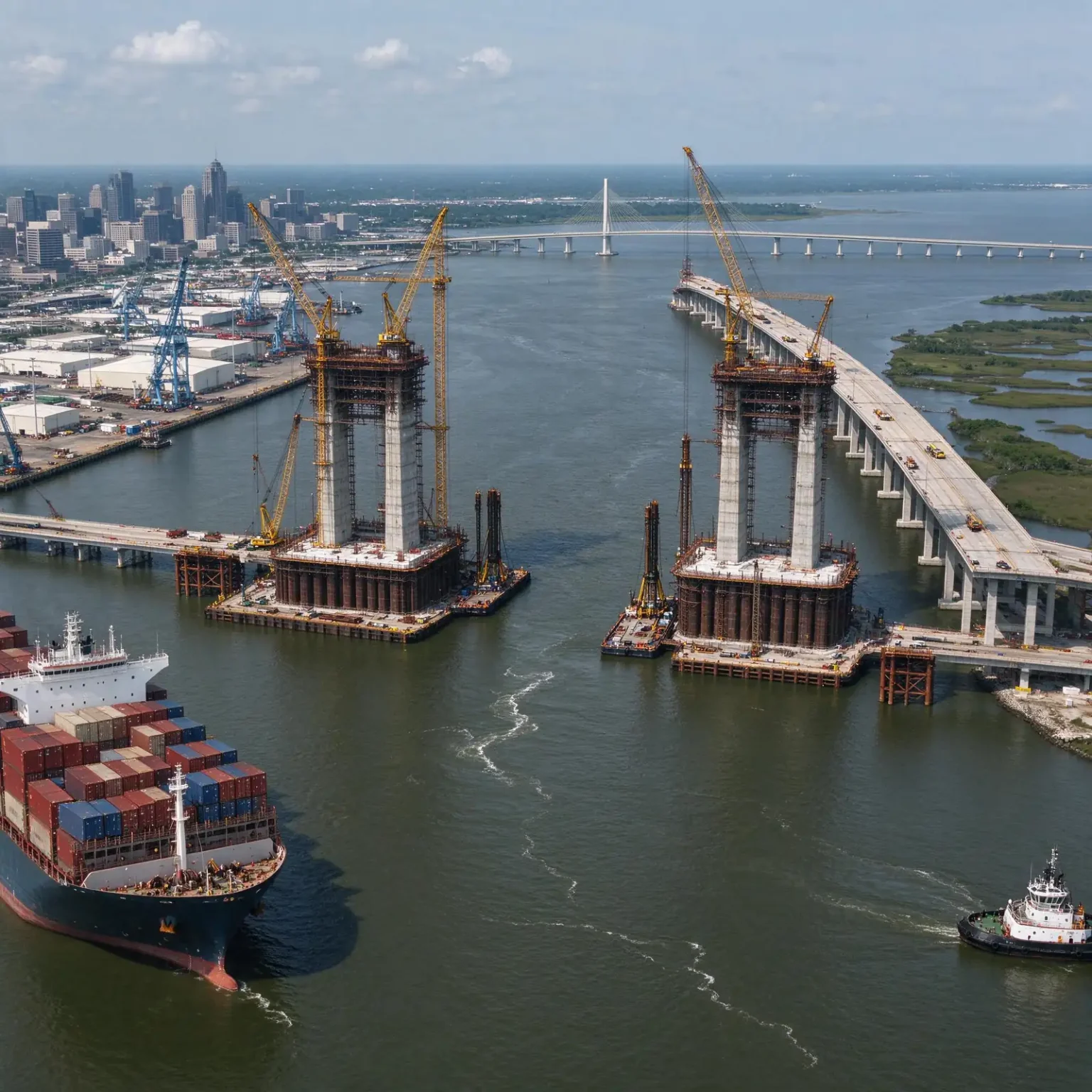
MOBILE, Ala. — Crews have started building the foundations that will hold up the towers of the new Mobile River Bridge, and work on the first of two approach spans is now underway, as the Alabama Department of Transportation lays out a timeline of construction milestones running through January 2027.
The Mobile River Bridge and Bayway project, a six-lane cable-stayed crossing on Interstate 10, is still years from completion. ALDOT currently expects the full project to be finished in October 2031. But the early stages of construction are now visible on both banks of the river, and the department is outlining what drivers, neighbors and businesses near the work zones can expect over the next few months.
Where Work Stands Right Now
Three milestones anchor the near-term schedule ALDOT has released. Two have already begun, and one is set for the new year.
Tower Foundations on Both Riverbanks
In October 2026, crews started foundation work for the two main towers of the Mobile River Bridge, one on the east side of the river and one on the west. These towers will eventually rise high above the water and support the cables that hold up the main span of the bridge.
Foundation work is one of the most important steps in any major bridge job. For a cable-stayed design, the towers carry enormous loads, so the structures beneath them must be built to transfer that weight safely into the ground below the river and its banks.
East Approach Toward the Bayway
This month, construction started on the east approach bridge. When finished, that segment will tie the new cable-stayed crossing into the current Bayway east of the river, linking the bridge to the long elevated stretch of I-10 that crosses Mobile Bay toward Baldwin County.
West Approach Toward Downtown
Next up is the west approach bridge, which ALDOT plans to begin in January 2027. That piece will join the new main bridge to the interstate as it runs today west of the river, on the Mobile side of the crossing.
What Comes After the Early Work
The foundation and approach work represents the beginning of a much longer construction sequence. According to ALDOT, the later phases will include:
- Raising the east and west towers of the Mobile River Bridge
- Building the superstructure of the main span, the deck that traffic will travel across
- Installing the stay cables that connect the towers to the deck
- Finishing the main spans of the bridge
ALDOT said it will release more detailed schedules for those later milestones as the project moves along. For now, the department has only provided specific dates for the work through January 2027.
What Drivers Should Expect
For the tens of thousands of motorists who use I-10 through Mobile and across the bay, the early construction stages mostly affect areas near the river and at the points where new structures will meet existing roadway.
ALDOT has said it will provide regular updates as the project advances, covering:
- Upcoming construction activities
- Lane closures and their effect on traffic
- The specific locations where crews are working
- Major project milestones
The department has also cautioned that schedules can shift. Weather, conditions at the construction sites and other factors may push dates forward or back, which is common for a project of this size, particularly one built over and beside open water on the Gulf Coast.
Tips for Traveling Near the Work Zones
Transportation agencies, including ALDOT and the Federal Highway Administration, regularly remind drivers that work zones call for extra caution. Some general practices for getting through construction areas safely include:
- Slowing down and obeying posted work zone speed limits
- Leaving extra space between vehicles, since traffic can stop suddenly
- Staying alert for workers, equipment and changing lane patterns
- Putting phones away and avoiding distractions behind the wheel
- Checking traffic conditions before leaving and planning extra travel time
Alabama law also generally provides for increased penalties for certain traffic violations committed in active work zones, so following posted signs protects both drivers and crews.
Building Beside a Working River
The construction site sits along one of the busiest waterways in the state. The Mobile River forms north of the city where the Alabama and Tombigbee river systems come together, then flows south past downtown Mobile into the head of Mobile Bay. Its lower reach serves as the main channel for the Port of Mobile, Alabama’s only deepwater seaport, where cargo ships, barges and tugboats move throughout the day.
Building tower foundations on both banks and approach spans over land and water near such an active channel requires careful coordination. Marine traffic must keep moving while barges, cranes and other construction equipment work along the shoreline, which is one reason large bridge projects of this kind are built in carefully sequenced stages.
The surrounding area also includes industrial sites, port facilities and neighborhoods on the western side of the river near downtown, along with marshland and the causeway corridor on the eastern side. Residents and businesses close to the work can expect construction equipment, truck traffic tied to the project and periodic activity changes as crews move from one phase to the next.
Understanding a Cable-Stayed Bridge
The new crossing uses a cable-stayed design, one of the most common choices for long modern bridges over shipping channels. In this type of structure, tall towers rise from the foundations, and straight cables run from those towers down to the bridge deck at intervals. The cables carry much of the deck’s weight back to the towers, which then transfer it into the foundations.
That setup differs from a suspension bridge, where the deck hangs from vertical cables attached to large main cables strung between towers. Cable-stayed bridges allow long spans without supports in the middle of a channel, which matters on a river that carries large commercial vessels serving the Port of Mobile.
Approach bridges, like the east and west segments now starting, are the lower spans that gradually carry the roadway up from existing ground-level or elevated highways to the height of the main span.
Why the Project Matters to the Region
I-10 is the main east-west interstate along the northern Gulf Coast, and in Mobile it has long faced a bottleneck at the river. Today, interstate traffic crosses beneath the Mobile River through the George C. Wallace Tunnel, a four-lane tube that opened in the 1970s. Traffic often backs up at the tunnel entrances, especially during peak travel periods, holiday weekends and the summer beach season.
Trucks carrying hazardous materials are not allowed to use the Wallace Tunnel, which forces them onto longer detour routes around downtown. A high-level bridge over the river is intended to give through traffic, including commercial trucks, a direct path across the water.
On the other side of the river, the Bayway carries I-10 over Mobile Bay between Mobile and the Eastern Shore communities of Spanish Fort and Daphne. The route is a daily commuting path for many Baldwin County residents who work in Mobile and is also a primary entry point for visitors heading to Gulf Shores, Orange Beach and other Baldwin County destinations.
Because the Mobile area is also a growing hub for shipping, manufacturing and logistics, reliable movement across the river and bay is important for freight as well as for commuters and tourists.
A Long Timeline Ahead
With completion targeted for October 2031, the project is expected to be under construction for roughly five more years. During that span, residents can expect construction activity on both sides of the river, periodic changes to traffic patterns, and a gradual rise of the bridge towers above the downtown skyline as the work progresses.
The milestones ALDOT has laid out so far show the project moving from planning and early site work into heavy construction. Each phase builds on the last: foundations must be in place before towers can rise, towers must stand before cables can be installed, and the deck and cables must come together before the main spans can be completed.
How to Stay Informed
ALDOT said it will keep sharing information on construction progress, lane closures and traffic impacts as the project continues. Drivers who travel I-10 regularly through Mobile or across the bay can watch for those updates and for message boards along the interstate that announce closures.
Motorists planning holiday travel this Thanksgiving weekend and through the end of the year may want to allow extra time when passing through the Mobile area, particularly near the river, as construction activity continues on the approach bridge and tower foundations.
Baldwin County commuters who cross the Bayway every day, along with Mobile residents who use the Wallace Tunnel, will likely notice the biggest changes as work shifts to the main span in later years. Keeping track of ALDOT announcements ahead of time can help them choose alternate routes, such as the Causeway, during closures.
More detailed dates for tower construction, cable installation and the main span will be announced later, according to the department, giving the public a clearer picture of the remaining work as the project moves toward its 2031 finish.