Mobile’s First Archbishop, Oscar H. Lipscomb, Dies at 88
Archbishop Emeritus Oscar H. Lipscomb, the first Archbishop of Mobile and a lifelong Mobile native, has died at 88 after 28 years leading the archdiocese.
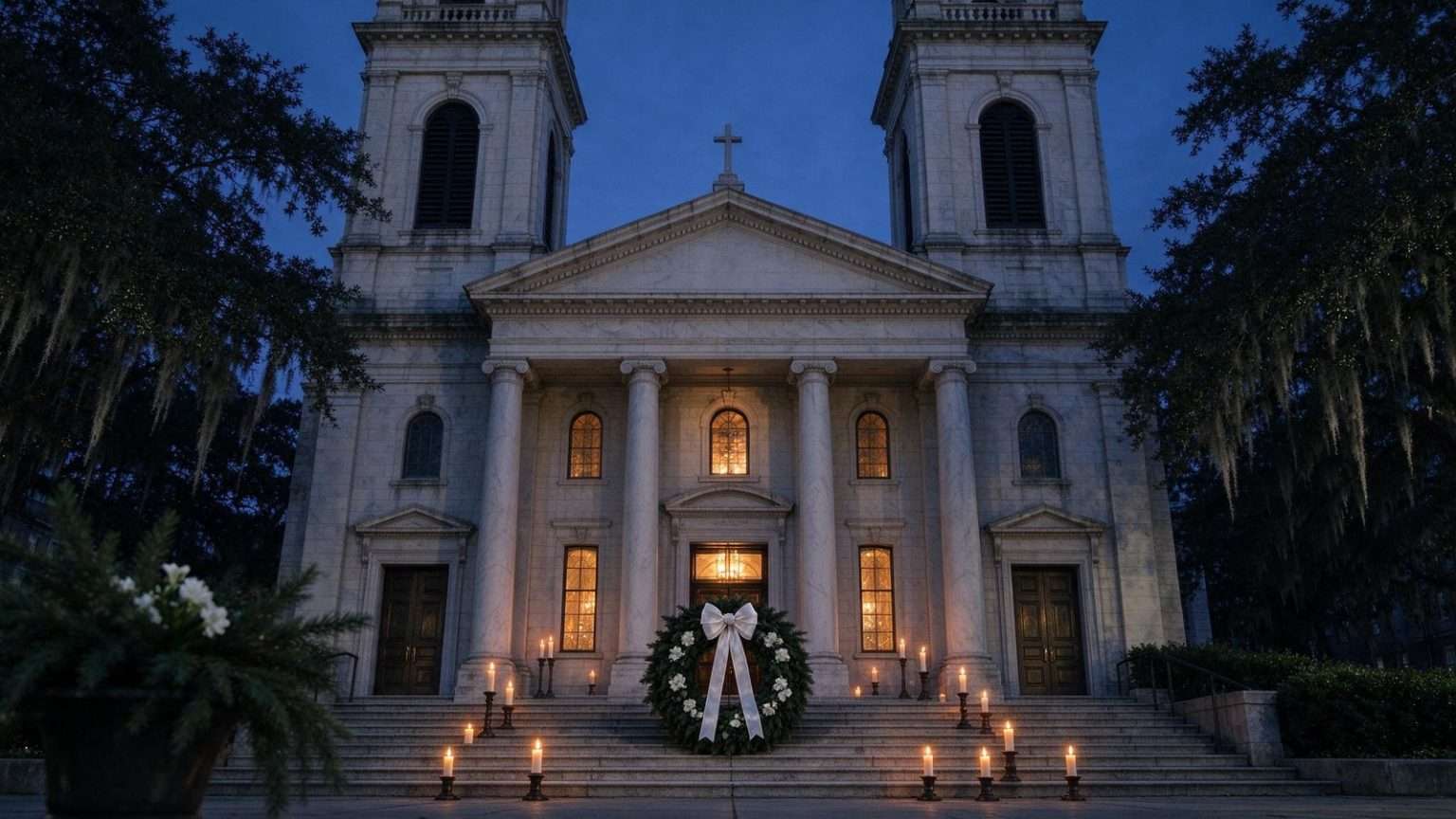
Archbishop Emeritus Oscar H. Lipscomb, the first man ever ordained Archbishop of Mobile and a lifelong son of the city he served, has died at age 88. Archdiocese officials confirmed that Lipscomb died peacefully at the Little Sisters of the Poor residence in Mobile after a lengthy period of physical decline. Because of the ongoing COVID-19 pandemic, his funeral arrangements will be held privately, with a public memorial expected to follow at a later date — a restriction on public mourning familiar to families across south Alabama during the pandemic years.
Lipscomb’s death closes out a chapter of local Catholic history that stretched across nearly six decades of priestly ministry, almost all of it in Mobile. No other figure of modern times has been so closely identified with the Catholic church in south Alabama, and few have presided over so much institutional growth in the region’s oldest religious community.
From Rome to the first chair
He was ordained to the priesthood in Rome on July 15, 1956, and went on to become chancellor, then vice chancellor, of the old Diocese of Mobile-Birmingham before being named the first Archbishop of Mobile in 1980, after the Vatican elevated the diocese to an archdiocese and established the Province of Mobile. The elevation recognized both the age of the Mobile see — among the oldest in the United States, tracing its roots to the earliest Catholic missions on the Gulf Coast — and the growth of the church across south Alabama in the decades after the Second World War.
As archbishop, Lipscomb became the metropolitan of a province that included the other sees of the region, giving Mobile senior standing among the Catholic dioceses of the Gulf South. He led the archdiocese for 28 years, retiring in 2008 at age 76 after Pope Benedict XVI accepted his request to step down. Twenty-eight years in the chair is a long tenure by any measure, and it spanned the whole arc of the church’s modern history in the region: school expansion, parish consolidation, growth along the Eastern Shore and in Baldwin County, and the administrative maturing of a province only decades old.
“Archbishop Lipscomb loved Mobile and its people,” said the Most Rev. Thomas J. Rodi, the current Archbishop of Mobile, in a statement released by the archdiocese. “As a native of the city, he devoted his life to bringing God’s love to many. He made an indelible mark in our archdiocese as a man of God, a good priest and a good bishop.” Rodi, who succeeded him and knew the institution Lipscomb built better than anyone, framed the tribute around the archbishop’s identity as a local man rather than a distant prelate — a distinction Mobilians who knew him would have recognized immediately.
A Mobile upbringing
Born Sept. 21, 1931, to Oscar H. Lipscomb Sr. and Margaret Antoinette Saunders Lipscomb, the future archbishop grew up in Mobile and attended St. Patrick Parochial School and McGill Institute before continuing his studies at St. Bernard College in Cullman and later at the Pontifical North American College and the Gregorian University in Rome. His path from a Midtown parish school to the Eternal City was the classic formation of an American priest of his generation, but it began and ended in the same few square miles of Mobile.
After his ordination, he returned to Mobile, where he served at St. Mary Parish and taught at both McGill Institute and Spring Hill College — the Jesuit college on the city’s western edge and the oldest institution of higher learning in the state. He also served as pastor of his childhood parish, St. Patrick in Mobile, from 1966 to 1971, and as assistant pastor at St. Matthew Parish and the Cathedral Parish. A priest who teaches at the school he attended and then leads the parish where he was baptized knows his city in a way few of its institutions can claim, and that grounding showed throughout his career.
Those early assignments also put him in the classroom and the pulpit during the years when Mobile’s parishes were navigating the changes of the 1960s, and colleagues credited the years of teaching with shaping the pastoral style he carried into the archbishop’s office: direct, practical and unpretentious.
Leadership beyond the pulpit
Throughout his tenure as archbishop, Lipscomb took on a wide range of leadership roles beyond the pulpit. He served on multiple committees of the United States Conference of Catholic Bishops, sat on several college and seminary boards, and was a member of the board of directors of the Alabama Department of Archives and History — an appointment that reflected both his own interest in the state’s history and the prominent place of the Catholic church in the record of early Alabama.
His work also extended to national and international Catholic affairs, including involvement with the Catholic Common Ground Initiative, the Catholic Health Association Committee on Ethics and Values, the Institute for Advanced Catholic Studies, the Southeast Regional Office for Hispanic Affairs, and the “Vox Clara” Committee of the Congregation for Divine Worship and the Discipline of the Sacraments. The last of those, a Vatican advisory body on the English translation of the Roman Missal, put a Mobile archbishop inside the rooms where the texts used in Catholic worship around the English-speaking world were debated and decided.
The breadth of those assignments made him a familiar figure well outside his province — at bishops’ meetings in Washington, at Rome meetings of the worship committees, and in the networks of Catholic higher education and health care. Colleagues in those circles knew him as a voice of the church’s Gulf Coast, a region whose Catholic history ran deeper than most Americans assumed.
Retirement on his own terms
Even after retirement, Lipscomb remained a familiar and active presence throughout the archdiocese, regularly attending Mass and Catholic community events around Mobile. He was also known as a devoted supporter of McGill-Toolen Catholic High School athletics, rarely missing a Friday night football game. For a generation of students and parents, the retired archbishop in the stands on Friday nights was as much a fixture of the fall as the games themselves.
The Little Sisters of the Poor residence where he died carries its own history in Mobile. The religious order, founded in 19th-century France to care for the elderly poor, has operated in the city for generations, and its home became Lipscomb’s residence in his final years. That an archbishop who spent his ministry in the parishes of the city should spend his last years in the care of its sisters struck many in the local church as fitting — a quiet end for a man whose public life had been spent in exactly such works of daily care.
That devotion was recognized in 2008, when the school’s athletic complex was formally dedicated as Lipscomb Field, a name still carried by the facility today. The dedication came in the same year he stepped down from the archbishop’s chair, and it tied his legacy to a place — the campus of the school he had attended and later taught at — rather than to a building at the chancery.
Within the archdiocese itself, Lipscomb’s tenure is remembered for the institutions that grew under his watch: the network of Catholic schools that serves families from Mobile to the Eastern Shore, the parishes founded or rebuilt as the region’s population shifted south and east, and the chancery’s role in coordinating the works of charity that the church carries out across south Alabama. A province that began with a single historic see on the bay grew into a structure capable of serving Catholics from the Mississippi line to the Florida border, and the archbishop who presided over most of that growth became, in the process, the public face of the church in the region.
He led the archdiocese through years when the Catholic church nationally passed through turbulent waters, and his style — rooted in the parishes of one city rather than the politics of a national church — shaped how those years were navigated locally. The administration of the archdiocese, in his handling of it, functioned as an extension of pastoral work rather than a substitute for it.
Lipscomb was preceded in death by his parents and his sister, Margaret Joyce Bolton, along with her husband, Joseph. He is survived by his nephew, Joseph M. Bolton Jr. and his wife, Linda, of Daphne; his cousin, Raye White of Houston; and a number of other nieces, nephews and cousins.
His life of service leaves a lasting imprint on the Catholic community in Mobile and across south Alabama, from the parishes he led to the students and athletes who still gather on the field that bears his name. The archdiocese he headed for 28 years entered its fifth decade as a province with the institutions he built or enlarged still standing at its center — and with the memory of its first archbishop tied, as he would have wanted, to the city where he was born, educated, ordained and buried.