Driver in Fatal Mount Vernon Pedestrian Crash Ordered Into Treatment Program
A Grove Hill man accused of striking two pedestrians on Highway 43 near Mount Vernon, killing one, must complete drug treatment before driving again.
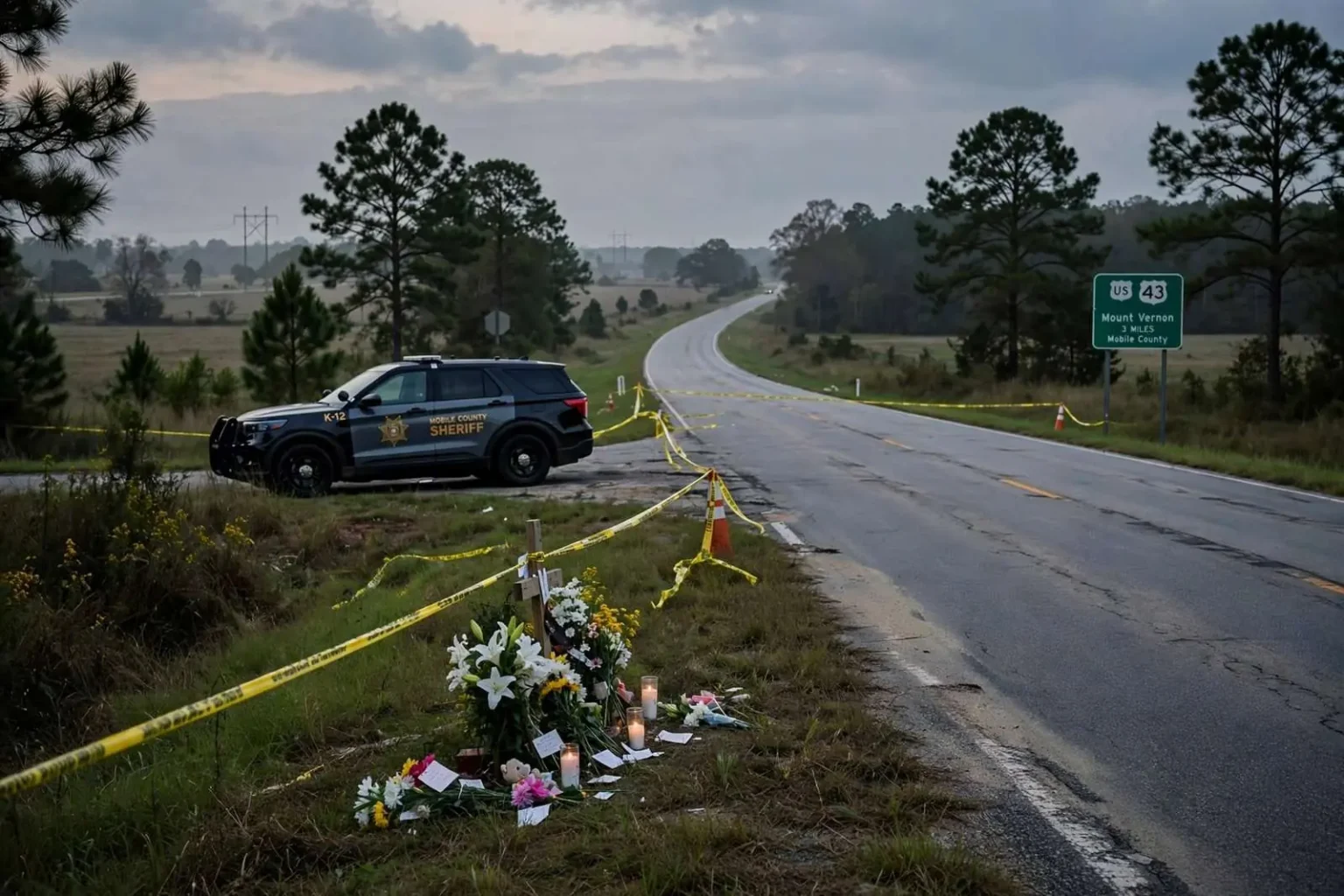
A Grove Hill man accused of running down two pedestrians walking along U.S. Highway 43 near Mount Vernon has been ordered into a drug and alcohol treatment program as a condition of his bond while his criminal case moves forward.
The 44-year-old defendant faces manslaughter, assault and two drug-related charges stemming from a June 18 crash that left one man dead and another hospitalized.
A Mobile County district judge added the special bond conditions on a Monday hearing, barring the defendant from driving at all until he completes his treatment program.
What investigators say happened
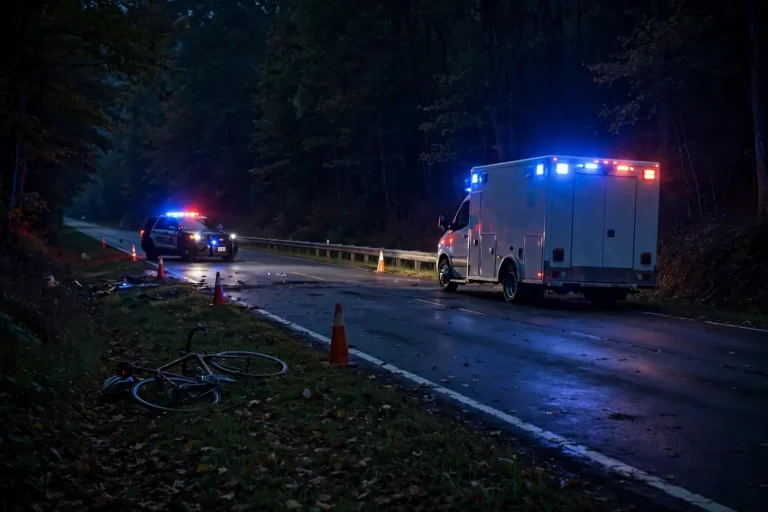
According to investigators, the driver was behind the wheel of his pickup truck traveling about three miles south of Mount Vernon when he left the roadway and struck two men on foot. One victim, a 52-year-old man, was killed in the crash, while a 20-year-old victim was taken to a hospital in Mobile for treatment.
Authorities said the driver was impaired by drugs or alcohol at the time of the crash.
The stretch of U.S. 43 where the crash occurred runs through rural north Mobile County, where the highway carries a steady mix of local commuters, commercial trucks and through traffic between Mount Vernon and communities farther south. Residents of the area say pedestrians walking along or near the roadway — whether because vehicles are unavailable or simply to get from one community to the next — are a common sight, particularly in the early morning and evening hours. A driver leaving the travel lane at highway speed leaves little chance for anyone on foot, and the June 18 crash underscored how little separates a routine walk from a fatal outcome on a corridor without consistent shoulders or lighting.
The conditions of release
The defendant remains free on a combined bond of $13,000 and has since enrolled in a substance abuse treatment facility in Brewton. Under the terms set by the court, he must successfully complete that program, remain free of drugs and alcohol, and submit to random testing in order to stay out of jail while the case proceeds.
The judge overseeing the case indicated that substance abuse issues appeared to be a central factor in the case.
Bond conditions of this kind are a familiar tool in Alabama’s district courts. Judges weighing whether a defendant can remain free pending trial routinely pair a monetary bond with behavioral requirements — no driving, no contact with victims, curfews, testing or treatment — that are meant to reduce risk to the public without requiring continued incarceration. A violation can send a defendant back to jail immediately, which gives the conditions real teeth. Requiring treatment at a facility outside the county, as here in Brewton, is less common than placement close to home, and it reflects both bed availability and the court’s judgment about what the defendant needs.
The no-driving condition is particularly significant in a rural county like Mobile’s northern reaches, where a pickup truck is often essential to work and daily life. Losing driving privileges while the case proceeds is itself a substantial burden, and it removes the possibility of another crash behind the wheel while the charges are pending.
The charges and what comes next
The defendant has pleaded not guilty to all charges, including first-degree assault, manslaughter, driving under the influence and possession of a controlled substance.
The charge list traces the course of the June 18 events. Manslaughter under Alabama law covers causing a death while driving under the influence — a felony that, unlike murder, does not require proof of intent, only that a person acted with extreme disregard for life. First-degree assault addresses the injuries suffered by the 20-year-old survivor. The DUI and controlled-substance counts reflect what investigators allege was happening before the truck left the roadway. Taken together, the charges mean prosecutors will argue the entire sequence — impairment, the controlled substance, the loss of control — was one criminal event with two victims.
A preliminary hearing in the case has been scheduled for mid-August. That hearing is where a district judge decides whether the state has produced enough evidence to bind the case over to a grand jury, which decides whether to issue an indictment. Defense counsel will have the opportunity to cross-examine investigators and challenge the probable-cause showing. The outcome of the preliminary hearing will not decide guilt, but it will shape the case’s trajectory — the specific charges the grand jury considers, and the leverage each side has in any plea discussions.
Because the defendant is charged with felonies, the case will ultimately be handled in Mobile County Circuit Court if it is bound over, with the district court handling the preliminary stage. The treatment program requirement will remain in force throughout, and progress — or failure — in the program is something the court can revisit at any hearing.
The treatment path in Brewton
The facility where the defendant has enrolled sits in Brewton, the Escambia County seat about an hour northeast of Mobile, a community that hosts residential substance abuse programs serving clients from across south Alabama. Residential treatment of the kind ordered here typically involves weeks of structured programming: substance abuse counseling, group sessions, random screening and preparation for long-term recovery. Completion is verified to the court, and judges commonly require documented aftercare — ongoing outpatient meetings or support-group attendance — as a follow-on condition.
For the court, the calculation in ordering treatment is twofold. Public safety is served by removing the drugs and alcohol that investigators say were behind the crash. And if the case ends in a conviction, a documented, voluntarily completed treatment program can factor into sentencing, giving the defendant a demonstrated record of addressing the underlying problem. If he fails out of the program, the bond that keeps him out of jail is likely to be revoked.
Pedestrian safety on Highway 43
The crash renewed concerns among area residents about pedestrian safety along Highway 43, a busy corridor connecting Mount Vernon and surrounding communities in north Mobile County, where foot traffic along the shoulder is common but sidewalks and lighting remain limited in many stretches.
Mount Vernon sits at the northern edge of Mobile County, near the Escatawpa River and the Washington County line, and U.S. 43 is the community’s main artery. Unlike the suburban corridors farther south, it was built as a rural highway — high speed limits, no continuous sidewalks, and long stretches where the only place to walk is the shoulder or the grass beside it. State and county transportation officials have historically prioritized such corridors for paving and maintenance rather than pedestrian infrastructure, leaving safety largely to driver awareness.
Residents who have raised concerns after crashes like this one point to the combination: a road designed for fast through traffic and a population that walks it out of necessity. Each fatal incident renews calls for more visible crossings, lower speeds through the community and more enforcement of impairment laws, though major redesigns of rural highways are slow and expensive undertakings.
For now, the immediate legal questions rest with the court: whether the state’s evidence supports the charges, and whether the defendant can complete the treatment program that stands between him and jail while the case moves forward. The victims’ families, meanwhile, are left with the harder, longer reckoning that follows any impaired-driving fatality on a hometown road.
How the court process will unfold
The weeks between now and the mid-August preliminary hearing will be consumed by preparation on both sides. Investigators will finalize their reports on the crash reconstruction, toxicology results and witness statements from the corridor where the two men were struck. Prosecutors at the Mobile County District Attorney’s Office will assemble the file that supports the four charges, and the defense will review the same evidence for weaknesses in the probable-cause showing.
At the hearing itself, the state typically calls the investigating officer or trooper to summarize the evidence, and the defense can cross-examine. Judges at this stage apply a low bar — probable cause, not proof beyond a reasonable doubt — so cases bound over to a grand jury are the norm in drunk-driving fatalities where the facts are as they have been described. The grand jury process in Mobile County operates in secret, and an indictment would move the case formally to circuit court for arraignment and, eventually, trial or a negotiated resolution.
Throughout, the Monday bond order remains the framework: treatment in Brewton, random testing, no alcohol or drugs, and no driving. Any slip is a separate violation of a court order, independent of how the felony charges resolve, and district judges generally do not hesitate to revoke bond for a defendant accused of an impaired-driving death who tests positive or gets behind a wheel.
A wider pattern on Alabama’s rural highways
The June 18 crash fits a pattern that safety officials in Alabama have documented for years: rural two-lane highways carry a disproportionate share of the state’s serious pedestrian crashes. The reasons are structural. Rural corridors like U.S. 43 connect small communities whose residents often lack reliable transportation, so walking is common; the roads themselves were engineered for vehicles moving at highway speed; and lighting, crossings and sidewalks are sparse. When any one driver is impaired, distracted or simply loses control, a pedestrian has no margin.
Impairment adds the final layer. Alcohol- and drug-involved crashes kill hundreds of Alabamians each year, and enforcement campaigns along rural highways concentrate on exactly this behavior. For the neighborhoods south of Mount Vernon, the case is a local reminder of statistics that usually arrive as numbers: one driver’s choices, on one evening, cost one man his life, put a 20-year-old in a hospital an hour away, and set in motion a criminal case that will play out in Mobile County’s courts for months to come.