Dauphin Island Named Seventh-Best Island in the Country in National Poll
Dauphin Island earned a top-10 ranking in a national island poll, with the mayor calling it a proud moment for the Gulf Coast community.
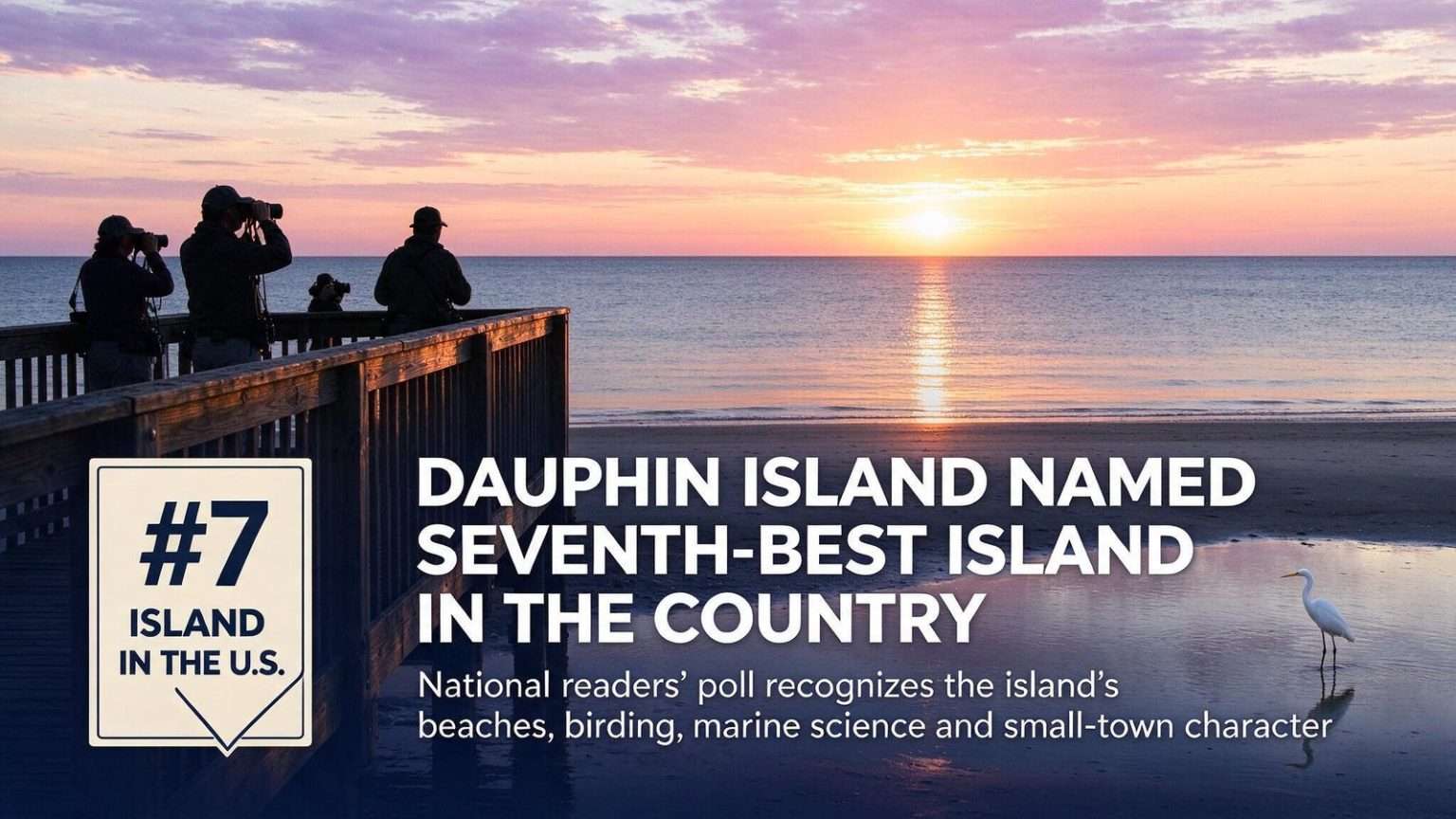
Dauphin Island has landed a spot among the ten best islands in the country, according to the results of a national readers’ poll that pitted the small Gulf Coast community against some of the nation’s most popular vacation destinations.
The island came in seventh place overall, a result Mayor Jeff Collier called both an honor and a genuine accomplishment given the caliber of the competition. For a town of roughly 1,300 year-round residents at the end of a single bridge, finishing ahead of far larger and better-known destinations was a point of real pride.
Collier said he was initially just glad to see the island included among the original list of twenty nominees, but seeing it rise to seventh among readers nationwide underscored how much the community means to the people who visit and live there. Voting in such polls is driven by passionate constituencies, and Dauphin Island’s showed up.
What the poll highlighted
The poll’s organizers highlighted several of the island’s signature attractions in explaining its appeal, including its bird sanctuary, its role along the Alabama Coastal Birding Trail, and the Dauphin Island Sea Lab and Estuarium, where visitors can learn about the freshwater and saltwater species native to Alabama’s Gulf Coast waters.
The island has long been known among birders and nature enthusiasts as a critical stopover point for migratory species crossing the Gulf of Mexico. In spring and fall, waves of songbirds, raptors and shorebirds come ashore on the island after their long overwater flights, making it one of the premier bird-watching locations on the entire Gulf Coast.
The Alabama Coastal Birding Trail, a loop of marked sites across Mobile and Baldwin counties, treats the island as one of its anchor destinations, drawing visitors from across the country whose spending supports the island’s restaurants, shops and rental cottages.
The Sea Lab and Estuarium, the public aquarium and education arm of the Dauphin Island Sea Lab, gives the island a scientific identity that few communities its size can claim. The Sea Lab serves as the state’s marine science education and research campus, hosting university programs and school groups year-round, and the Estuarium introduces tens of thousands of visitors annually to the ecosystems of Mobile Bay and the northern Gulf.
First place went to Puerto Rico
First place in the national poll went to Puerto Rico, a reminder of just how broad the competition was across island destinations of vastly different size and scope. A territory of more than three million people with an international tourism industry finished at the top of a list that also included a barrier island in Alabama accessible by a single three-mile bridge.
Still, Collier said landing in the top ten alongside such well-known locations speaks to the unique character of the small barrier island community, often referred to locally as the sunset capital of Alabama. The nickname is earned at the island’s western end, where evening crowds gather on the public beach to watch the sun drop into the Gulf, a ritual that has defined the island’s identity for generations of families.
Recognition with responsibility
Collier said the recognition should be a point of pride for everyone along Alabama’s Gulf Coast, not just island residents, and reinforces the importance of protecting the natural resources that make the island a draw for visitors in the first place.
Local officials have often pointed to conservation efforts, from dune restoration to wildlife protection programs, as key to preserving the very qualities that keep drawing outside recognition to the island. The island’s east end includes the Audubon Bird Sanctuary, hundreds of acres of maritime forest, dunes, lakes and marsh where much of the migratory activity happens, protected ground in a state where coastal development has transformed much of the shoreline.
That balance between tourism and preservation is a constant theme of island governance. The town has long grappled with the pressures that come from its own popularity: seasonal traffic over the Gordon Person Bridge, the challenge of providing services to a barrier island, beach nourishment needs, and the perennial work of rebuilding after hurricanes.
National attention of this kind brings tangible benefits. A top-ten ranking in a national poll circulates through travel media and social channels, putting the island in front of prospective visitors who might otherwise have driven past coastal Alabama on their way to Florida’s better-known beaches. Tourism officials across the region have long argued that the state’s Gulf beaches and islands are undervalued compared to their neighbors, and results like this one support the claim.
A community defined by nature
Unlike many resort destinations, Dauphin Island’s economy and identity rest almost entirely on its natural setting. There are no high-rises and no amusement strips; the island’s attractions are its beaches, its birds, its fishing grounds, Fort Gaines, and the research and education work of the Sea Lab.
That character is precisely what the poll’s organizers highlighted, and what the mayor pointed to in accepting the result. The island’s history stretches back centuries — it takes its name from the French colonists who landed there in 1699 and observed a day of prayer and thanksgiving on its shores — and it has served ever since as a place where the Gulf’s natural world remains on display.
For a community that has weathered hurricanes, oil spills and the steady pressures of coastal change, the ranking offered a moment of straightforward good news. Island residents know as well as anyone how fragile their home is — a sandbar community where storms can rearrange the shoreline in a night — and recognition on a national stage affirms the work the town has put into keeping that home worth visiting.
What comes next for the island
Town officials said the poll result would be celebrated and shared, but the practical focus remains the same as ever: maintaining the island’s infrastructure, supporting its small businesses, and protecting the habitat that underpins both the birding economy and the island’s quality of life.
Visitors planning a trip are drawn by more than the ranking. The island offers public beaches, the fishing pier at the site of the old railroad trestle, charter and shore fishing in some of the richest waters on the coast, campgrounds and vacation rentals, and the ferry connection across the bay to Fort Morgan during the warmer months — a ride that gives travelers a boat’s-eye view of Mobile Bay and the at the mouth of one of the nation’s most productive estuaries.
Fort Gaines, the well-preserved Civil War-era fort at the island’s eastern tip, anchors the historical side of a visit, standing across the channel from its counterpart at Mobile Point and preserving the story of the Battle of Mobile Bay. The fort, the Estuarium and the sanctuary together give the island a depth of attractions unusual for a community so small.
The mayor’s message about the honor applied equally to the region: Alabama’s Gulf Coast can stand beside the nation’s best-known island destinations when its natural assets are protected and promoted. Seventh in the country is a result the town will cite for years, in tourism materials and in the ongoing arguments for conservation funding — evidence, in a single ranking, that the investment in the island’s dunes, forests and waters pays off in ways that reach far beyond its one bridge.
Residents, for their part, took the news with the easy confidence of people who already knew what visitors were voting for. The sun still sets on the west end every evening, the birds still come ashore by the thousands each spring, and the small island at the mouth of Mobile Bay now has a national ranking to prove what the regulars have always said.
The island’s place on the Alabama coast
Dauphin Island occupies a singular position on Alabama’s Gulf coast. It sits at the mouth of Mobile Bay, guarding the shipping channel that connects the state’s port to the Gulf, and it is connected to the mainland by the Gordon Persons Bridge over the Intracoastal Waterway and Mississippi Sound. The island runs roughly east to west for about 14 miles, with the developed town clustered at the eastern end and long stretches of undeveloped shoreline extending west.
That geography explains both the island’s appeal and its vulnerability. The same location that concentrates migratory birds — the first landfall for Gulf crossings, funneling travelers down from the mouth of the bay — also puts the community directly in the path of every hurricane that enters the north-central Gulf. Residents have rebuilt repeatedly, and the town’s land-use decisions have deliberately kept much of the island’s west end low-key and its natural areas intact.
The Audubon Bird Sanctuary on the east end is the largest of the island’s protected areas, and its trails lead through maritime forest and around freshwater lakes where migrating warblers gather in such numbers that spring mornings can feel like a bird festival. Ornithologists and hobbyists travel from across the country for the fallout events that follow spring storms, when exhausted migrants come down on the island in spectacular variety.
The Estuarium complements the sanctuary with its indoor and outdoor exhibits on the bay’s habitats — from the Delta’s freshwater marshes to the seagrass beds and oyster reefs of the lower bay — and its staff play a leading role in coastal research and restoration across Alabama. Between the sanctuary, the Sea Lab and the town’s conservation programs, the island functions as a living classroom for the northern Gulf of Mexico.
That is the substance behind a seventh-place national ranking: not a marketing slogan, but decades of protected habitat, public access and quiet insistence that the island’s value lies in what lives there. The town’s challenge now is the one that comes with success — welcoming the extra visitors that the recognition will bring, while keeping the wild character that earned it the votes in the first place.