

Pulitzer Prize-winning biologist and naturalist E. O. Wilson returned to the region where his scientific career began this week for two public appearances tied to his latest book, a novel titled “Anthill.” The visits brought one of the world’s most celebrated scientists back to the Mobile area, where his lifelong study of the natural world first took hold.
Wilson was scheduled to speak April 14 at 6 p.m. in Room 170 of the University of South Alabama’s Humanities Building in Mobile, a free event open to the public. The following evening, April 15, he was set to discuss and sign copies of “Anthill” from 5:30 to 7:30 p.m. at the Gatra Wehle Nature Center inside Historic Blakeley State Park in Baldwin County, an event hosted by Fairhope’s Page & Palette bookstore. That event was also free, though organizers recommended tickets in advance because of limited space; tickets were available through the Blakeley park nature center and Page & Palette.
From Birmingham to Mobile
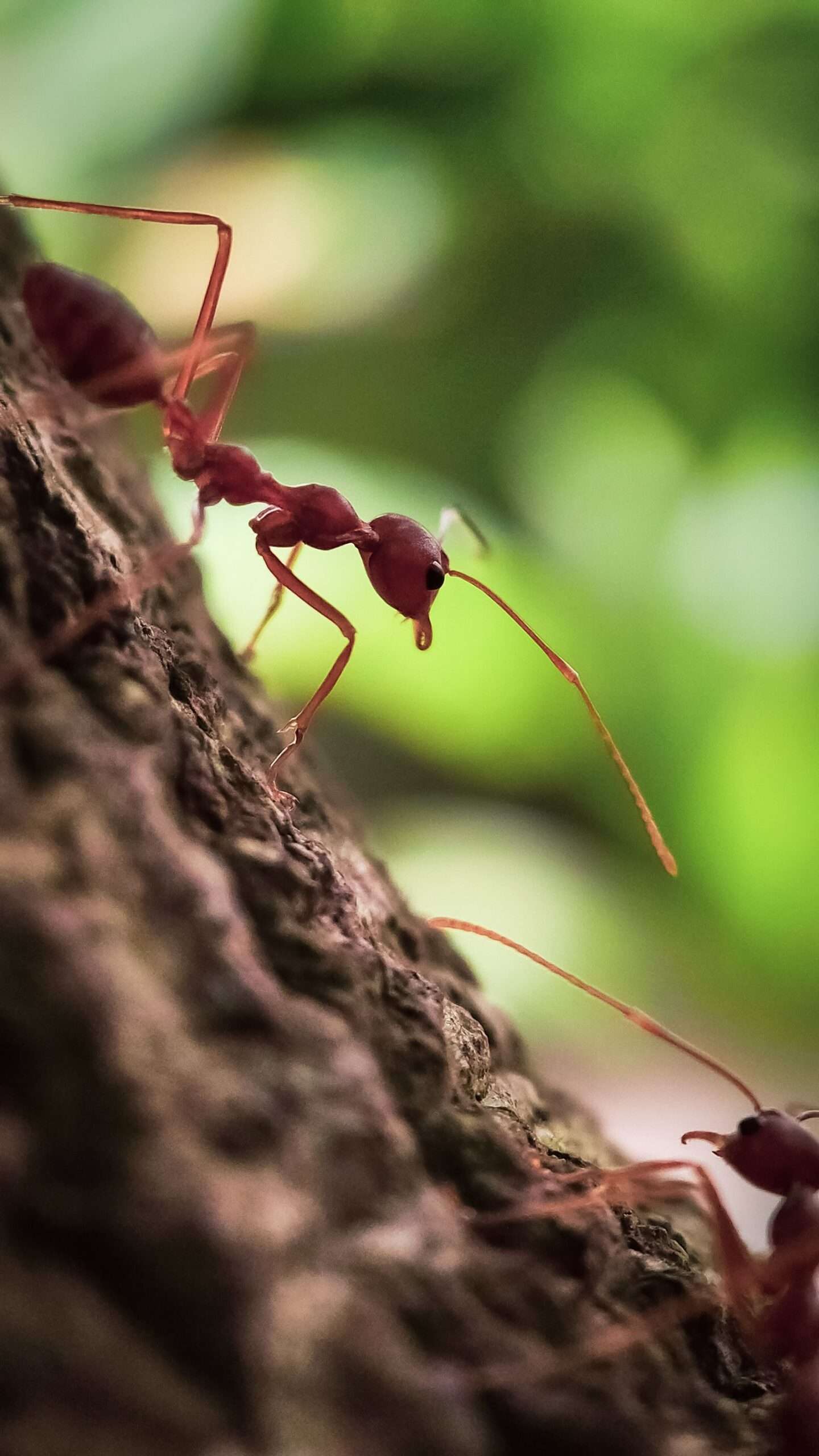
Wilson was born in Birmingham but grew up in Mobile, where his lifelong fascination with insects took root. As a teenager exploring the area’s vacant lots, he made a discovery with lasting consequences for the Southeast: in 1942, at age 13, he reported the first known United States sighting of the red imported fire ant, found in a lot on Charleston Street near his childhood home. The invasive species has since spread across much of the southern United States, becoming one of the region’s most familiar pests and a permanent mark of Wilson’s boyhood observation.
The episode has become a fixture of the Wilson origin story — a teenage naturalist, wandering the lots and edges of Mobile with jars and notebooks, recognizing something new. It is also a fitting prelude to the career that followed, in which observation of small creatures led to some of the largest ideas in modern science.
A career built on ants
Wilson went on to study as an undergraduate at the University of Alabama before earning his Ph.D. at Harvard University, where he built a career as one of the world’s foremost authorities on ants, biodiversity and the concept of “sociobiology.” His work on the social organization of insects grew into sweeping theories about the biological roots of social behavior, work that earned him international renown and, at times, fierce debate within his own field.
He is the author of numerous books, including his autobiography “Naturalist” and “Nature Revealed: Selected Writings, 1949-2006,” and has been a leading voice in global conservation efforts through the E. O. Wilson Biodiversity Foundation. His writings have carried the case for protecting the natural world to audiences far beyond the laboratory, and his advocacy helped shape the modern understanding of biodiversity as a resource under threat.
“Anthill” — science as story
“Anthill” marked a new departure for the scientist: his first novel, using fiction to tell the story of a young Alabama naturalist whose life becomes entwined with the fate of a tract of wild land and the ant colonies that live within it. The book allowed Wilson to blend a lifetime of scientific observation with the landscape of his own childhood, setting the story in the kind of Gulf Coast terrain where he made his first discoveries.
The novel’s publication gave the two South Alabama appearances a particular resonance — audiences were hearing the author read from a book rooted in the very geography that shaped him, in the company of neighbors who share that landscape.
The University of South Alabama event
Wilson’s April 14 lecture at the University of South Alabama put the scientist in front of the university community whose home city he once prowled as a young collector. Room 170 of the Humanities Building offered an intimate setting for a scientist of his stature, and the free admission reflected the university’s tradition of opening major speakers to the wider public, not just students and faculty.
Appearances by figures of Wilson’s renown are rare on the Gulf Coast, and the event drew interest from students, educators and naturalists across the region. For the university, hosting Wilson connected its own programs — from biology to environmental studies — to a scientific legacy that began, remarkably, a short drive from campus.
An evening at Blakeley
The second event carried Wilson into the landscape his work has long celebrated. Historic Blakeley State Park, one of the largest sites on the National Register of Historic Places, preserves thousands of acres of Gulf Coast forest and wetlands along the Tensaw River north of Spanish Fort, along with the remains of the ghost town of Blakeley and Civil War battlefield grounds. The park’s Gatra Wehle Nature Center sits at the heart of that landscape, an apt venue for an author whose career began with fieldwork in the woods of South Alabama.
The April 15 discussion and book signing, hosted by Fairhope’s Page & Palette bookstore, paired Wilson with one of the eastern shore’s best-known independent booksellers. The store has long served as the literary hub of Fairhope, and its staff worked with the park to bring the event to Baldwin County so residents would not have to cross the bay to attend. Free tickets were offered in advance because the nature center’s space was limited, and organizers encouraged early reservations.
Conservation on the Gulf Coast
Wilson’s visits came at a moment of heightened environmental attention along the Gulf Coast, where development pressures, hurricanes and restoration efforts after the Deepwater Horizon oil spill have kept conservation at the center of public conversation. His lifelong argument for preserving habitat — the idea that the small creatures of a forest floor are as essential to the world’s future as any headline species — found an attentive audience in a region still defining its relationship with its own natural resources.
His visits gave South Alabama audiences a rare chance to hear directly from a scientist whose research into the natural world began in their own backyard, and whose message — that the wild places close to home deserve the same care as any wilderness on Earth — resonated in the very lots, parks and waterways where it was first formed.
The fire ant legacy
The red imported fire ant that Wilson first documented in 1942 has become one of the defining nuisances and scientific subjects of the American South. The species arrived from South America, likely in ship ballast or nursery stock through Gulf ports, and spread steadily across the warm, wet states — including every corner of Alabama — where mounds now dot lawns, pastures and roadsides. Farmers, utility companies and homeowners spend significant sums each year managing the ants, whose painful stings and electrical equipment damage make them both a health and economic concern.
That a Mobile teenager’s report marked the species’ first recorded appearance in the United States has become one of the great anecdotes of American natural history — a reminder that scientific discovery does not always require expeditions to distant continents. Sometimes it requires only attention to the lot next door.
Sociobiology and its debates
Wilson’s development of sociobiology — the systematic study of the biological basis of social behavior — reshaped multiple fields and provoked decades of argument about the balance between nature and nurture in human affairs. His 1975 book laying out the discipline became one of the most discussed works of modern science, and the debates it sparked continue in evolutionary biology, psychology and philosophy.
Through it all, Wilson remained at Harvard for his entire career, accumulating honors that included the National Medal of Science and recognition as one of the most influential scientists of his era. His ability to write for general audiences — evident in books from his autobiography to his final works — made him one of the few scientists whose names were familiar far outside the academy.
What local audiences heard
For the Mobile and Baldwin County audiences who turned out for the two events, the appearances offered something beyond a book promotion: the chance to see how a scientific life begins and where it leads. Wilson’s story runs from the vacant lots off Charleston Street to Harvard’s museum halls, and his return visits traced that path in reverse — the world authority on biodiversity walking the ground where he first noticed the world’s small wonders.
Both events were free, a detail organizers emphasized, reflecting the institutions’ commitment to making a scientist of Wilson’s caliber accessible to the entire community rather than a ticketed few. Between the university lecture and the park signing, the visit stood as a homecoming for one of South Alabama’s most accomplished native sons, and a night or two of science storytelling rooted firmly in the soil of Mobile and Baldwin counties.