

The Alabama High School Athletic Association has released its latest round of classifications and competitive balance adjustments, and several private schools across Baldwin and Mobile counties are bracing for tougher competition over the next two years.
Every two years, the AHSAA sorts its member schools into classifications based on average daily enrollment figures collected over the first 20 school days after Labor Day. Since 2017, the association’s Central Board of Control has layered a “competitive balance rule” on top of that enrollment-based system, a mechanism designed to push successful private schools into higher classifications when their teams consistently outperform public school competition. Private schools already carry a longstanding enrollment “multiplier,” in place since 1999, that counts each student 1.35 times when calculating classification numbers – an adjustment meant to account for advantages some private and parochial schools hold in recruiting, staffing and facilities.
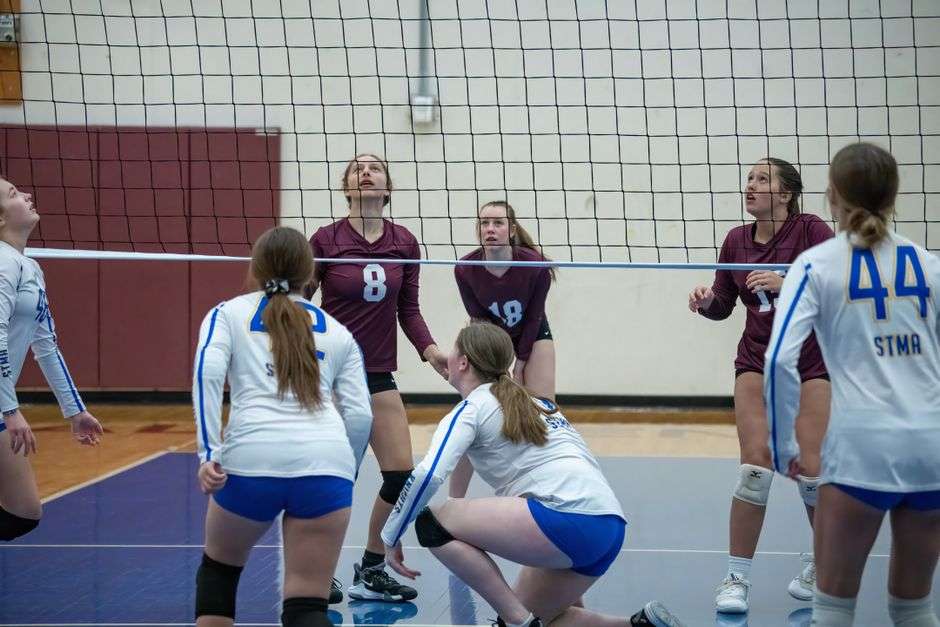
No local program will feel the new alignment more than Bayside Academy. The Daphne school, which last season tied the national record with its 18th consecutive state volleyball championship, will compete in Class 5A under the new classification even though its actual enrollment would place it in Class 2A.
“Yes, we are 5A,” Bayside head coach Ann Schilling said of the reclassification, adding that she had expected the jump after the Admirals piled up state volleyball trophies across Classes 1A, 2A, 3A and 4A in recent years.
“We may as well embrace it,” said Schilling, who was inducted into the Mobile Sports Hall of Fame in 2017 and was named the National Federation of State High School Associations’ national volleyball Coach of the Year for the 2009-2010 season. “We should be fine. It will be more difficult, but we do play a very stout schedule and should be prepared.”
The competitive balance rule has not gone unchallenged. St. Paul’s Episcopal School filed a federal civil lawsuit against the AHSAA in 2018 seeking to block the rule, arguing that pushing its athletes into competition against larger schools created a safety risk. The Saints ultimately dropped that lawsuit.
Under the current formula, private schools earn points toward reclassification based on their postseason results over the prior two years. In single-gender sports such as football, volleyball, golf, baseball, softball and wrestling, a program is bumped up a class if it earns more than four points – half a point for reaching the round of 16, a full point for a quarterfinal appearance, two points for the semifinals and four points for a championship game appearance. Programs that score between one and four points stay put, while those scoring less than one point drop a classification. Co-ed sports such as basketball, soccer, swimming, tennis, cross country, indoor and outdoor track and bowling combine boys’ and girls’ point totals; more than seven points triggers a move up, two to seven points holds a program steady, and anything under two points sends a program down a class.
The new football alignment for the 2020-2021 and 2021-2022 school years places the state’s 32 largest high schools in Class 7A, with the remaining six classifications split evenly among 59 football-playing schools apiece. The Central Board has also finalized cross country and swimming alignments, though winter sports classifications will not be announced until after the conclusion of the basketball postseason, with spring sports alignments to follow once those playoffs wrap up.
On the football side, three private school programs that met the competitive balance threshold will move up a class heading into the new cycle: Mobile Christian and UMS-Wright locally, along with Mars Hill Bible. St. Paul’s, meanwhile, is among two schools sliding back down a class after failing to meet the threshold required to remain in its higher classification, joined by Madison Academy.
Volleyball saw even more movement. Of eight programs bumped up a class during the previous cycle, Bayside Academy, Providence Christian and St. James earned enough points to move up yet again, while St. Luke’s Episcopal, Madison Academy and St. Paul’s will hold steady in their current classifications. Decatur Heritage and John Carroll Catholic did not meet the threshold and will drop back down. Faith Academy in Mobile, along with Athens Bible, Westminster-Oak Mountain and Montgomery Academy, are moving up for the first time under the competitive balance rule. McGill-Toolen presents an unusual case: the Mobile school is dropping from Class 7A to 6A based on enrollment alone, but its volleyball program will remain in 7A because of points earned under the competitive balance system. Full enrollment and classification data for football, volleyball, cross country and swimming is available through the AHSAA’s website.
The reclassification announcement arrived alongside recognition for two figures well known in local high school athletics. UMS-Wright’s Terry Curtis has been named a National Football Coach of the Year, one of 23 coaches nationwide honored by the National Federation of State High School Associations across various sports. Curtis has amassed a 317-85 career coaching record over 31 years, including stops at Shaw and Murphy high schools before spending the last 21 seasons leading the Bulldogs. His UMS-Wright teams have claimed eight state titles, among them the program’s last three Class 4A championships.
“This is quite an honor,” Curtis said in a news release announcing the award. “I knew I wanted to be a coach when I was in the eighth grade. I am truly humbled, and am reminded of so many others who have been responsible for our success. I share this recognition with our outstanding assistant coaches, with an administration that has always been so supportive and with players who are committed to playing for a school and a team that they believe in.” Curtis, who entered the AHSAA Hall of Fame in 2004, becomes the fourth Alabama coach to receive the national football honor. Schilling of Bayside previously received the sport-specific national volleyball honor for the 2009-2010 season.
The volleyball community is also mourning the loss of Becky Dickinson, the first volleyball coach inducted into the AHSAA Sports Hall of Fame, who died recently at age 83. Dickinson coached at McGill-Toolen from 1970 to 1998, building the program known as the “Dirty Dozen” into a powerhouse that won 1,273 matches and 14 state titles. She also guided McGill-Toolen to three girls’ basketball championships and three boys’ tennis titles during her tenure, was honored by the AHSAA in 1991 and was inducted into the Mobile Sports Hall of Fame in 1994. Her coaching tree runs deep through the region’s current high school ranks, including Schilling at Bayside Academy, Gretchen Boykin at Spanish Fort and Monique Adams at Daphne.
The Alabama High School Athletic Association, known as AHSAA, oversees interscholastic athletics across the state. The association periodically reclassifies member schools based on enrollment figures, moving schools up or down between classifications to maintain competitive balance.
Bayside Academy, UMS-Wright and McGill-Toolen are three of the more storied private-school athletic programs in the Mobile area. Each has won state championships in multiple sports, and the schools regularly compete against each other in the private-school classifications of AHSAA sports.
When schools are reclassified upward, they typically face larger public schools from bigger population centers, and the move can affect scheduling, travel and playoff seeding. Coaches and athletic directors have a short window to adjust their non-region schedules to prepare for the new classification, and the reclassification is one of the more closely watched events of the AHSAA offseason calendar.
Local governments and community partners are working through the implications of the situation, and several follow-up meetings have been scheduled for the coming weeks. Members of the public who want to weigh in on the matter can find the meeting dates on city and county websites, and written comments can be submitted through the standard channels used by the relevant agencies. Local news outlets will continue to cover the story as it develops.
Across south Alabama, similar issues are being addressed in other communities, and the lessons learned here are likely to inform how those communities approach their own challenges. Local officials have indicated they are in regular contact with counterparts in neighboring cities and counties, and they expect to share best practices as the situation continues to evolve.
The agencies involved in the matter have committed to keeping the public informed as the work progresses, and residents who want to receive updates directly can sign up for email or text alerts through the relevant city or county websites. Local community organizations have also agreed to share information as it becomes available, and several have scheduled public forums in the coming weeks to give residents a chance to ask questions of the officials involved.
For background, readers can consult the official websites of the relevant agencies, the local newspapers that have covered the story, and the public-meeting archives that document the prior deliberations on related topics. The combination of those resources should give residents a thorough understanding of how the current situation developed and how the agencies and elected officials are approaching the decisions that remain.