Oakleigh Belles Launch Petition to Keep Historic Mobile Museum Open
Oakleigh Belles and Historic Mobile Preservation Society members launch a petition opposing the closure of the Oakleigh House Museum in Mobile.
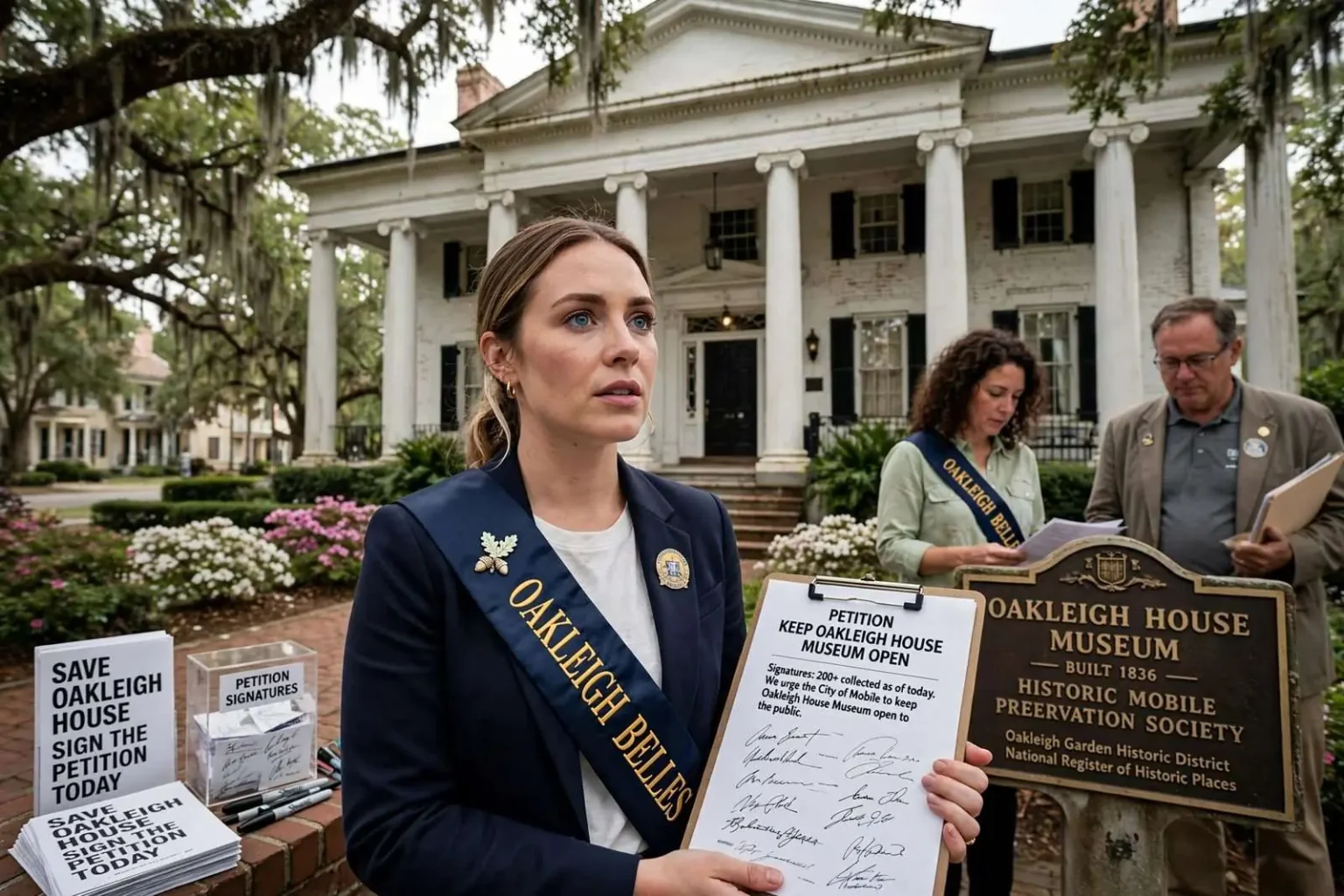
Members of the Historic Mobile Preservation Society are pushing back against plans to close Oakleigh House Museum, the antebellum-era mansion that gives Mobile’s Oakleigh Garden Historic District its name, and have started a petition urging the city to reconsider.
Chaney Scott McCorquodale, an Oakleigh Belle and member of the Historic Mobile Preservation Society, said she was distraught to learn that the historic house museum was being closed, calling it a unique fixture not just for Mobile but for the country.
As a docent at Oakleigh, McCorquodale said she has welcomed visitors from across the United States, including guests traveling from as far as California, Washington and Maine, as well as international visitors from Germany, the United Kingdom and Japan. For docents who lead tours through the house, those long-distance visitors are evidence of the museum’s reach — proof that Oakleigh draws travelers the way far larger attractions do.
“I believe closing this much-beloved fixture in our community, from which we have a whole historical district named after, is poor judgment in the city’s priorities,” McCorquodale said, while adding that she appreciates and respects the broader improvements the mayor and Mobile City Council have made throughout the city.
McCorquodale said she started a petition the same day the closure became public and had already collected more than 200 signatures within hours. She is encouraging residents to join the effort in hopes of keeping Oakleigh’s doors open to the public.
What Oakleigh Means to Mobile
Oakleigh House has long served as one of Mobile’s most visited historic homes, drawing tourists and history enthusiasts to the Oakleigh Garden District to tour the antebellum mansion and learn about the city’s architectural and cultural history. Built in the 1830s, the Greek Revival mansion stands as one of the oldest house museums in the city, and its columned facade has become shorthand for the historic character of the surrounding neighborhood.
The house’s name follows a pattern common to the city’s oldest landmarks: the mansion lent its name to the district that grew up around it, and today the Oakleigh Garden Historic District encompasses blocks of historic architecture, restaurants and residences just south of downtown. The museum operates as a touchstone for that identity, hosting school groups, tours and heritage events throughout the year.
Preservation advocates argue that losing the museum would diminish the historical and cultural influence that helped shape the surrounding district and the broader city. A house museum is not merely a building, they argue — it is an interpretive institution, staffed by docents and volunteers who connect generations of Mobilians and visitors to the city’s past in a way markers and plaques cannot.
The Oakleigh Belles and Docent Tradition
The Oakleigh Belles, the volunteer group to which McCorquodale belongs, serve as docents and ambassadors for the museum, leading tours in period dress and supporting the house’s educational mission. The Belles program has operated for decades, drawing young women from across the Mobile area who train on the house’s history and architecture before guiding visitors through its rooms.
For the docents, the closure is personal as well as civic. Hours spent studying the house’s furnishings and stories become the raw material for tours given to visitors, and a museum without a public schedule leaves that work without a stage. McCorquodale’s account of greeting travelers from distant states and foreign countries reflects the daily experience of the volunteer corps, which measures its impact in the people who walk through the door.
The Preservation Community’s Concerns
The Historic Mobile Preservation Society has long been among the city’s leading voices for protecting historic buildings and neighborhoods. The organization’s work spans advocacy, education and the operation of its own archival and historic properties, and its members have historically weighed in whenever landmarks face demolition, neglect or — as in this case — the loss of public access.
The society’s argument in the Oakleigh dispute centers on the museum’s dual role: it is both a heritage attraction and an anchor for the district that bears its name. Advocates contend that a city’s historic assets are part of its economic infrastructure, drawing cultural tourism, supporting nearby businesses and giving neighborhoods a distinct identity that newer development cannot replicate.
McCorquodale said she hopes city officials will give residents the opportunity to weigh in and find a path forward that keeps the museum accessible to the public, rather than allowing the closure to move forward without further discussion. Her petition frames the question in those terms — not as a fight against the city, but as a request for a public conversation before a decision becomes final.
How House Museums Operate
House museums like Oakleigh typically operate on slim margins, balancing admission revenue, membership support, grants and volunteer labor against the considerable costs of maintaining a historic structure. Preservation standards require careful, often expensive upkeep — from the roof and foundations to period-accurate finishes — and closed houses deteriorate faster than open ones, because routine use and inspection catch problems early.
That reality is part of the advocates’ urgency. A house museum that closes its doors does not simply pause; heating, humidity control and security costs continue, and the building’s needs do not wait for a reopening decision. Preservationists across the country have documented cases where temporarily closed house museums slid into serious disrepair within a few years, turning a budget question into a far larger restoration bill.
The petition also reflects a wider trend in which residents use fast-organizing online campaigns to influence decisions about public and civic assets. In the first hours after the closure became public, the petition’s early success showed the depth of attachment Mobilians feel toward the house — signatures arrived not only from the Oakleigh Garden District but, organizers hope, from across the city.
What Residents Can Do
For residents who want to support the effort, the path McCorquodale described is straightforward: sign the petition and make their views known to the mayor’s office and the City Council. Preservation groups have also historically urged residents to visit the museum itself, since attendance figures carry weight in budget discussions and demonstrate the public demand that keeps a house museum viable.
The coming weeks will determine whether the petition changes the outcome. What is already clear is that Oakleigh’s defenders intend to make the city argue for the closure rather than accept it quietly — and that the museum’s supporters include a volunteer corps that has spent years learning every story the house has to tell.
Oakleigh’s Place in Mobile’s Story
Mobile’s historic landscape is unusually rich for a city of its size, shaped by French, Spanish, British and American periods of control and by the cotton wealth that built its antebellum mansions. Oakleigh stands among the most significant survivors of that era, and its survival as a museum has depended on exactly the kind of citizen advocacy now being organized on its behalf. Many of the city’s treasured landmarks exist today because residents organized to save them when budgets or development plans put them at risk.
The Oakleigh Garden District that surrounds the house has itself become one of the city’s most desirable neighborhoods, and residents often cite the museum and the district’s historic character as reasons they choose to live there. Real estate patterns in historic districts across the country suggest that proximity to well-maintained heritage attractions supports property values and business activity — an argument preservationists have made in cities from Charleston to Savannah, and one they are making in Mobile now.
The museum’s educational role extends beyond tourism. School groups from across the region tour the house to learn about antebellum life, architecture and the complexities of Mobile’s history, lessons that require a physical place to stand in. Docents tailor tours to audiences young and old, and teachers have long relied on the museum as a field trip destination that brings textbook material to life.
What happens next depends on whether the city revisits its plan, but the preservation community has made its position clear: Oakleigh House is not a discretionary expense to be trimmed but a public asset whose value compounds the longer it stays open. The petition now circulating is the first formal step in that argument, and the speed with which signatures gathered suggests the argument will have plenty of company.
City officials who weigh the museum’s future will also be measuring something harder to quantify: the goodwill of the volunteers and preservationists who keep Mobile’s heritage institutions running. Groups like the Historic Mobile Preservation Society operate largely on donated time, and decisions that overlook that contribution tend to echo. McCorquodale’s careful praise for the mayor and council, even as she disputes this decision, signals that the petition’s supporters see themselves as partners in the city’s progress — asking for the museum’s place in it to be recognized before it is given up.