Pensacola Beach adds lifeguards, warns of hazards for busy Memorial Day weekend
Pensacola Beach added lifeguards for a busy Memorial Day weekend, urging visitors to watch for rip currents and jellyfish after recent drownings.
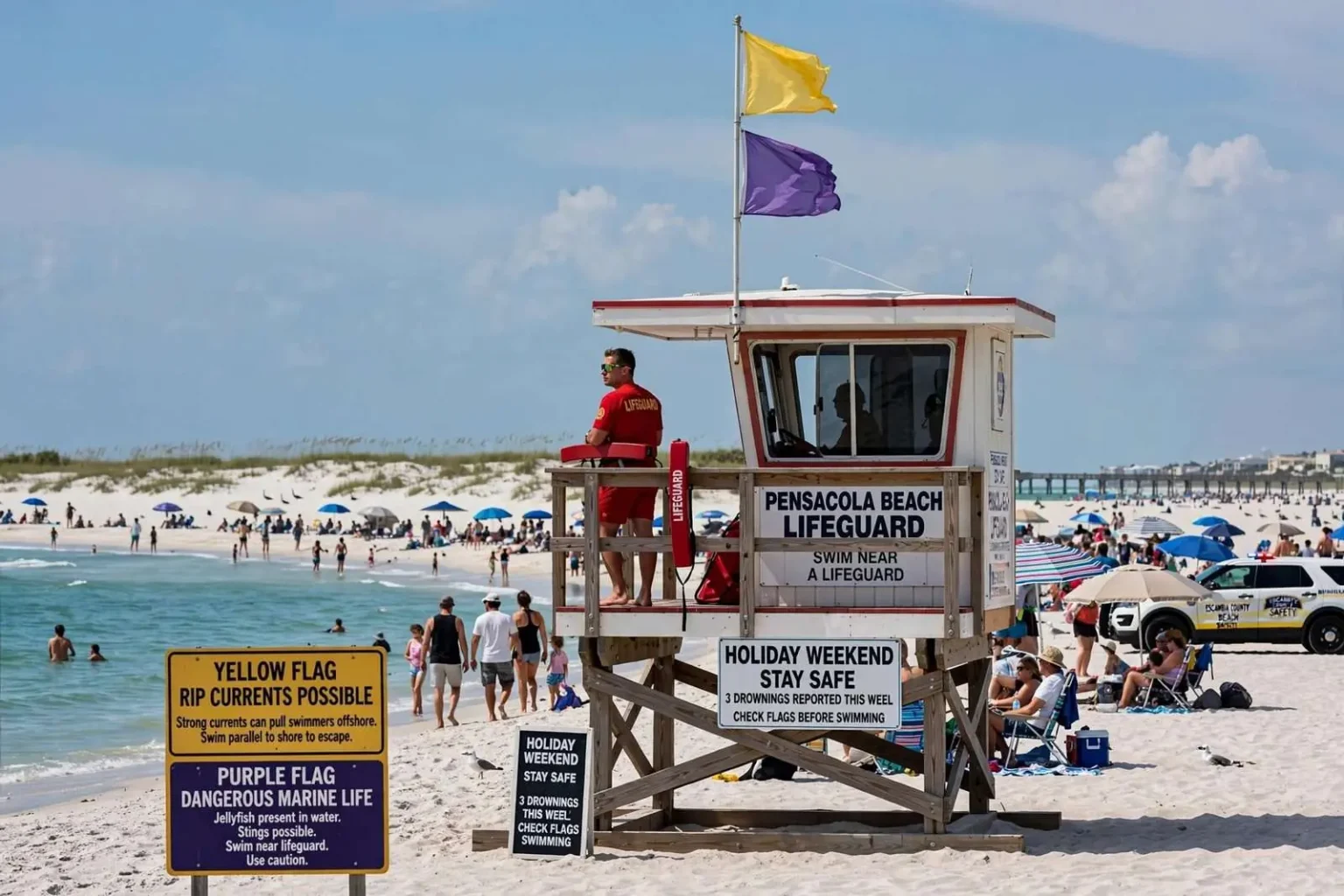
PENSACOLA BEACH, Fla. — As thousands of visitors headed for the sand ahead of Memorial Day weekend, lifeguards on Pensacola Beach had a two-part message for the crowds: keep your distance from others in the water, and pay attention to the ocean’s other dangers. The reminder came at the unofficial start of the Gulf Coast summer season, when the barrier island’s population swells well beyond its normal size and the water fills with swimmers of every ability level.
The warning carried extra weight this year. Three drownings had already been reported in Escambia County in the week leading up to the holiday, a grim run-up that underscored how quickly a day on the water can turn deadly along the Panhandle’s open Gulf shoreline.
Reading the Flags
On the beach itself, crews flew purple flags to warn swimmers of jellyfish in the water and yellow flags to signal a chance of rip currents. The flag system used on Pensacola Beach and across Florida’s public beaches is a standardized color code: green for calm conditions, yellow for moderate surf, red for high hazard, double red for water closed to the public, and purple for dangerous marine life such as jellyfish, stingrays, or harmful organisms. The combination flying over the holiday weekend meant visitors faced two separate hazards at once — stinging marine life drifting inshore and currents that could pull swimmers away from shore.
Jellyfish warnings are common along the northern Gulf, where wind and currents push blooms of the animals toward the beach, particularly in the warm months. Stings range from mildly painful to serious for those who are allergic, and lifeguards recommend shuffling feet in the shallows, keeping vinegar or hot water treatments handy, and seeking medical attention for severe reactions. Rip currents, by contrast, are the region’s deadliest hazard, responsible for more surf fatalities in Florida than sharks, lightning, and tornadoes combined.
Swim Near a Lifeguard
“Swim near a lifeguard. Be mindful of the presence of rip currents. Make sure you know your own swimming ability,” said Water Safety Deputy Chief Alex Johnson. The advice distills the core of beach safety into three habits that lifeguards say would prevent most of the emergencies they respond to each year.
Swimming near a lifeguard matters because seconds count when a swimmer gets into trouble. Lifeguards stationed on Pensacola Beach during the busy season watch designated areas, and statistics gathered by beach safety organizations nationwide consistently show that the odds of drowning at a guarded beach are dramatically lower than at an unguarded one. Knowing your own swimming ability matters just as much: holiday crowds on the Gulf Coast include thousands of visitors who swim rarely, many of them overestimating how they will handle open water chop, sudden drop-offs, and the pull of a current that would be trivial in a pool and overwhelming in the Gulf.
Rip Currents: The Gulf’s Hidden Danger
Rip currents are narrow channels of water flowing from shore back out to sea, formed when waves break over sandbars and near structures and the returning water funnels through gaps. They can move faster than an Olympic swimmer can sprint, and they do not pull swimmers under — they pull them out. The instinct to fight directly back toward shore is what exhausts and drowns most victims, which is why safety officials teach swimmers caught in one to stay calm, float, and swim parallel to the beach until they escape the narrow band of outward flow.
Escambia County’s stretch of the Gulf, from the Pensacola Beach lifeguard towers across Santa Rosa Island, sees rescues clustered around the beach’s deepest cuts and passes, where currents concentrate. Warning signs posted at beach access points explain how to spot a rip current — a channel of churning, choppy water, a difference in water color, a line of foam or debris moving steadily seaward — before entering the surf.
A Crowded Holiday on a Narrow Island
Memorial Day weekend ranks among the busiest stretches of the year on Pensacola Beach, drawing families, college students, and spring-into-summer travelers from across the Southeast to the sugar-white sand of Santa Rosa Island. The island’s single main road funnels arriving traffic past the Casino Beach area and the fishing pier, and parking becomes scarce by midmorning on peak days. Crowds of that size change the texture of water safety: more swimmers mean more people in the surf at once, more children near the waterline, and more strain on the lifeguards and first responders watching over them.
The distance warning — keeping apart from other groups in the water — reflects the realities of a packed holiday beach. Swimmers clustered tightly together can collide, block a lifeguard’s view, and complicate rescues. Officials urged visitors to give other groups room and to keep children within arm’s reach, advice that applies doubly when surf conditions include both jellyfish and a chance of rip currents.
After a Deadly Week
The three drownings reported in Escambia County in the week before the holiday lent urgency to the safety push. Drownings along the Panhandle’s beaches are rarely dramatic spectacles; they unfold quietly, often within sight of shore, when a swimmer tires against a current or is overcome while swimming beyond their ability. Safety officials mark each one as a lesson in the same principles lifeguards repeated heading into the weekend: enter the water with a plan, stay where help can reach you, and respect the Gulf’s strength regardless of how calm it looks from the sand.
Emergency responders along the coast remind beachgoers that anyone who sees a swimmer in trouble should call 911 immediately and, if possible, throw the person something that floats rather than entering the water themselves. Well-intentioned rescuers who wade in after a struggling swimmer account for a share of drowning deaths every year, turning one emergency into two.
Visitors Heeding the Advice
Visitors on the beach said they were doing their best to enjoy the water safely, staying close to their own groups along the busy shoreline. Families claimed stretches of sand near guarded areas, kept towels and umbrellas close to the waterline as markers, and rotated who kept watch on children in the shallows — the kind of informal practices lifeguards encourage, layered on top of the flag system and posted warnings.
The holiday weekend sets the tone for the entire summer season on the Gulf Coast, which runs from Memorial Day through Labor Day and brings the largest crowds of the year to Pensacola Beach. Lifeguards urge every visitor to check the flags at the beach access points before entering the water, to swim during posted hours when lifeguards are on duty, and to treat the combination flying this weekend — purple over yellow — as a reminder that the Gulf offers beauty and hazard in equal measure.
How the Beach Guard System Works
Pensacola Beach’s lifeguard operation follows the seasonal rhythm of the crowds. Towers are staffed during the peak daylight hours from late spring through early fall, with coverage concentrated on weekends and holidays when visitation is heaviest. Lifeguards train in the same conditions they guard, practicing rescue strokes with rescue cans, simulating searches, and rehearsing the coordination needed when a swimmer is pulled from a current and needs care on the sand.
The flag warnings posted at each access point are updated as conditions change through the day, and beach patrol vehicles patrol the sand to enforce the water-closure orders that come with double red flags. Visitors sometimes mistake a purple flag for a reason to stay entirely out of the water; the flag is a caution about marine life rather than a closure, and many swimmers simply choose protected areas or adjust their plans for the day when jellyfish are in the surf zone.
Planning Around the Water
Safety officials suggest that families visiting the beach build their day around the water rather than the other way around. That means checking the posted flags on arrival, setting up near a staffed tower, agreeing on a meeting spot in case anyone is separated, and saving the most active swimming for times when the beach is fully staffed. Sunscreen, hydration, and breaks from the heat round out the practical advice, since heat exhaustion and dehydration put swimmers at greater risk once they enter the surf.
For parents, the standard guidance is blunt: children in or near the water need a designated adult watching them, without a phone in hand, at all times. Drowning is quick and silent, and the crowded, festive atmosphere of a holiday weekend is precisely when a child can slip beneath the surface unnoticed a few yards from a full beach.
The Season Ahead
The Memorial Day push opens what beach safety officials hope will be a safe summer on the Panhandle’s beaches. The three drownings in the week before the holiday stand as a sobering count against which the season will be measured, and lifeguards will repeat the same three-point message — swim near a lifeguard, respect rip currents, know your own ability — at every crowded weekend between now and Labor Day.
For the thousands who spent the holiday weekend on Pensacola Beach, the goal is simple: enjoy the Gulf, take the flags seriously, and leave the water with nothing worse than a sunburn. Visitors who follow the posted warnings, swim within their abilities, and keep their groups together give themselves and the lifeguards watching over them the best odds of a safe start to the summer season.