Pensacola woman charged with aggravated child abuse after broom attack on son
A Pensacola woman is charged with aggravated child abuse after deputies say she beat a child with a broom, leaving injuries that needed 22 stitches.
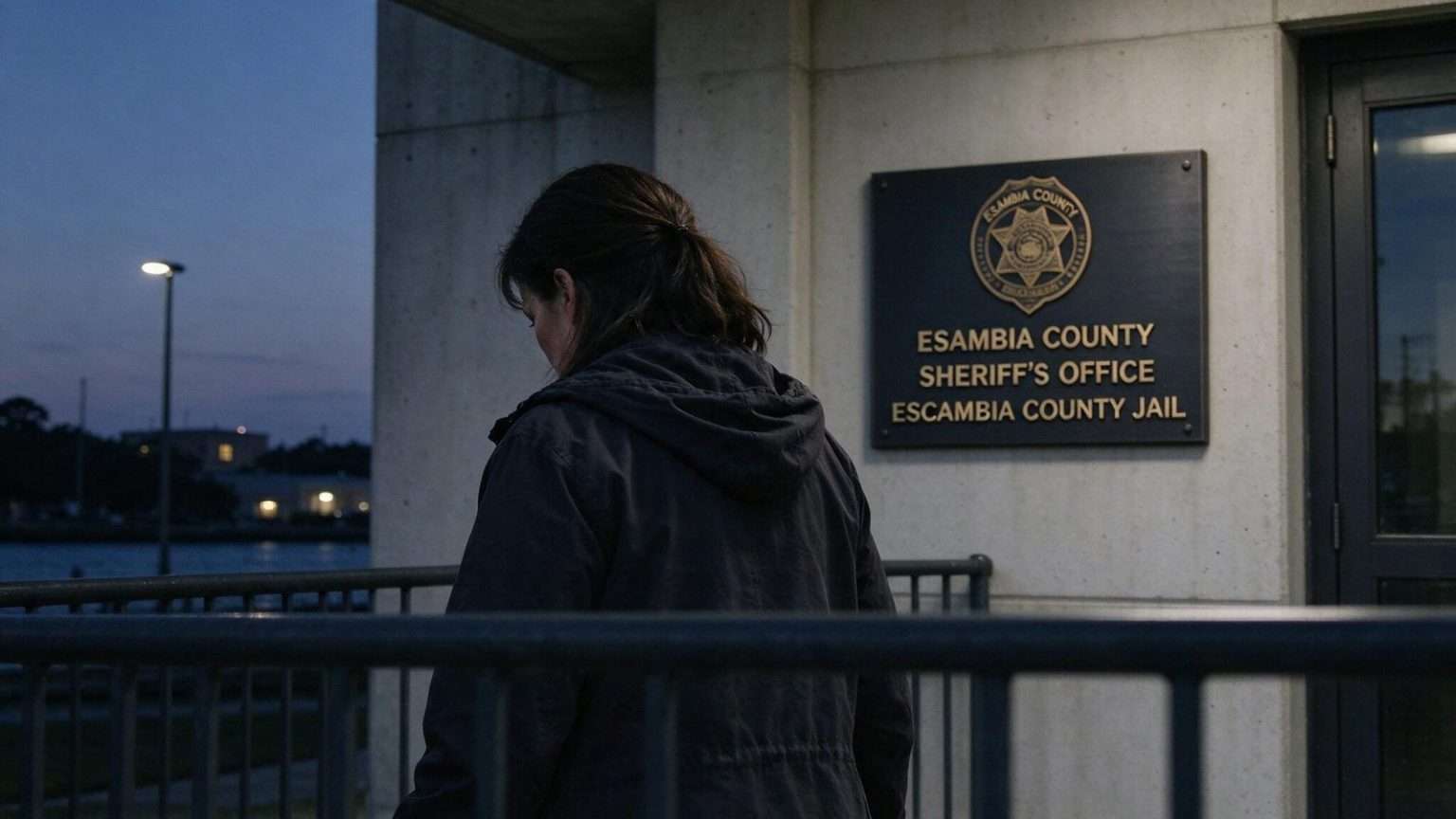
A Pensacola woman has been charged with aggravated child abuse after authorities say she struck a child with a broom, leaving the boy with injuries that required more than 20 stitches, according to the Escambia County Sheriff’s Office. Chenna Jordan, 40, was taken into custody and booked into the Escambia County Jail on a $50,000 bond, deputies said. The case began with a phone call from a teacher and ended with a mother in jail, a child in protective custody and a community confronting again how violence inside a home comes to light through the people who notice it from outside.
Aggravated child abuse is among the most serious charges Florida law provides for crimes against children, and a $50,000 bond reflects the gravity prosecutors and the court assign to it. The charge applies when a person willfully tortures, maliciously punishes or cages a child, or willfully and unlawfully causes great bodily harm, permanent disability or permanent disfigurement. Injuries that require extensive stitches, as investigators allege in this case, fall squarely within the category of great bodily harm that the statute is written to reach.
The Case Began With a Virtual Teacher’s Call
The investigation began after the child’s virtual teacher contacted the Sheriff’s Office around 10 a.m. Monday to report concerns that the boy may have cheated on a school assignment, according to the arrest report. The call itself was about a schoolwork matter, not about violence — but it set in motion the deputy visit that brought the injuries to light. Virtual schooling has placed teachers in an unusual position in the era of online learning: they see students through a screen and on assignment submissions, but not in person, which makes direct observation of a child’s condition impossible and makes teachers dependent on what shows through in academic behavior and conversation.
When deputies arrived, the child told them he was afraid and did not want to remain in the home, the report states. That statement transformed the visit from an academic inquiry into a child welfare response. Deputies are trained to treat a child’s own account of fear in their home as a serious signal, and in Florida, law enforcement and the Department of Children and Families work in parallel once abuse is disclosed — deputies gather the criminal evidence while child protection staff determine what arrangement keeps the child safe while the case proceeds.
What Investigators Say Happened
According to investigators, Jordan became upset after the teacher’s call and ordered the boy to do 50 pushups as punishment. The boy said that while he was performing the exercise, Jordan struck him on the lower back with a broom. He stood up and was hit again on the right side of his face, causing him to bleed, he told deputies. The account describes punishment that escalated from a physical exercise to a beating, with the weapon — an ordinary household broom — turning discipline into the kind of injury the law treats as abuse rather than corporal punishment.
Jordan later drove the boy to a hospital and told medical staff he had fallen in the shower, according to the report. The explanation did not match the injuries. He received 22 stitches for a cut to the side of his head. Medical personnel are among the most important links in the child protection chain precisely because they are trained to recognize when an injury’s characteristics contradict the explanation given — a distinction between the pattern of a fall and the mark of a blow that often determines whether an abuse case is discovered or missed.
Deputies said they found a bent broom with blood on it inside the home, along with blood on the floor and on the door to the room where the boy does his schoolwork. They also noted marks on the child’s body, a bump on his head and a laceration. The physical evidence — the bent broom, the bloodstains in the locations the child described, and the pattern of marks — matched the boy’s account, giving investigators the basis for the aggravated child abuse charge and the arrest that followed.
The Escambia County Sheriff’s Office continues to investigate the case. Investigators will assemble the complete record — the teacher’s call, the child’s statements, the medical documentation, the physical evidence and interviews with everyone in the household — before the file goes to the State Attorney’s Office, which decides how the charge proceeds through the court system. The boy’s immediate safety, meanwhile, is handled through the child welfare system, and the outcome of the dependency process — where the child lives during the case — is determined separately from the criminal charge against his mother.
Teachers and the Duty to Report
The case illustrates the role Florida law assigns to teachers and school personnel as reporters of suspected child abuse. Florida requires anyone with knowledge or reasonable suspicion of child abuse to report it, and school employees are trained to take that duty seriously even when the initial concern is something smaller — a change in a student’s work, a story that does not add up, a child who seems frightened. In this case, a teacher’s call about a possible cheated assignment brought a deputy to the door, and the system worked exactly as designed: the concern escalated through the people positioned to notice until someone with the authority to investigate saw the child in person.
Virtual learning has complicated that safety net. When a student attends school through a screen, the daily in-person observations that catch bruises, flinches and hunger are no longer available, and teachers must rely on subtler signals. Child welfare advocates have warned since the shift to online learning that children in dangerous homes lose the layer of protection that school buildings provide — the adults who see them every morning. Cases like this one show both the gap and the counterweight: even through a screen, a teacher paying attention can start the process that reaches a child before the damage goes further.
How the Legal Process Moves From Here
Jordan’s case now moves through the Escambia County court system. After booking on the aggravated child abuse charge, the next stages include first appearance before a judge, where bond conditions are set or reviewed, and arraignment, where the formal charge is answered. The $50,000 bond set in her case allows release pending trial if posted, subject to conditions the court imposes — and in cases involving allegations of violence against a child living in the defendant’s home, no-contact provisions protecting the child are standard conditions of any release.
The charge carries serious potential consequences under Florida law. Aggravated child abuse is classified among the most severe felony categories for crimes against persons, and a conviction can mean years in state prison followed by supervision, along with the lasting restrictions that accompany any violent felony record. Prosecutors weigh the child’s statements, the medical evidence and the defendant’s account in deciding how to proceed, and the discrepancy between the shower-fall explanation and the injuries documented by medical staff will be central to the case either way.
The Broader Context in Escambia County
The Sheriff’s Office investigates child abuse cases as a standing part of its workload, and Escambia County — anchored by Pensacola at Florida’s western edge — processes these cases through the same institutions as the rest of the state: the Sheriff’s Office and other local law enforcement agencies handle the criminal side, the Department of Children and Families handles child safety, and the State Attorney’s Office brings the charges to court. The Guardians ad litem and child advocacy professionals who support children through the process are part of the same network, and their work continues regardless of how long the criminal case takes.
Child welfare officials note that the physical signs documented in this case — defensive marks, a head bump, a laceration requiring more than 20 stitches — represent the visible portion of the harm, while the psychological impact on a child who tells a deputy he is afraid to stay in his own home extends well beyond the stitches. Recovery in cases like this one involves counseling, stability and the slow work of rebuilding a child’s sense of safety, and the adults who receive that child’s trust — a teacher who noticed, a deputy who listened — become part of that process long after the arrest report is filed.
What Neighbors and Family Members Can Do
Florida’s mandatory reporting structure relies not only on teachers and medical staff but on the wider community. The state’s abuse hotline accepts calls from anyone with reasonable suspicion, and the professionals who staff it screen each report and route credible concerns to the right agency. Advocates emphasize that callers do not need proof — only a reason to be concerned — and that the decision to investigate belongs with the professionals, not the caller. The threshold matters because the cost of a missed case is measured in injuries like the 22 stitches documented in this one, while the cost of a well-intentioned report that proves unfounded is minimal.
The case that ended with Chenna Jordan’s arrest began with a teacher who picked up the phone about a school assignment and stayed on the line long enough to describe what concerned her. From there, the process unfolded the way the system intends: a deputy at the door, a child heard and protected, a hospital’s documentation, physical evidence collected, and a serious charge filed. The Escambia County Sheriff’s Office says its investigation continues, and the courts will take the case from here — while the boy at the center of it moves forward under the protection of the network that finally reached him.
For the community, the case is a reminder of how child abuse is actually discovered: rarely through confession or dramatic rescue, and usually through an ordinary adult who notices something wrong and makes the call. The system that responded in this case — from a virtual classroom in Pensacola to a hospital to a jail booking on a $50,000 bond — worked because each person in the chain did their part, and the boy who said he was afraid is no longer alone with it.