

Just days after Tropical Storm Bertha moved through Baldwin County, Pirates Cove in Josephine pressed ahead with its 20th annual High Hopes for Autism FUNraiser this past weekend, drawing crowds by land and by water for a milestone celebration of the waterfront event. The event featured live music, an art market set up along the beach, and an elaborate raffle for a Jeep, all in support of High Hopes 4 Autism, a nonprofit that provides Applied Behavior Analysis, or ABA-based, therapy for school-aged children, with a focus on language development and social behavior.
The milestone carries weight in a corner of Baldwin County where the unincorporated community of Josephine sits along Perdido Bay’s shoreline, a stretch of waterfront defined by small marinas, weathered docks and the kind of old-Florida-style roadhouses that have all but vanished elsewhere on the Gulf Coast. For two decades, the fundraiser has been the venue’s signature event, and this year’s edition drew families, boaters and longtime supporters who have made it a summer tradition.
Rachael Mueller, co-founder of the event and director of the High Hopes Clinic, was inspired to open the clinic after finding a lack of local services following her daughter’s autism spectrum diagnosis. Two decades later, the fundraiser she helped launch has grown into a fixture of the Baldwin County community calendar, raising roughly $100,000 each year for the clinic’s work.
“It just blows me away that our community just continues to support us year after year,” Mueller said. “I’m so grateful to have the support of our community because it’s the same people buying these tickets every year, and without this event, we would not be able to have the kind of clinic that we have.”
The need the clinic addresses is substantial. Families raising children with autism spectrum disorder in coastal Alabama have long faced waiting lists and long drives for ABA therapy, the evidence-based approach that builds communication, social and daily-living skills through structured, individualized work with children. A clinic that serves school-aged children close to home — funded in part by the dollars raised each summer at Pirates Cove — removes barriers that for many families determine whether their child receives consistent therapy at all.
Volunteers Behind the Yellow Shirts
The fundraiser runs on the strength of a core group of volunteers, some of whom have taken part since the very first year.
“Everyone you see with a yellow shirt on for the most part is either a volunteer or a family member of ours,” said Paul Mueller, who co-owns Pirates Cove with his brother Karl. “Some of the people have done it all 20 years, and then some of the people just found out or just moved to the area and they start doing some community involvement. I’m fire chief here, so community involvement is important to me.”
His role as fire chief — a volunteer post in the small waterfront community — reflects the same ethic that sustains the fundraiser. In unincorporated Baldwin County communities like Josephine, the institutions that hold the community together are precisely these: the volunteer fire department, the waterfront businesses and the annual events that turn neighbors into organizers. The yellow-shirted crew that runs the FUNraiser each year functions as all three at once.
Arriving by Land and by Water
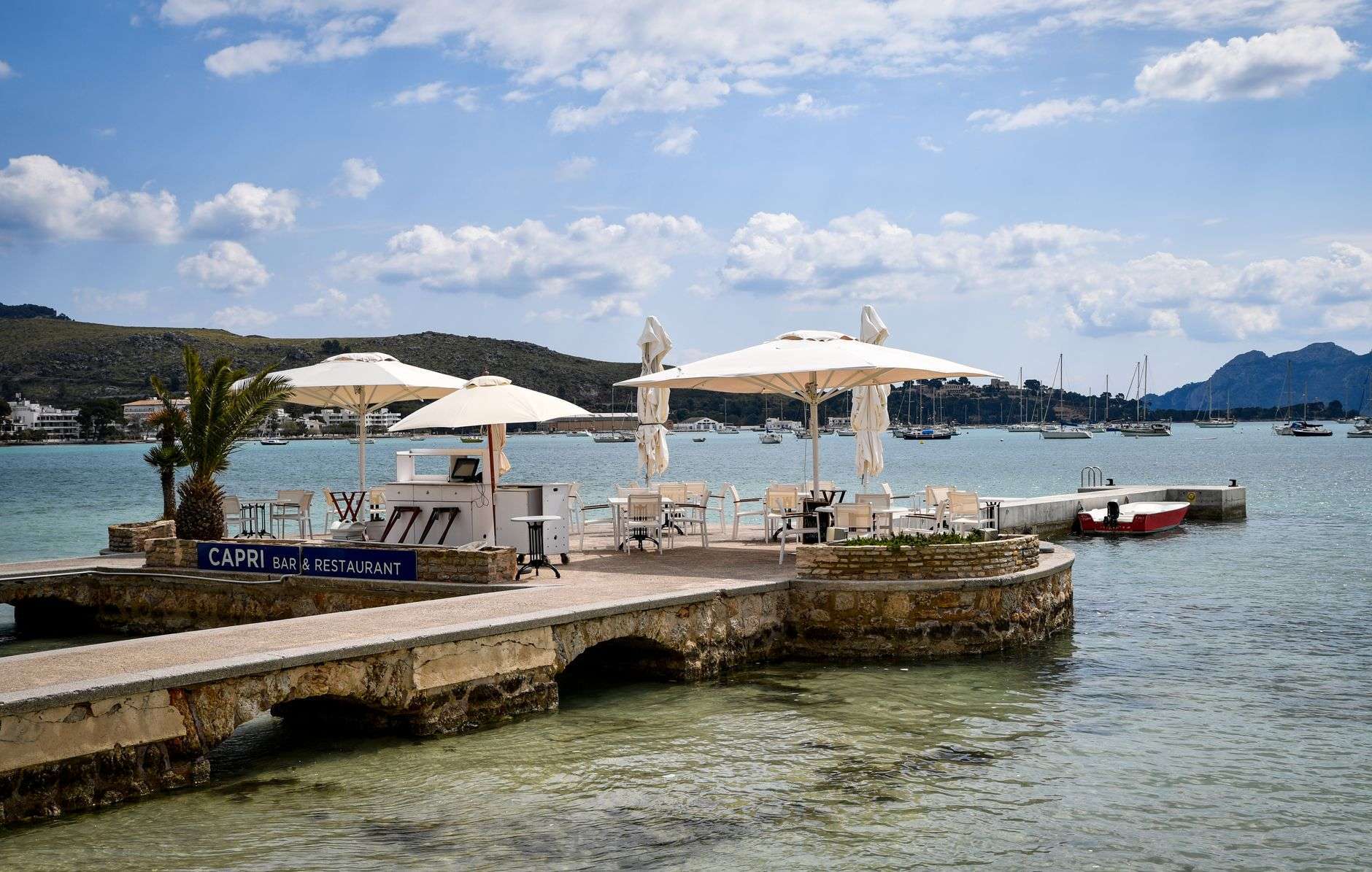
Pirates Cove sits a short boat ride from Perdido Bay, and this year’s event saw patrons arrive both by car and by boat. The venue’s dockside accessibility is central to its identity — boaters have long idled up to the cove for burgers and live music, and the fundraiser’s crowds spill across the beach and the water in a way few landlocked venues could duplicate. The art market along the beach and the Jeep raffle give the event its shape, but the setting supplies its atmosphere, and on a summer weekend the cove fills with boats rafted together as the music plays into the evening.
The gathering came just days after Tropical Storm Bertha swept through Baldwin County, bringing high tides and rip currents to the coast. While some areas took a harder hit than others, Mueller said Bertha ranked near the bottom of the list of storms Pirates Cove has weathered, calling it more of an inconvenience than a threat.
“It wasn’t bad,” Mueller said. “If I could have one of those once or twice a year and we never saw a major storm, that would be fantastic. It would be far cheaper to lose a little bit of revenue compared to physical damage.”
Unlike past storms, Bertha didn’t force Pirates Cove to close. Mueller said the business typically closes only when its parking lot floods, and despite high tide pushing water nearly to the main building, the restaurant stayed open, posting weather updates on social media as water crept over the beachside picnic tables.
Two Decades of Storms
Pirates Cove, owned by the Mueller family since the 1950s, has weathered far more serious storms over the decades. Mueller cited Hurricane Sally as the worst for the business, having destroyed roughly 95% of the outside deck, along with Hurricane Ivan, Hurricane George and Hurricane Frederick, which Mueller experienced at age 10. Each storm brought its share of debris and roof damage.
The litany of storms traces the modern history of Baldwin County’s waterfront. Hurricane Frederick struck in 1979 as one of the costliest hurricanes in Alabama history to that point, devastating the Mobile Bay area. Hurricane Georges flooded the coast in 1998. Hurricane Ivan came ashore near Gulf Shores in 2004 and ravaged Baldwin County’s waterfront, and Hurricane Sally — a slow-moving Category 2 storm in September 2020 — inundated Perdido Bay communities with catastrophic surge and wind damage that took months to repair. Each time, Pirates Cove rebuilt, and each time the community came back with it.
“Storms will show you things that you didn’t really want to know with a 100-year-old building,” Mueller said. “We fixed some things that are long-term fixes in the process of just getting back open, so it exposed some stuff we didn’t know, some problems we didn’t know we had, but we had addressed them as we went.”
Keeping a Landmark Running
Keeping the aging waterfront business running, storm or no storm, remains part of the daily challenge and reward of operating a family business for Mueller, who holds degrees in both engineering and management information systems.
“Stuff breaks all the time,” he said. “We do a lot of our own repairs here.”
That do-it-yourself ethic is how a seven-decade-old waterfront roadhouse survives. Structures on Perdido Bay face salt air, termites, flood tides and the occasional hurricane on top of the ordinary wear of a business that packs in crowds all summer, and a hands-on owner with an engineering background is the difference between a repair bill and a closure. The family’s stewardship since the 1950s has made the cove one of the last of its kind on Alabama’s coast, a place unchanged enough that generations of regulars measure their own lives against its shifts and survivals.
The 20th annual FUNraiser tied those threads together: a family business that has survived every storm the Gulf has thrown at it, lending its dockside stage to a clinic that has grown from one mother’s search for help into a pillar of special-needs services in Baldwin County. Two decades of yellow shirts, raffle tickets and boat-dock crowds have raised a cumulative sum measured in the millions for children on the spectrum, and the milestone year showed the formula still works.
For the families the clinic serves, the event’s continuity matters as much as its check. ABA therapy works through consistency — hours of structured sessions, week after week, year after year — and the steady, predictable support that Pirates Cove and its community provide each summer is what allows the High Hopes Clinic to plan in years rather than months. Bertha came and went, the water lapped at the picnic tables, and the cove threw its party anyway. Around there, that is simply how it is done.
A Clinic Born From a Parent’s Search
The High Hopes Clinic’s origin story is a familiar one to parents of children with autism in communities where services are scarce: a diagnosis, a search for therapy, and the discovery that the nearest qualified providers were hours away or booked for months. Mueller’s response — building the service her family could not find — followed a path many parent-advocates have taken in Alabama, where nonprofit clinics and school partnerships have filled gaps that the state’s network of providers has not kept pace with in the state’s smaller cities and counties.
The roughly $100,000 the fundraiser delivers each year funds that mission across the calendar. ABA-based therapy is intensive by design, and insurance coverage for such services has only gradually expanded in Alabama, leaving many families dependent on providers with scholarship funds or sliding-scale programs. An annual gift of that size, arriving reliably each summer, underwrites the consistency the therapy model requires — and shields the clinic from the funding gaps that force similar programs to close their doors.
The art market and the Jeep raffle that anchor the event each year have become traditions in their own right. Local artists set up along the beach to sell coastal work, with proceeds flowing to the clinic, while the raffle for a vehicle gives supporters a reason to buy tickets by the stack — and a reason to come back the following summer to see who won. Live music runs through the afternoon and evening, with the stage set against the water so the crowd of boaters and beachgoers blurs into one gathering.
Twenty years in, the FUNraiser has outlasted multiple hurricanes, a tropical storm or two per decade and the wholesale transformation of Baldwin County’s coastline around it. The community Mueller thanked — the same people buying the same tickets every year — has grown only more essential as development reshapes the bay’s shoreline and the old waterfront communities lose ground to new construction. What has not changed is the arrangement at the heart of it: a family business that opens its docks for a cause, a clinic that turns the proceeds into therapy, and a crowd that shows up every summer to keep both afloat.