

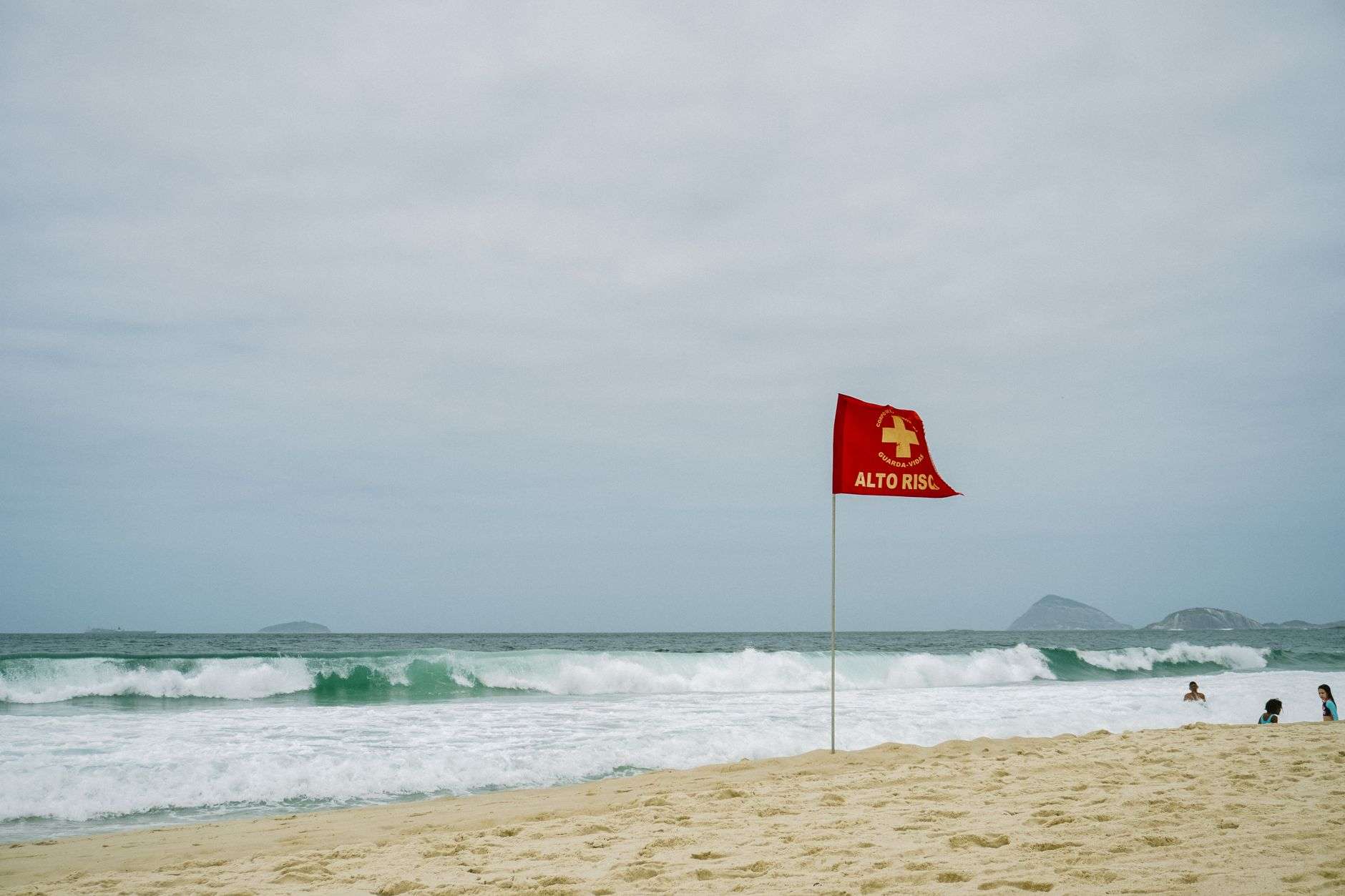
BALDWIN COUNTY, Ala. — Two Baldwin County lawmakers are drafting legislation that would give local authorities across Alabama’s coast the power to order people out of the Gulf when surf conditions turn deadly, and they are naming the proposal after a sheriff’s deputy who lost his life trying to save swimmers in rough water at Fort Morgan.
State Sen. Chris Elliott, R-Josephine, and State Rep. Frances Holk-Jones, R-Foley, are working together on what they are calling the Deputy William “Bill” Smith Act. The bill would set up a uniform beach flag warning system along the Gulf Coast and allow authorities to close public waters whenever double red flags are flying. It would also allow officials to close the water because of “extreme hazardous conditions.”
The measure is still in draft form. Because of the Nov. 3 general election, lawmakers are not able to pre-file bills right now, but Elliott and Holk-Jones say they plan to introduce the legislation during the 2027 regular session of the Alabama Legislature.
Closing a gap between the beach cities and unincorporated areas
Along Alabama’s roughly 32 miles of Gulf beaches, the rules visitors encounter depend a great deal on where they happen to lay down their towels. Gulf Shores and Orange Beach already operate beach flag warning systems. In those cities, double red flags signal dangerous rip currents and mean the public waters are closed.
Outside those city limits, the picture is different. The proposed legislation would extend the same authority to other cities and to unincorporated areas such as Fort Morgan, the long, narrow peninsula that stretches west from Gulf Shores toward the mouth of Mobile Bay. Fort Morgan does not have a flag system, the lawmakers noted, because there are no lifeguards on duty there.
That gap matters because conditions do not change at a city limit sign. When a strong system churns up the Gulf, the same currents that prompt closures in Gulf Shores and Orange Beach can be pulling at swimmers a few miles away, where no one has the clear legal authority to order them out.
‘No, we really mean it’
Elliott said the goal is to give law enforcement the backing it needs when warnings alone are not enough to keep people out of dangerous surf.
“We’re trying to give law enforcement the authority to say, ‘No, we really mean it, get out of the water,'” Elliott explained. “It also gives them the ability to use the emergency alert system, a geofenced notice, to say, ‘Hey, it’s double red flag. Y’all have got to stay out of the water,’ and they’ll get alerts on their phones.”
The alert piece of the plan is especially important in a place like Fort Morgan. Without lifeguard stands or a posted flag system, beachgoers there may have no visible signal telling them how dangerous the water is on a given day. A geofenced alert would send a warning directly to phones in a defined area, reaching people who may be staying in rental homes, walking in from public access points or visiting the area for the first time.
Under the draft, surfers who are attached to their boards by a leash would be exempt from the closures. People who violate a closure would face criminal penalties.
‘An issue our beach communities have been dealing with for years’
Holk-Jones said the bill reflects a long-running struggle in Alabama’s beach communities: convincing people that the water really is as dangerous as the warnings say.
“This bill is absolutely necessary in protecting our residents, visitors and first responders,” Holk-Jones stated. “This is an issue our beach communities have been dealing with for years – how to convince people that the water is in fact dangerous. When we put enforcement in place and back it up with criminal penalties, it shows that we are serious about keeping people out of the water when the conditions are dangerous. It shows that this is a serious situation.”
She also pointed to the risks that rescuers take on when swimmers ignore the warnings.
“Our first responders expected to enter dangerous situations, yes. But they should not be expected to enter a dangerous situation needlessly,” Holk-Jones added. “When people don’t respect the water and place themselves purposely in a hazardous situation, that puts our first responders at grave risk. That is not something I am willing to allow to continue to happen.”
Remembering Deputy Bill Smith
The legislation carries the name of Baldwin County Sheriff’s Deputy William “Bill” Smith, who died in June 2021 after responding to a call about three distressed swimmers in the Gulf at Fort Morgan. Deputy Smith went into the water as part of the rescue effort and did not survive. His death was mourned across Baldwin County and beyond, and he was widely remembered as a hero who gave his life trying to save others.
For the Baldwin County Sheriff’s Office, the bill is personal. Sheriff Anthony Lowery said it means a great deal to him that lawmakers are addressing the issue in the name of his late colleague.
“It’s going to keep people that are visiting our beaches and the people that live here safer, which is our primary responsibility,” Lowery said. “But it will also keep my deputies safe, which is my responsibility, too. It’s one of those things that’s been needed for a long time.
“This isn’t a ‘solve all,’ but when you combine it with all the other things that we do, I think it’s really important.”
What the bill would do
Based on what the sponsors have described so far, the draft Deputy William “Bill” Smith Act would:
- Establish a beach flag warning system along Alabama’s Gulf Coast.
- Allow authorities to close public waters when double red flags are flying.
- Allow closures of the water because of “extreme hazardous conditions.”
- Extend that authority to cities and unincorporated areas, including places such as Fort Morgan, not just Gulf Shores and Orange Beach.
- Allow authorities to use the emergency alert system to send geofenced notices to phones when the water is closed.
- Exempt surfers who are attached to their boards by a leash.
- Set criminal penalties for people who violate a water closure.
Because the bill is still being drafted, details such as the specific penalties and how closures would be declared in unincorporated areas have not been released. Those specifics are expected to take shape before the legislation is formally introduced.
Understanding the beach warning flags
For visitors who are not familiar with the flag system used in Gulf Shores and Orange Beach, the colors are meant to give a quick read on conditions before anyone steps into the surf:
- Green: Low hazard, with calm conditions. Swimmers should still use caution.
- Yellow: Medium hazard, with moderate surf and/or currents.
- Single red: High hazard, with high surf and/or strong currents.
- Double red: The water is closed to the public.
- Purple: Dangerous marine life, such as jellyfish, has been spotted.
Conditions can change quickly, sometimes within hours, so beachgoers are encouraged to check the flags each time they head to the water rather than relying on what they saw earlier in the day.
Why rip currents are so dangerous
Rip currents are narrow, fast-moving channels of water that flow away from the shore. They can form on days that look deceptively pleasant from the sand, and they can pull even strong swimmers away from the beach faster than they can swim back against the flow.
Safety experts, including the National Weather Service, offer consistent advice for anyone caught in one:
- Stay calm and do not fight the current by swimming straight back to shore.
- Swim parallel to the shoreline until you are out of the current, then angle back toward the beach.
- If you cannot escape, float or tread water and wave or call for help.
- If you see someone in trouble, call 911 and try to throw them something that floats rather than going in after them.
That final point is part of what the lawmakers are trying to address. Well-meaning bystanders and trained responders alike can find themselves in danger when they enter rough water to help someone else, which is exactly the kind of situation that claimed Deputy Smith’s life.
What happens next
The Deputy William “Bill” Smith Act remains in draft form, and no official bill text has been filed. With the Nov. 3 elections ahead, lawmakers cannot pre-file legislation at this time. Elliott and Holk-Jones have said they intend to introduce the bill during the 2027 regular legislative session, at which point it would move through the committee process in the Alabama House and Senate.
Until then, the existing rules remain in place: Gulf Shores and Orange Beach will continue to operate their flag systems and water closures, while areas such as Fort Morgan will continue without lifeguards or posted flags. Anyone heading to the beach, especially in unguarded areas, is encouraged to check the surf forecast, watch for rip current warnings from the National Weather Service and stay out of the water when conditions are rough.
As Sheriff Lowery put it, the proposal is not a cure-all, but for the families who live along the coast, the visitors who come every year and the deputies and first responders who answer calls in dangerous surf, supporters believe it would be an important step toward preventing the next tragedy.