

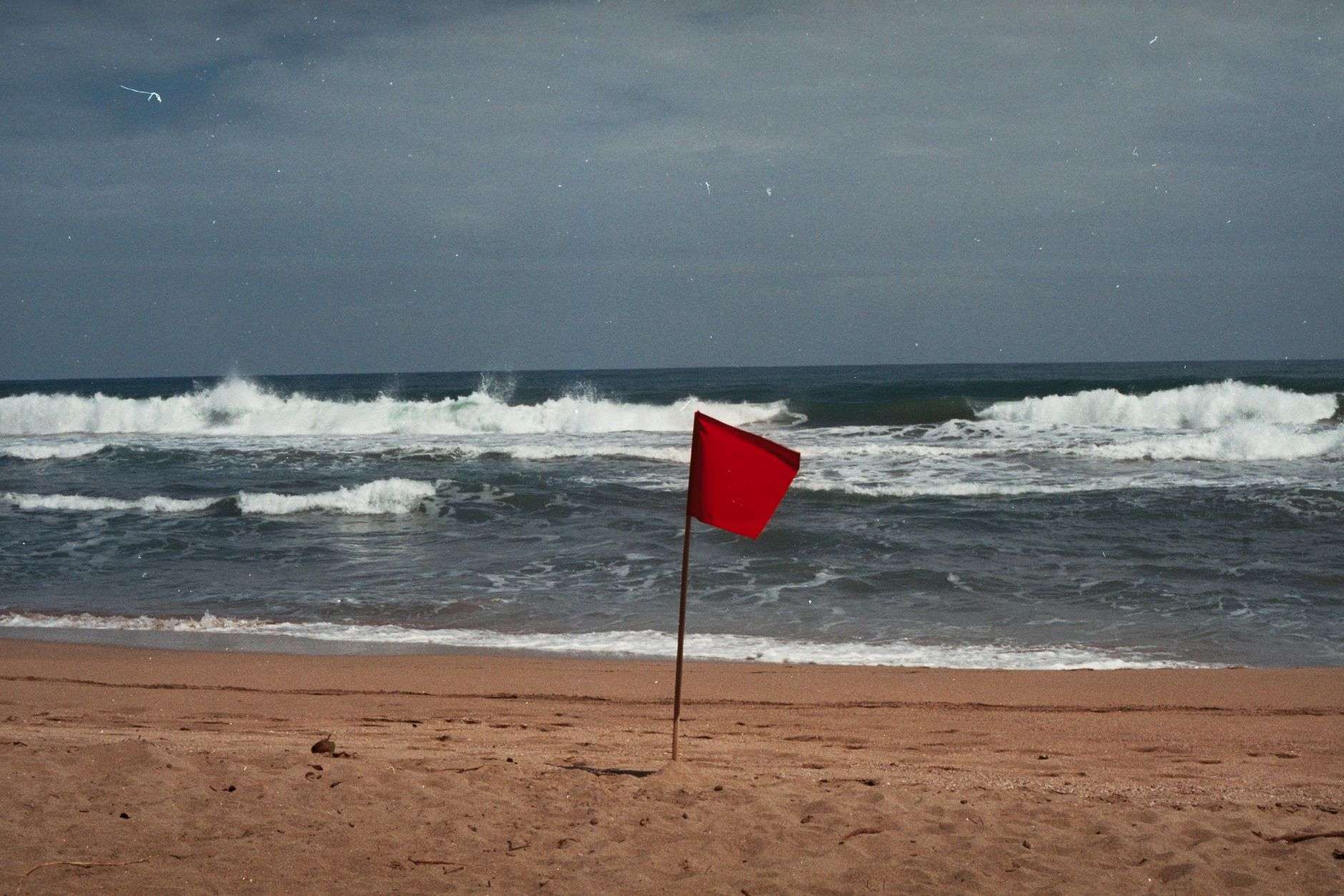
FORT MORGAN, Ala. — Dangerous rip currents pulled at least 22 people into trouble in the Gulf on Thursday afternoon, forcing first responders in Fort Morgan into a steady stream of water rescues even as red flags flew along Alabama’s beaches warning swimmers to stay out of the water. What began as a routine afternoon along the Fort Morgan peninsula turned into one of the busiest rescue days the volunteer fire department has handled this season, with crews moving from one swimmer in distress to the next for hours.
The Fort Morgan Volunteer Fire Department said its crews had responded to at least 22 water rescues by 4:30 p.m. Thursday. At least six people were taken to the hospital, and two were airlifted in critical condition. The count does not include swimmers who made it back to shore on their own or were helped out by other beachgoers before crews arrived — numbers that, responders said, would push the day’s total higher still.
The rescues stretched across the afternoon, and each call meant dispatching crews trained in water rescue out into surf that was itself dangerous. Volunteer firefighters on the peninsula respond to water emergencies with boats and rescue equipment, and on days like Thursday the department’s resources are stretched to the limit by the simple math of 22 separate emergencies in a single afternoon.
Warnings ignored as surf remains rough
Despite the red-flag warnings posted along the coast, first responders said many beachgoers continued to enter the Gulf throughout the day. Red flags are posted at public beaches across coastal Alabama when conditions are considered high hazard, and they are meant to be a clear, uniform signal: stay out of the water. On Thursday, the flags flew along the Fort Morgan shoreline while the rescue calls kept coming in.
Damon Haun, assistant chief of the Fort Morgan Volunteer Fire Department, said the dangerous surf conditions are a predictable, if frustrating, aftermath of tropical weather moving through the region. “Usually when these tropical storms roll in, we deal with the bad surf conditions for, it could be weeks after the storm, but definitely the day after the water is going to be really bad,” Haun said.
That pattern — an offshore storm, a day of calm-looking sunshine and a gulf full of dangerous currents — is among the most deceptive in coastal safety. Beachgoers who see blue skies and tolerable waves often assume the danger passed with the storm itself, unaware that the churned-up seafloor left behind is what makes the water treacherous.
Haun said every rescue call carries risk not just for swimmers but for the volunteer crews sent to pull them from the water. “We’re not the fun police,” Haun said. “We just are doing everything that we can. Every bit of power that we have to try to keep people safe, we try to use. And if you listen, we appreciate you. If you don’t, unfortunately, you’re going to get stuck, and we’re going to have to come get you.”
Why rip currents follow tropical storms
Rip currents are powerful, narrow channels of water that flow away from shore, often forming or intensifying after storms churn up the Gulf and reshape sandbars close to the beach. When a tropical system passes, the altered seafloor and sustained wave energy create channels where water rushes seaward faster than most swimmers can swim against it — pulling them away from the beach even on a calm-looking day.
They can pull even strong swimmers away from the shoreline quickly, and swimmers caught in one are typically advised not to fight the current directly but to swim parallel to shore until they escape its pull, then swim back to the beach at an angle. Fighting the current is what exhausts swimmers; the escape route is sideways, along the beach, until the narrow current releases its grip.
Beach warning flags — with red indicating high hazard and double red signaling a full water closure — are used throughout coastal Alabama to communicate real-time conditions to visitors, though compliance often lags behind the warnings during and after major storm systems. The flag system is posted at lifeguard-protected and public beaches from Dauphin Island to Orange Beach, and it follows standards used across the Gulf Coast so that returning visitors can read conditions at a glance.
The Fort Morgan peninsula’s unique rescue burden
The assistant chief’s message was aimed at the visitor behavior his crews see every time the flags go up: swimmers who acknowledge the warning, wade in anyway, and end up needing rescue within minutes. Volunteer crews on the Fort Morgan peninsula operate with limited staffing, and each preventable rescue draws personnel away from the next emergency.
Fort Morgan occupies a distinctive place in Baldwin County’s beach safety picture. The peninsula extends west from Gulf Shores toward Mobile Point, lined with rental houses, condominiums and long stretches of unguarded beach. Unlike the municipal beaches in Gulf Shores and Orange Beach, which staff lifeguard towers during peak season, most of Fort Morgan’s shoreline has no lifeguards at all — leaving volunteer first responders as the primary safety net for swimmers in trouble.
That structure shapes every rescue. Crews must travel to the victim rather than reacting from a stand a few yards away, and the peninsula’s limited access routes mean response times depend on where along the beach a call originates. When conditions deteriorate after a storm, the department’s call volume rises sharply, as Thursday’s 22-rescue afternoon demonstrated.
The volunteer department draws its members from the small community it serves, and its water rescue capability is built for exactly the scenario that played out this week: multiple simultaneous emergencies in surf that even trained responders treat with respect. Two of Thursday’s victims required helicopter transport, underscoring how quickly a day of swimming can become a medical emergency.
Officials urge caution as conditions persist
First responders are asking beachgoers to respect posted beach warning flags and stay on the sand until conditions improve. Officials encourage residents and visitors to stay informed about current Gulf conditions and to follow beach safety guidance available through Baldwin County resources before entering the water in the days following a tropical system.
The guidance carries extra weight in the days after a storm passes. Rip current risk does not end when the rain stops; it can persist for days or weeks while the reshaped sandbars gradually settle back into place. Swimmers who visited a beach safely before a storm may find the same stretch of water completely changed afterward, with new channels running where the bottom used to be shallow and even.
Safety officials recommend a few habits that dramatically reduce risk in rough conditions: check the flag before entering the water, never swim alone, keep children within arm’s reach, and assume that any current pulling away from shore is a rip current until proven otherwise. Strong swimmers are not immune — rip currents move faster than Olympic swimmers, and the panic that sets in when a swimmer realizes they are being carried seaward is what turns a survivable situation into a fatal one.
A pattern coastal Alabama knows well
Thursday’s rescues fit a pattern that Gulf Coast emergency agencies see after every tropical system. The combination of rough surf, school holidays and warm water draws crowds to beaches that are technically open but operationally dangerous, and rescue calls cluster in the days immediately after the storm has moved on. First responders across Baldwin County and along the Mississippi and Florida coasts plan for the surge, knowing that the day after the storm is likely to be their busiest water-rescue day of the season.
The Fort Morgan Volunteer Fire Department’s handling of 22 rescues in a single afternoon illustrates both the danger and the response. No fatalities were reported in Thursday’s incidents, a outcome crews credit to fast calls from bystanders on the beach and the department’s rescue crews reaching victims before the currents could exhaust them.
Emergency officials say the message they most want visitors to take from days like Thursday is simple: the flags are there for a reason, and the men and women who volunteer to pull swimmers from the Gulf would much rather never get the call. Until the surf settles, the safest place on the Fort Morgan peninsula is on the sand, watching the water rather than swimming in it.
Local officials also point visitors toward the tools that make the warnings easier to follow. Baldwin County publishes current beach conditions and flag statuses through its public safety channels, the National Weather Service office in Mobile issues surf zone forecasts that flag elevated rip current risk by beach, and rental hosts along the peninsula are encouraged to post flag information for their guests. Checking those sources takes only a moment — and on days like Thursday, responders say, that moment is the difference between a day on the sand and an afternoon being pulled from the Gulf.