

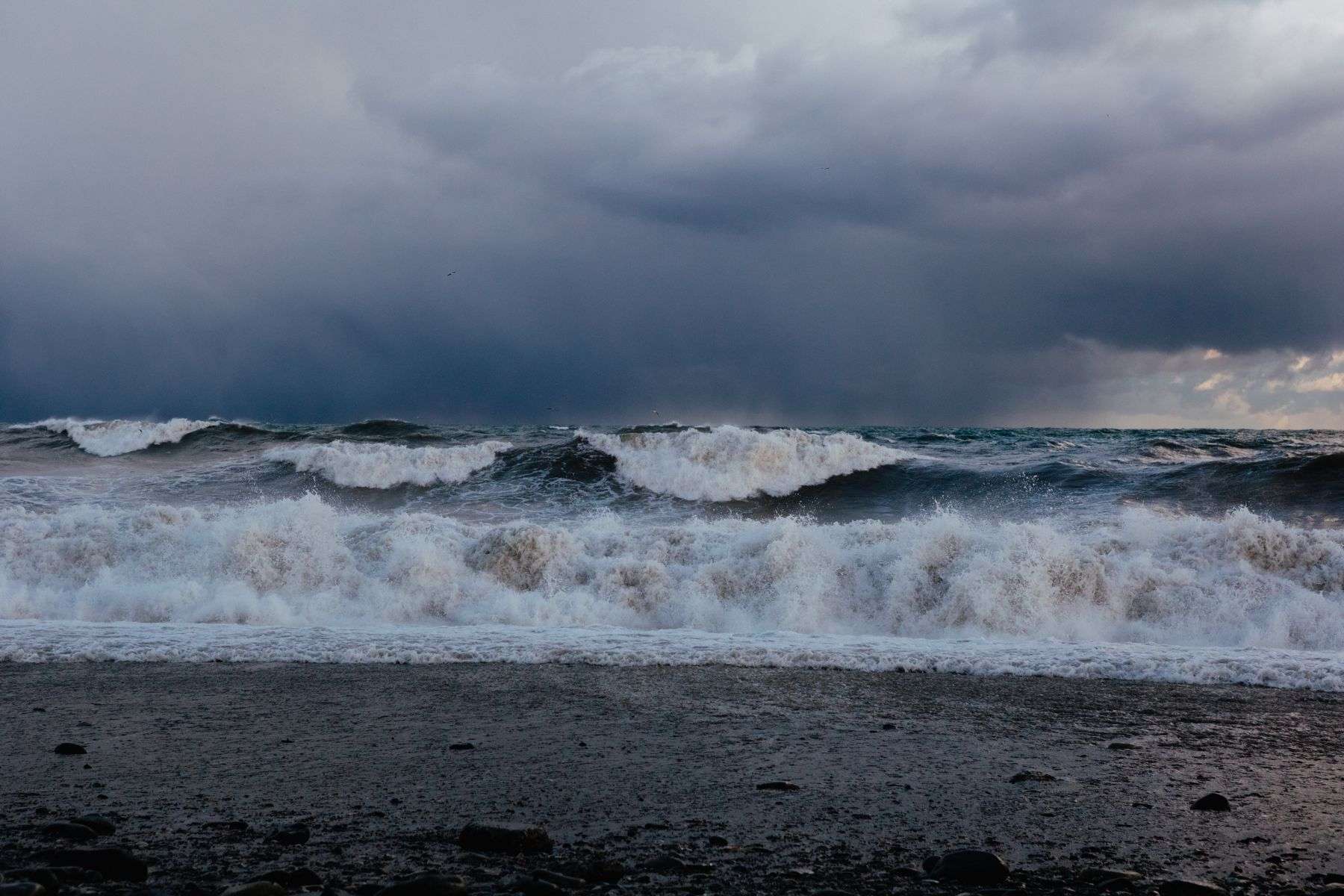
Tropical Storm Bertha kept the Gulf of Mexico churned up along the Alabama coast this week, and in Fort Morgan that meant one thing for beachgoers: stay out of the water. Officials closed the Gulf to swimmers as rough waves and gusty winds moved through the area, and the Baldwin County Sheriff’s Office took to the sand to make sure the message got through. Corporal Holt Johnson patrolled the beach in his department Jeep, stopping to remind visitors that the water was off-limits. “Hey y’all the water is closed. Please stay out of the water,” Johnson told beachgoers along the shoreline.
Double red flags, the highest-level warning used along the Alabama coast, flew over Fort Morgan throughout the day to signal that the Gulf was closed. Along the Alabama coast, a single red flag typically warns of high surf and strong currents, while a double red flag means conditions are dangerous enough that swimming is prohibited altogether. The flag system is the coast’s frontline safety tool, posted at public beach access points and patrolled beaches from Dauphin Island to Orange Beach, and it exists so that a visitor who has never seen the Gulf this rough can read the danger at a glance. When double reds fly, entering the water is not merely discouraged but barred, and violators can be asked to leave the beach by law enforcement working the shoreline.
Most people at the beach kept their distance from the water as instructed, though a handful still cast fishing lines from the shore rather than wading in. Others came out simply to watch the storm’s effects from a safe distance, drawn by the spectacle of a churned-up Gulf that few calm summer days ever show. The scene along Fort Morgan’s undeveloped shoreline, where beach houses sit behind dunes and the beach stretches wide and open, gave the storm’s power full display, with waves breaking heavier than usual and wind pushing spray down the beach.
Visitors take in a rougher Gulf
David and Donna Jeffreys, who are visiting Fort Morgan from Clanton, said they preferred to enjoy the view from the sand rather than risk the surf. “We’ve been here for about three weeks. It has been a wonderful time on the beach until this week,” David Jeffreys said. Donna Jeffreys added, “We just enjoy the God given beauty that we have on days like this. It takes this to appreciate the hotter days or the colder days.” Long-term visitors like the Jeffreys, who settle in for weeks at a stretch along the Fort Morgan peninsula, get an up-close view of how quickly conditions on the northern Gulf can turn, and many treat a storm-churned beach day as part of the coastal experience rather than a spoiled vacation.
Marcie Rome made the drive over from Gulf Shores with her dog, Daisy, to see Bertha’s impact on the Gulf firsthand. “We were just wanting to get out after being inside for a little while. We wanted to come down, bring Daisy and see what the wave conditions were like. It’s pretty impressive for a small storm,” Rome said. Her assessment captured what residents along the coast repeatedly observe about tropical systems: even a storm that falls short of hurricane strength can reorganize the entire beach, pushing sand, cutting scarps into the dune line and producing surf and currents that would be unremarkable in a hurricane but are extreme by ordinary summer standards.
Tropical storms in the Gulf carry a particular hazard that the flag system is designed to counter: rip currents. These narrow channels of fast-moving water form as storm-swollen waves pile water against the shore, and they can pull even strong swimmers away from the beach faster than they can swim back. Rip currents are consistently among the deadliest coastal hazards, and they claim lives most often on days when the sky looks inviting and the water does not look obviously dangerous — precisely the days when double red flags are easy to dismiss. The Baldwin County Sheriff’s Office presence on the beach is part of the enforcement of that warning, because the first hours of a closure, when visitors are still arriving with plans already made, are when the most water entries tend to happen.
Fort Morgan’s geography makes the closure especially consequential. The peninsula extends westward from Gulf Shores toward Mobile Point, guarding the entrance to Mobile Bay, and its beaches face open Gulf water with no barrier island offshore to knock down incoming swell. What the Gulf produces arrives at Fort Morgan’s shoreline with little interference, so a tropical storm in the central Gulf translates quickly into heavy surf along the peninsula. The community’s mix of vacation rentals and full-time homes means its beaches draw both tourists and residents, and the unpaved, spread-out character of the area makes beach patrol work a matter of covering ground mile by mile.
How long the closure lasts
As of Tuesday night, double red flags remained posted at Fort Morgan, and the Baldwin County Sheriff’s Office said the closure would stay in place until conditions along the coast improve. That open-ended timeline is standard practice for tropical systems, because surf and currents lag the wind: a storm’s center can move hundreds of miles away while long-period swells generated by its winds continue to arrive on the coast for days. Lifeguards and sheriff’s deputies watch a combination of wave buoys, tide and wind forecasts before recommending that a beach be reopened, and flags are upgraded step by step as conditions permit rather than all at once.
For the rest of the coastal strip in Baldwin and Mobile counties, the same conditions applied, with warnings in effect from Dauphin Island east through Orange Beach. Beach town officials use storm closures to remind visitors of the broader rules that govern the water: swim near posted access points, never swim at night or alone, and treat the flags as the final word on whether the water is open. Vacationers arriving for a week’s stay sometimes mistake a flag warning for a suggestion, and the deputy’s Jeep-on-the-beach message is the coast’s way of correcting that impression before it becomes a rescue call.
Bertha’s disruption also fits the rhythm of a Gulf Coast summer, when tropical systems form in the Atlantic, Caribbean and Gulf itself and send their effects ashore even on days when the rain never arrives. Early- and late-season storms frequently track well away from Alabama while still generating dangerous surf, which is why beach conditions along the coast can deteriorate from a forecast issued hundreds of miles offshore. Residents of Fort Morgan and the beach communities watch for three signals when a storm is in the basin: the flags on the beach, the closure notices from the sheriff’s office, and the surf forecast, in roughly that order, because the first two are what actually govern whether the water is open.
Rip currents and rough surf can persist even after a storm’s winds and rain move on, and officials continued to urge residents and visitors to keep watching posted flags and to stay out of the Gulf until it reopens. The days immediately after a tropical system passes are among the most dangerous of the season, because the beach looks recovered — the rain is gone, the sun is out, the water looks cleaner — while the current structure offshore remains disturbed. The Baldwin County Sheriff’s Office and beach safety officials across the coast will keep the patrol pattern and the flag postings in place until the Gulf settles back to its summer norm, and the advice they repeat is simple: the beach will still be there when the flags come down, and the water will wait.
The flag system itself is worth understanding, because it changes meaning season by season and beach by beach. Along the Alabama Gulf Coast, the daily flag posting is updated in the morning based on the latest surf and wind observations, and it can be changed midday as conditions shift faster than forecast. Red means the water is closed to swimmers, yellow signals caution for moderate surf or currents, green indicates calm conditions, and purple flags warn of dangerous marine life such as jellyfish or stingrays rather than water hazards. Double red is reserved for the most serious situations, including tropical storm surf, and it is the only posting that outright prohibits entering the water regardless of a swimmer’s ability or intent.
Fort Morgan’s position also explains why the sheriff’s office leads enforcement there rather than a municipal lifeguard force. The peninsula lies in unincorporated Baldwin County outside the Gulf Shores city limits, so beach safety falls to county deputies, and the department’s beach patrol is a familiar sight during storm events and holiday weekends alike. Deputies working the sand handle a range of calls beyond water enforcement, from traffic issues on the peninsula’s narrow roads to lost children and locked-out renters, and during a closure their main job is the simple, repeated message that Corporal Johnson delivered up and down the beach.
What visitors should watch next
For visitors with trips planned in the coming days, the practical guidance is to check the flag status before heading to the sand each morning and to plan beach days around what is open rather than what was expected. Fishing from the shore, shelling, walking the beach and watching the surf all remain available during a water closure, as the Jeffreys and Rome families demonstrated, and many regulars consider a storm-watching day one of the more memorable kinds of Gulf Coast visit. What the closure rules are designed to prevent is the one activity that turns dangerous fastest: wading or swimming in storm surf, where a single wave or current can put someone in trouble within seconds and rescue conditions are at their worst.
The message from officials along the coast through the remainder of the week is consistent with what Fort Morgan beachgoers heard directly from the patrol: the flags are the authority, the closure stands until conditions genuinely improve, and the Gulf will reopen when it is safe. Bertha’s brush with the coast ends up as a modest storm by tropical standards, but it delivers the reminder the coast gets every season — that the same water that draws millions of visitors commands respect whenever a storm is anywhere in the basin, and that the system of flags, patrols and posted warnings exists precisely for the weeks when the Gulf refuses to look as calm as the brochure.