

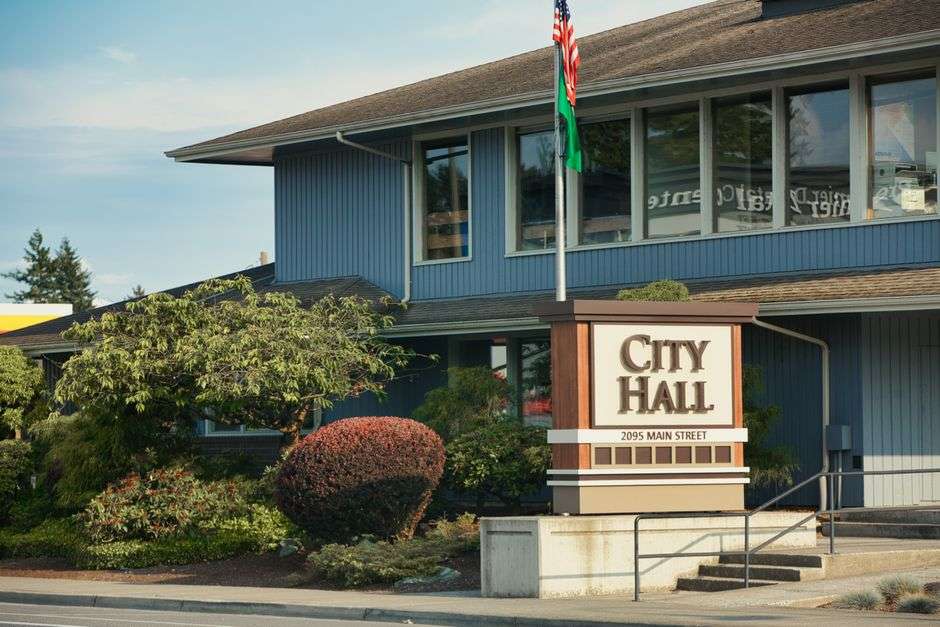
Prichard is running out of time on three fronts at once. Its police department is under indictment, its municipal insurance lapses within days, and its mayor and city council have not shared a meeting room in weeks. How the city of roughly 18,800 people navigates the next few months will determine whether one of Alabama’s oldest predominantly Black cities emerges from its crisis or buckles under it.
The sequence of events that brought Prichard here accelerated in late July, when a special Mobile County grand jury recommended that the city abolish its police department and build a new one from scratch — a recommendation that followed the arrests of the police chief, a major, and a string of officers on corruption charges stretching back to last year.
A Department Charged From the Bottom Up
The unraveling began before the summer. Officer Ryan Phillips was charged in March on allegations involving stolen firearms, and officer Malachi Ligon faced theft and privacy charges in 2025. In June, agents from the FBI’s Mobile Field Office and investigators from the Mobile County Sheriff’s Office arrested officer Emanuel Dotch on charges of bribery and evidence tampering. Officer Jihad Irby followed in early July, charged with extortion and bribery. Then, on July 22, deputies arrested Chief Walter Knight and Maj. Aaron Tucker on charges they used their public positions for personal gain and committed second-degree theft by deception — accusations centered on misusing police vehicles and work time to escort private funeral processions.
One week later, Capt. Michael Knight was arrested on first-degree theft by deception and using his office for personal gain, accused of taking paid private security work while on the city’s clock.
When the special grand jury finished its review, it went beyond indictments: it recommended that Prichard abolish its police department entirely and build a new one. Mobile County District Attorney Keith Blackwood, whose office has driven the investigation, told reporters there is a “cultural rot” at the agency — a failure to supervise, a failure to follow policies and regulations, and in some cases what he called blatant violations of law.
“I am optimistic moving forward that, despite their differences, they will come together in a show of leadership and a show of service to the citizens of Prichard to take this grand jury recommendation and implement what has been recommended,” Blackwood said.
Sheriff Paul Burch, whose office has policed the city since June, put it more bluntly. “It has not been a secret Prichard has had problems for a long time,” he said.
What Abolition Would Look Like — and Cost
If Prichard follows the recommendation, it would become only the second city in Alabama to abolish its police department. Hanceville, in Cullman County, did so in February 2026 after a grand jury indicted its chief, four officers and an officer’s spouse on corruption charges.
The price of transition is steep. Sheriff Paul Burch has told the city that contracting with the county for law enforcement while a new department is created would cost at least $3 million up front and at least $2 million a year thereafter — figures that loom large over a city whose entire annual budget sits at roughly $3 million. Burch has suggested the city could free up money by dismantling its municipal court system, which it would no longer need without its own police force.
The cost of doing nothing is also mounting. Since taking over day-to-day operations in June, the sheriff’s office has fielded more than 400 calls for service in some weeks, with domestic violence complaints leading every other category. Overtime for the operation initially ran between $18,000 and $20,000 per day before deputies were reallocated to bring the daily average down to between $5,000 and $6,000 — a pace Burch calls unsustainable for a department with between 230 and 240 deputies covering the entire county.
“It has not been a secret Prichard has had problems for a long time,” Burch said. His office has applied for a $777,813 federal grant, requiring a $194,453 local match, to help cover the cost of a takeover if the city disbands its department.
The Fight Over the Evidence Room
Beneath the charges lies a catalog of institutional failure that investigators are still cataloging. Deputies assigned to bring order to the department’s disorganized evidence room found hundreds of firearms improperly stored — and 247 unprocessed sexual assault kits, evidence now being evaluated by the Alabama Department of Forensic Sciences and the FBI.
For Council President Traci Hale, the kits are the heart of the case for abolition. “When I look at all these families of unsolved murders, how many rape kits were not even processed right?” she said. “I can speak on behalf of me personally and my family: We’ve had two murders in my family in the city of Prichard that have not been solved.”
The Insurance Deadline
While city leaders argue over policing, another clock is running. Prichard’s coverage through the Alabama Municipal Insurance Corporation was set to expire on Aug. 1, and Hale has said AMIC will not insure the police department amid the criminal investigation. The city has appealed the insurer’s decision, which the mayor attributed to claim issues, late responses to correspondence and the police probe. A city without insurance faces exposure on everything from vehicle accidents to lawsuits, and losing coverage for its police operations would compound a crisis already short on money.
A Government That Doesn’t Meet
Beneath the policing debate sits a structural feud. Mayor Carletta Davis and councilors Teresa Fox Bettis, Traci Hale, Stephani Johnson-Norwood, Roy Smith II and Annie Williams have been at odds for months over the city’s finances, a fight that culminated in Davis suing the council in June over what she called its improper investigation of city finances. Davis has not attended a council meeting since June 11.
When the council convened on July 23 — the day after the grand jury recommended abolishing the department — the mayor was absent, appearing instead at a voting awareness and back-to-school rally at Bishop State Community College. Council Attorney Moshae Donald told residents the council was legally powerless to act on the grand jury’s recommendations: state law reserves those decisions for the mayor, who has made no recommendation. One resident shouted, “Where is she? Where’s the mayor?” “Good question,” Hale replied.
Davis, in a Facebook statement, said Chief Knight resigned at her request and Maj. Tucker was placed on leave, and that Maxine Mark, a 33-year department veteran, would lead the agency in the interim. “We are currently exploring all possible options to determine how any transition can be handled responsibly and in the best interest of Prichard residents, employees and business owners,” she said.
Walter Knight’s wife, Ramona, disputed that account in her own video, insisting her husband never submitted a resignation. “If you want him out, fire him,” she said, calling the indictment “a slap in the face” and the “perp walk” a designed humiliation. State Rep. Napoleon Bracy, D-Saraland, has also questioned the case, writing that felony indictments “centered on funeral escorts” against a chief who made $60,000 a year “raise serious questions” about whether the investigation has become a “witch hunt.”
Abolition, For and Against
Inside the council, the recommendation has split the chamber. Hale and District 1 Councilwoman Annie Williams support abolition, with Williams arguing the sheriff’s office will leave “once we can call consultants and get our police department up and running.” Bettis objects: abolishing the department would be “a dangerous thing,” the “beginning of the end of our city,” and “an economic killer.” She wants a revamped department with new personnel and outside professionals guiding hiring and policies.
Residents watching deputies patrol in groups of three and four cars per stop have described the sheriff’s presence as overwhelming; one man shouted that deputies were working like “slave catchers.” Burch has defended the staffing levels as necessary for deputy safety.
For now, every path forward runs through a mayor and council who have not shared a room since June. The grand jury has recommended; the council has mostly endorsed; the mayor is exploring. Somewhere in that standoff lies the answer to whether Prichard rebuilds its police department, contracts for law enforcement, or both — and whether a city that has survived bankruptcy, hospital closure and utility catastrophe can add a police abolition to its list of firsts.