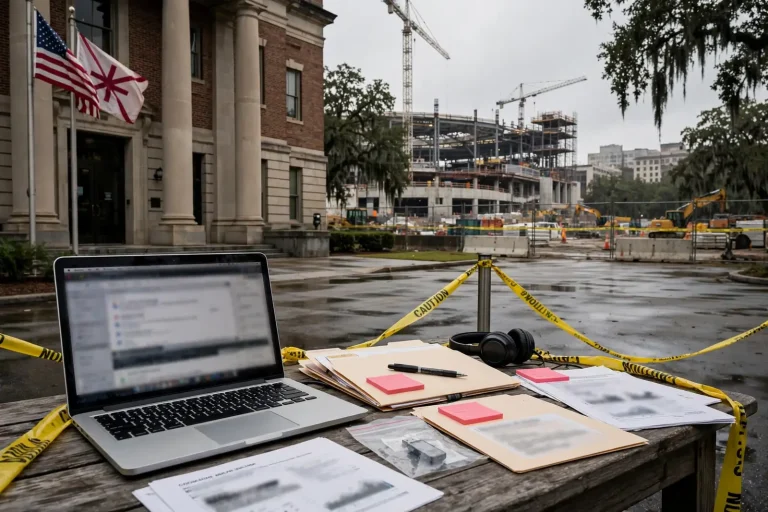
A Mobile man’s routine trip to a dumpster behind a business on Halls Mill Road turned into a rescue mission earlier this month after he noticed a plastic trash bag moving on its own beside the bin. Inside were three puppies — one black, one brown and one white with black spots — all severely dehydrated and malnourished after apparently being sealed inside the bag and left for dead in the summer heat.
The man quickly reached out to friends connected with a local animal rescue organization, and within a short time the surviving puppies were in the hands of volunteers who could give them the emergency care they needed. The swift response mattered: puppies in that condition can decline rapidly in Gulf Coast summer temperatures, and dehydration that goes untreated for even a few hours can cause organ damage that no follow-up care can undo.
The smallest and weakest of the three, the black puppy, did not survive; he died the following day, unable to recover from the dehydration and trauma of being trapped without water or shelter. The loss underscored how little time the rescuers had, and how much of the outcome depended on the passerby deciding to stop and check a bag he might easily have dismissed as yard debris caught against a dumpster.
Recovery at Save-a-Stray
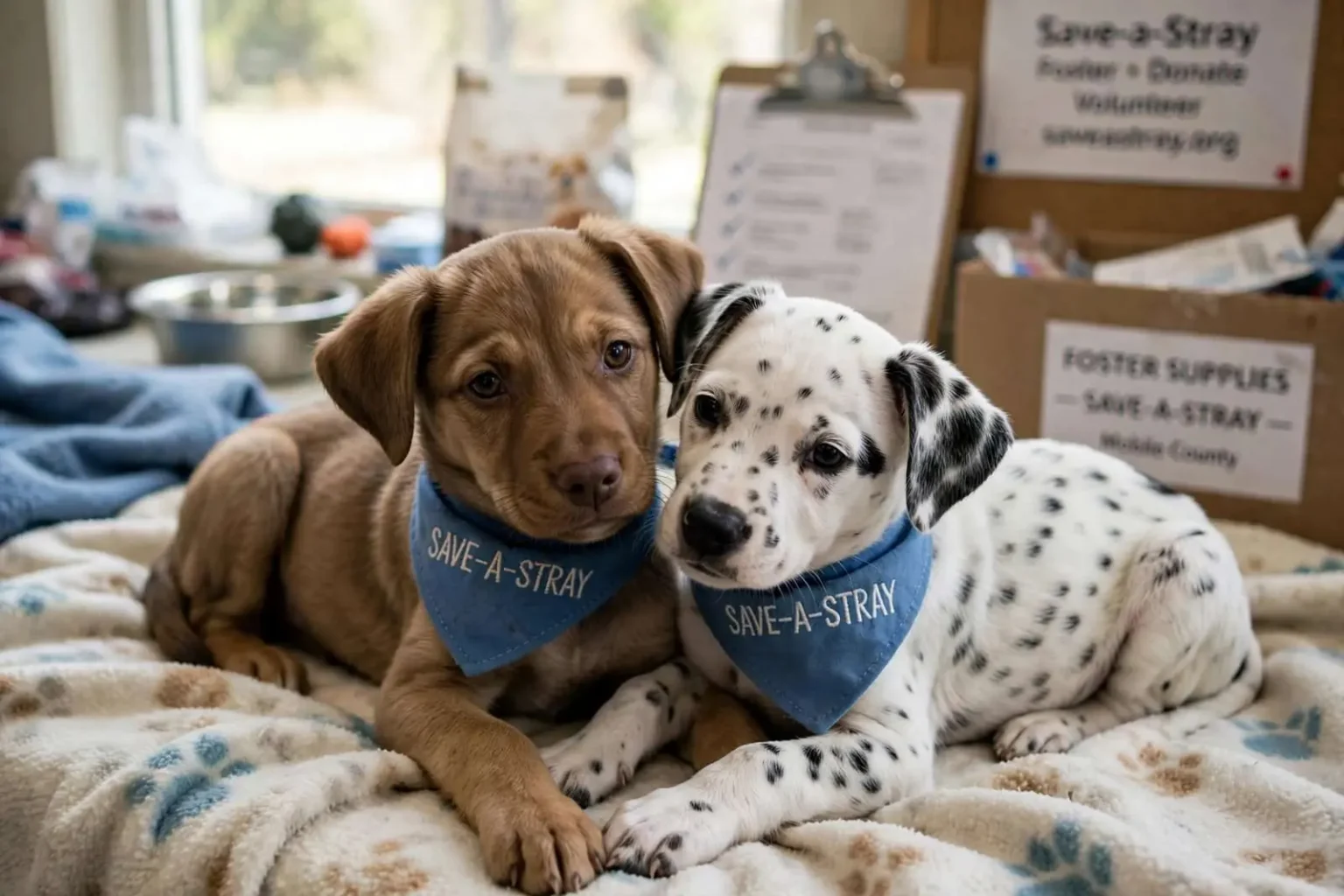
The two puppies that survived are now recovering and growing stronger in the care of Save-a-Stray, a Mobile County-based nonprofit animal rescue group led by Stephanie Williamson. The organization has spent the past several weeks nursing the pair back to health, and officials with the group say both dogs are expected to be ready for adoption into permanent homes in the coming weeks, once veterinary checks and weight gain confirm they are fully recovered.
The recovery process for dogs in this condition is gradual. Rehydration comes first, followed by controlled feeding as the digestive system readjusts, treatment for parasites and any secondary infections, and only then the vaccines and neutering that precede adoption. Volunteers have handled that sequence step by step, and the two survivors — the brown puppy and the white one with black spots — have responded well enough that their caretakers expect them to be adoptable within weeks.
For the volunteers involved, cases like this one are the reason the organization exists. Founded three years ago, Save-a-Stray focuses on improving outcomes for shelter animals across the Mobile County area, an effort that has become especially important given how often local shelters take in more strays than they can place. Municipal shelters in the region routinely operate at or above capacity, and rescue groups that pull animals out of that system create the space that keeps shelter intake from turning into euthanasia.
The northern transport pipeline
The group’s best-known program is a monthly transport effort that pulls between 40 and 60 dogs at a time from area shelters and drives them roughly 24 hours north to the Helping Hounds Rescue shelter in Dewitt, New York. The transports move dogs from a region where they are numerous to a region where they are wanted, and they have become one of the most effective tools South Alabama rescues have for reducing shelter overcrowding.
Volunteers say the trips fill a real need. Shelters in the Syracuse, New York, region generally see far fewer stray dogs than shelters in Alabama do, in part because harsh winters make it much harder for abandoned or stray animals to survive there. Fewer free-roaming dogs mean fewer intakes, and northern shelters that once depended on local strays now have the capacity to accept transfers from states like Alabama.
As a result, dogs transported north from South Alabama tend to find adoptive families quickly, with an average shelter stay of about nine days once they arrive. Some dogs are even claimed before the transport van pulls in, according to the rescue group, because prospective adopters are drawn to the idea of taking home a dog from the South. The short shelter stays keep the pipeline moving: dogs arrive, meet adopters, and free kennel space for the next transport a month later.
Before making the trip, animals in the program typically spend about two weeks in foster homes with local volunteers, who provide temporary shelter, feeding and positive human interaction to help prepare the dogs for their eventual adoptive families. That foster window serves several purposes at once — it lets rescues observe temperament, treat any health issues that would disqualify a dog from travel, and give the animals a baseline of socialization that makes the long van ride and the transition to a new home easier.
The transport model also depends on coordination that most adopters never see. Veterinary records travel with each dog, transport dates are scheduled around shelter capacity on both ends, and volunteers in New York stage home visits and meet-and-greets so that dogs can move quickly from the van into families. Each run represents weeks of planning compressed into a single day of driving.
What keeps the program running
The transports themselves are volunteer-run undertakings that stretch across a full day of driving each way, with scheduled stops for water, walks and health checks along the route. Drivers log the miles in rotation, and the dogs travel in crates sized to their weight class, with paperwork clipped to each kennel so that receiving volunteers in Dewitt know every animal’s history before the doors open.
The monthly rhythm has a cumulative effect. Moving 40 to 60 dogs each month means hundreds of animals a year redirected from South Alabama shelters into adoptive homes in the Northeast, and shelter partners here have come to plan intake around the departure dates. For the dogs, the difference is stark: the average nine-day shelter stay up north contrasts with weeks or months on a local adoption floor, where competition for homes is much stiffer.
Save-a-Stray relies heavily on the community to keep its rescue and transport programs running, and organizers say the group is always looking for monetary donations as well as volunteers willing to open their homes as foster placements. Anyone interested in donating, fostering or adopting can find more information and an application on the group’s website, saveastray.org.
Foster homes are the program’s scarcest resource. Every dog that spends its pre-transport quarantine in a volunteer’s home is a dog that does not occupy a kennel at an already crowded shelter, and every new foster family directly expands the number of animals the group can move. Donations cover the veterinary bills, transport costs and supplies that otherwise fall to individual volunteers.
A fundraiser on the calendar
The nonprofit is also gearing up for a fundraiser called Tails of Service, scheduled for Sept. 24 at the Pillars. The event will showcase large-format portraits of service animals, honoring the working dogs that support veterans, first responders and people with disabilities. The venue, a historic downtown Mobile property, gives the group space for an evening built around the portraits and the stories of the dogs featured in them.
Fundraising events like Tails of Service carry more than their ticket revenue. They introduce the organization to donors and volunteers who might never encounter a shelter transport, and they build the name recognition that makes tips, foster applications and adoption inquiries flow in the months that follow. For a group that has grown quickly in its three years of operation, that visibility is part of the infrastructure.
A reminder of an ongoing problem
Cases like the one on Halls Mill Road are a reminder to local animal welfare advocates that abandonment and neglect remain an ongoing problem in the Mobile area, and that organizations like Save-a-Stray depend on tips from the public to intervene quickly when animals are in danger. The dogs found behind the business survived because someone looked inside the bag; advocates note that many similar cases go unreported because passersby assume a discarded bag or box is empty.
Under Alabama law, abandoning an animal can carry criminal penalties, and animal control officers across Mobile County respond to reports of abandoned litters throughout the year, with summer months typically the busiest. Unwanted litters are the common thread in most abandonment cases, which is why rescue groups pair their transport and adoption work with persistent encouragement of spay-and-neuter services in the community.
Anyone who witnesses suspected animal cruelty or abandonment is encouraged to contact local animal control or law enforcement. For the two puppies from Halls Mill Road, that chain of attention — from the man who stopped, to the volunteers who took the call, to the foster caretakers now finishing their recovery — will end in a home rather than a dumpster, which is precisely the outcome the group’s volunteers work toward on every other case like this one.