

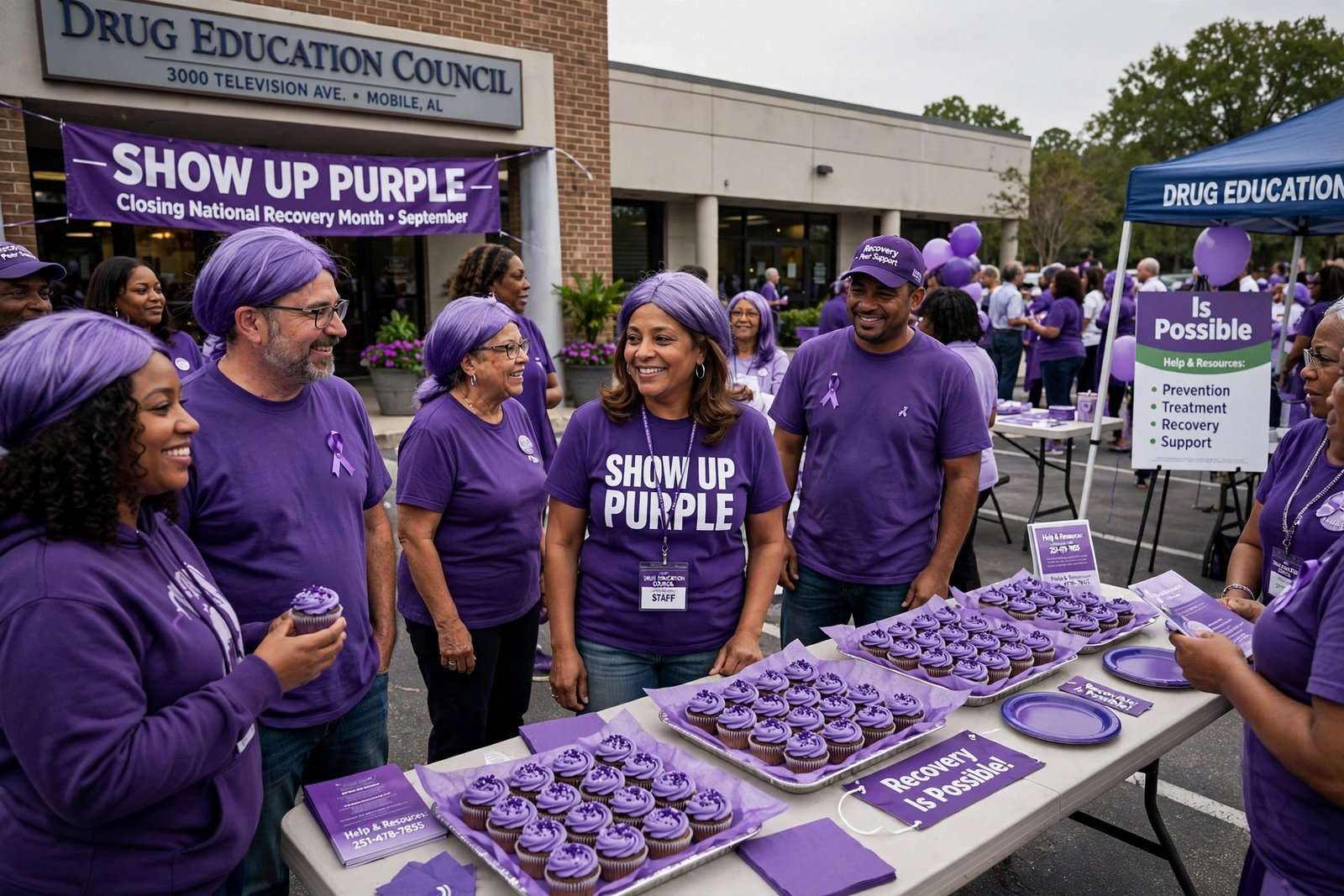
Purple wigs, purple shirts and trays of purple cupcakes filled a Mobile parking lot this week as the Drug Education Council closed National Recovery Month with its “Show Up Purple” celebration.
Dozens of people gathered at the council’s headquarters to recognize and celebrate people in recovery from substance use disorders, along with the families and friends who support them. The council organized the event to mark the end of the September observance, which is held nationwide each year.
“Recovery Is Possible”
Virginia Guy, the Drug Education Council’s executive director, used the event to speak directly to people who are still struggling with addiction and to those who love them.
“Prevention works, treatment is effective and recovery is possible. It’s like any other chronic, progressive, and potentially fatal disease. We want to intervene early, stop that use, get the person the help that they need and get the family back healthy again,” Guy said.
Describing addiction as a chronic disease reflects the way major medical and public health organizations approach it today. That framing treats substance use disorder like other long-term health conditions that can be prevented, treated and managed over time, rather than as a moral failing. It also explains why recovery advocates put so much emphasis on early intervention, family involvement and long-term support.
Why Purple
Purple has become a familiar color at recovery and overdose awareness events across the country, and it gives supporters an easy, visible way to show solidarity. In Mobile, that meant purple clothes, purple wigs and purple desserts, all meant to make the celebration hard to miss.
Advocates say that visibility matters. Stigma is one of the biggest obstacles to treatment, and public events that celebrate recovery can help people feel more comfortable asking for help, for themselves or for someone they love.
About National Recovery Month
National Recovery Month has been observed every September since 1989. It began as “Treatment Works! Month,” which honored professionals working in addiction treatment. In 1998, it was renamed National Alcohol and Drug Addiction Recovery Month, and the focus expanded to include people in recovery. It later became National Recovery Month, a broader observance that includes people in recovery from mental health conditions as well as substance use disorders.
The month has been promoted nationally by the Substance Abuse and Mental Health Services Administration, the federal agency known as SAMHSA. Hundreds of community organizations take part each year. Its central message is that people can and do recover, and that treatment and support services help make that possible.
In Mobile County, September included more than one recovery-focused event. On Sept. 24, People Engaged in Recovery, a peer-run nonprofit, organized Save A Life Day activities, and the Mobile County Health Department distributed free naloxone, the opioid overdose reversal medication, in observance of the national day.
Nearly 60 Years of Prevention Work
The Drug Education Council’s roots go back to 1967, when Mobile civic leaders created the Southwest Alabama Council on Alcoholism to address alcohol rehabilitation. The organization took the name Drug Education Council in 1986 and grew in 1995 through a merger that brought in assets from the Mobile Bay Area Partnership for Youth.
Today, the nonprofit provides drug education, prevention, intervention and treatment services in Mobile, Baldwin, Washington and Clarke counties. Its stated mission includes helping reshape how the community talks about substance use disorder and addiction, and encouraging informed choices for individuals and families.
Guy has led the council as executive director for years. Its Mobile office is at 3000 Television Ave., and it also has a Baldwin County office in Robertsdale.
Prevention, Treatment and Recovery
Guy’s message — prevention works, treatment is effective and recovery is possible — matches the way many recovery advocates describe care. Each part fills a different role:
- Prevention includes school and community education, especially for young people, aimed at delaying or preventing alcohol and drug use before it starts.
- Intervention means spotting problems early and connecting people with help before addiction becomes more severe.
- Treatment can include outpatient counseling, residential programs and, for some substance use disorders, medications.
- Recovery support includes peer groups, recovery community centers and family support that help people stay well over the long term.
Guy also emphasized family health. Addiction affects parents, children, spouses and siblings, and many programs offer support for family members as well as the person with the substance use disorder.
Where to Find Help
Organizers said help is available for people struggling with substance use and for family members looking for guidance. Options include:
- Drug Education Council: 251-478-7855 in Mobile, or 251-721-1451 for the Baldwin County office in Robertsdale.
- People Engaged in Recovery (PEIR): a peer-run recovery organization with a 24/7 toll-free line at 844-307-1760. Its services are free and confidential.
- Mobile County Health Department Overdose Prevention Program: 251-410-6322, for naloxone and overdose prevention resources.
- SAMHSA National Helpline: 1-800-662-4357, a free, confidential treatment referral and information service available 24 hours a day, every day of the year.
- 988 Suicide & Crisis Lifeline: call or text 988 for anyone in emotional distress or a mental health or substance use crisis.
In an emergency, including a suspected overdose, call 911.
Beyond September
National Recovery Month is over, but advocates say recovery happens all year. The Drug Education Council’s prevention and treatment work continues year-round. For many of the people at Show Up Purple, the purple clothes were a reminder that recovery is possible and that they do not have to go through it alone.