

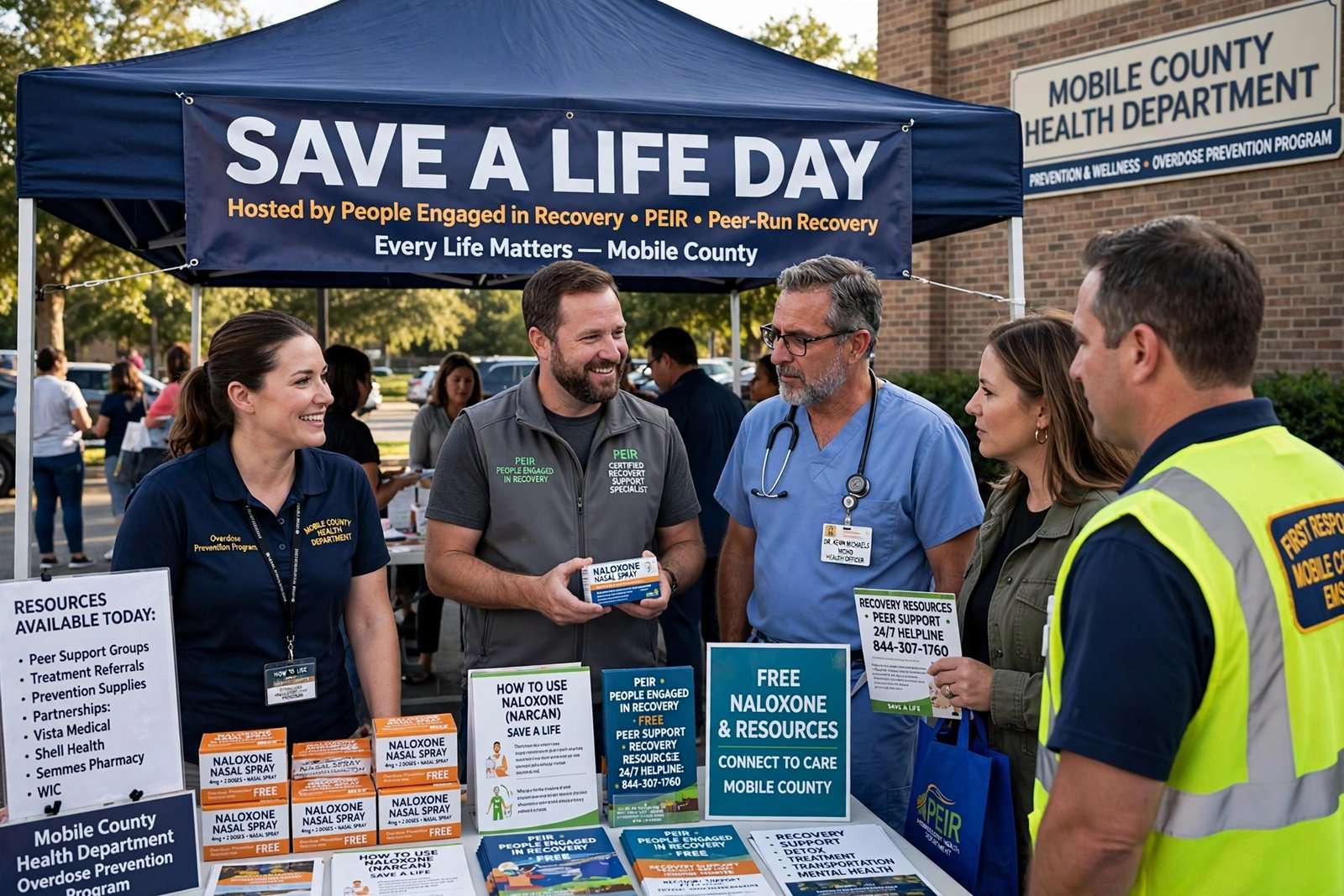
The Mobile County Health Department is publicly thanking People Engaged in Recovery, a peer-run recovery nonprofit, for organizing Save A Life Day in Mobile County. Health officials say the event brought residents, first responders, health care workers and advocates together around one goal: preventing overdose deaths.
The health department said PEIR’s planning and coordination created a welcoming place where people could learn about recovery services, connect with local resources and find out what help is available across the county.
“Every Life Matters”
Danielle Simpson, who oversees the health department’s Overdose Prevention Program, said the event showed what community partnerships can accomplish.
“We are grateful to People Engaged in Recovery for their dedication to organizing Save A Life Day and for the work they do throughout our community,” Simpson said. “Events like this remind us that every life matters and that recovery is possible when people have access to compassionate support, meaningful resources, and a community that stands beside them.”
Dr. Kevin Michaels, Mobile County’s health officer, said the work has to continue after the event ends.
“Save A Life Day is a powerful reminder that support does not stop when an event ends,” Michaels said. “Continued access to naloxone, prevention supplies, treatment and recovery resources, and compassionate support gives individuals and families opportunities to get the care they need. Together, we can help save lives and build a healthier, more resilient Mobile County.”
What Happened on Save A Life Day
National Save A Life Day was observed Thursday, Sept. 24. The health department said communities in all 50 states took part. Organizers focus on handing out naloxone, the medication that can reverse an opioid overdose, and teaching people how to use it. According to the health department, communities nationwide distributed about 133,000 doses in a single day during the 2025 observance.
Locally, the Mobile County Health Department handed out 164 boxes of naloxone nasal spray, or 328 individual doses, on Save A Life Day. PEIR teams also distributed naloxone across Mobile, Baldwin and Washington counties. Health department partners included Vista Medical, Shell Health, Semmes Pharmacy and the department’s Women, Infants and Children office.
PEIR’s reach extended beyond Mobile County. In Brewton, a recovery group took part in Save A Life Day with an event focused on overdose awareness, fighting stigma and hands-on training in how to give Narcan.
About People Engaged in Recovery
People Engaged in Recovery, often called PEIR, was founded in 2018 as a nonprofit, peer-run organization that helps people reach and maintain recovery from substance use disorder. Its services are delivered by Certified Recovery Support Specialists, many of whom have lived experience with recovery.
PEIR runs recovery community centers in Mobile and Dothan and serves 20 counties across south Alabama. Its free, confidential services include:
- Peer mentoring and peer-led support groups
- A safe, substance-free space for people in recovery and their families
- Help connecting to detox, residential and outpatient treatment
- Transportation to treatment facilities
- Help with mental health and substance use evaluations
- Legal advocacy and support after treatment
The organization runs a 24/7 toll-free line at 844-307-1760.
Peer support has become an important part of addiction care in Alabama and across the country. Recovery support specialists can relate to clients in ways clinicians sometimes cannot, because they have been through recovery themselves. That can make it easier for a person to take the first step toward treatment and to keep going after treatment ends.
Why Naloxone Matters
Naloxone, commonly known by the brand name Narcan, is an opioid antagonist. It quickly reverses an opioid overdose by blocking the effects of opioids in the brain and restoring breathing. The health department notes that it works only if it is given in time, which is why public health agencies want it in the hands of family members, friends and bystanders, not just paramedics.
A few key facts about naloxone:
- The U.S. Food and Drug Administration approved naloxone nasal spray for over-the-counter sale in 2023, so no prescription is needed for that form.
- The nasal spray is designed for use by people without medical training.
- Naloxone works only on opioid overdoses, including those involving fentanyl. It will not harm someone who has not taken opioids.
- Its effects can wear off before the opioid’s effects do, so calling 911 is always part of responding to an overdose.
- Overdoses involving powerful synthetic opioids may require more than one dose.
The health department said prevention supplies, education, referrals and recovery support also help residents take steps toward care, safety and long-term recovery.
A Countywide Effort
Save A Life Day fits into a broader overdose prevention effort in Mobile County. The health department runs Prevention & Wellness kiosks at community locations, where residents can pick up free naloxone and other prevention supplies without an appointment. As reported earlier this month, the kiosks had dispensed 692 items as of August 2026, including 377 two-dose naloxone packages. Mobile County launched the kiosks in November 2024 as Alabama’s first program of its kind.
First-year data from the kiosks showed the most common reason people gave for taking naloxone was to be ready to help someone else, the same bystander response Save A Life Day encourages.
County surveillance numbers also show why the work continues. In July 2026, Mobile County recorded 146 suspected overdose-related 911 runs, and 19 naloxone administrations were reported, according to the health department.
Thanks to Many Partners
Beyond PEIR, the health department thanked the organizations, volunteers, first responders, health care professionals, advocates and residents who gave time and resources to Save A Life Day. Officials said the combined effort shows that preventing overdoses and supporting recovery require a long-term commitment from the whole community.
The health department says its mission is to promote, protect and improve the health of people and communities across Mobile County through prevention, education, clinical services, environmental health, emergency preparedness and partnerships. Its Overdose Prevention team works on overdose prevention and helps guide people toward recovery options.
How to Get Naloxone or Help
- MCHD Overdose Prevention Program: 251-410-6322 or [email protected]
- People Engaged in Recovery: 844-307-1760, available 24/7
- SAMHSA National Helpline: 1-800-662-4357, free and confidential, 24 hours a day
- Emergencies: If you suspect an overdose, call 911, give naloxone if it is available and stay with the person until help arrives.
Naloxone is also sold over the counter at pharmacies and is available through the health department’s prevention kiosks around Mobile County.