

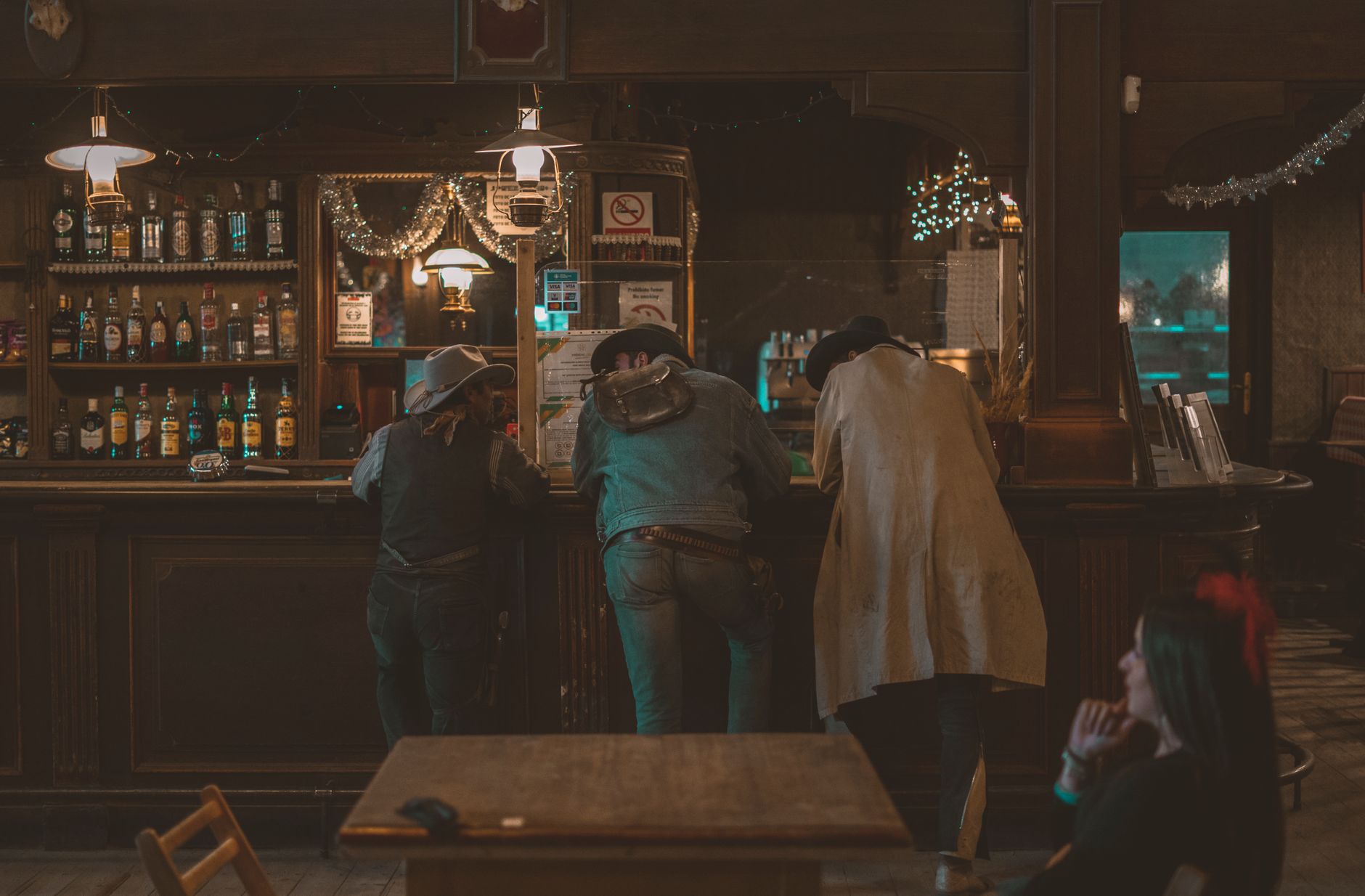
More than two decades after fire took it, the Judge Roy Bean Saloon still comes up whenever longtime Eastern Shore residents start swapping stories. The Daphne roadhouse, which operated from 1977 until 2005, was the creation of Jack West, and few people saw that creation take shape more closely than Harry P. Johnson, the Baldwin County restaurateur who worked behind the bar on opening night.
In a personal remembrance written in 2023, Johnson described West, who died in 2017, as the teacher whose influence shaped not only his own career but much of the look and feel of the Eastern Shore’s bar and restaurant scene. The story he tells is part business history, part music history and part portrait of a small town on the edge of big changes.
A Quiet Eastern Shore in the 1970s
When Johnson first began driving across the Causeway in the mid-1970s, Daphne was a very different place. The town had a population of roughly 4,500, and he remembers its beaches as deserted. Growing up in Mobile, he had spent summer weeks at Battles Wharf, in what felt then like an hour-long trip from the Port City.
At the time, Johnson owned half of the Fandango Saloon, a popular Mobile college bar that operated from 1975 to 1983 and was, by his account, the second college bar in the city after Thirsties Tavern. He had decided the college bar business was not for him. On one trip back from the Eastern Shore, he spotted an old Creole cottage for sale on College Avenue in Daphne and made an offer. He had bought a house on Euclid Avenue in Mobile for $11,000 the year before; after he and friends fixed it up, it sold for $19,000, the same price as the Daphne cottage.
He moved into that cottage in the bitterly cold winter of 1976. It had beaded board walls, gas space heaters, no insulation and wavy single-pane windows. The late-night commute from the Mobile bar did not last long; by that spring he had sold his Fandango interest, and a few months later he needed a job. That is where Jack West entered the picture.
In those days, Johnson recalls, there was little in Daphne beyond Manci’s Antique Club, which dates to 1936, and not much more in Fairhope in the way of restaurants, bars or entertainment. Someone introduced him to West, mentioning that he had just sold his share of a Mobile bar. That news, Johnson later learned, was exactly the kind of thing that lit West up.
The Man Behind the Bean
Johnson describes Jack West, who was born in 1945, as a figure “straight out of central casting”: handsome, confident, curious about everyone he met and seemingly powered by an endless supply of energy. West’s interest in other people was genuine, Johnson writes, and he used that curiosity to learn from everyone around him.
Two years before the two men met, West had bought the former Embassy Lounge, a Black nightclub on South Main Street in Daphne, and had already renovated it into his own place. The city of Daphne approved his liquor license, but the State of Alabama turned it down, an unusual step once a municipality had signed off. As a result, the first phase of Judge Roy Bean sat finished for a year before it could open.
West took his inspiration from the liner photograph of Jerry Jeff Walker’s 1973 album “Viva Terlingua,” the record that helped define the progressive country and Texas outlaw sound of that decade. The saloon’s name borrowed from the famous Texas frontier figure Judge Roy Bean, the self-styled “Law West of the Pecos,” who held court in his own saloon in the late 1800s. Eventually, pressure mounted for the state to grant West his license, and the Bean opened in 1977.
Walking Into a Movie Set
Johnson’s first look inside came on a fall afternoon while West was still fighting for the license. He remembers feeling as though he had stepped onto a movie set. The room was finished in the deep red of heart pine and natural wood beaded board, with beveled mirrors and rustic barn wood. The ceilings were covered in burlap sacks from Baldwin County potato farms, a nod to the agriculture that once defined much of the county. Accent lighting picked out tables, doorways and the main bar in the small, intimate room. A pot belly stove provided the only heat, and window air-conditioning units, oddly placed, handled the summers.
Johnson worked opening night, took extensive notes and stayed on for the first year before striking out on his own in 1980. Whether as an employee, customer or friend, he writes, he had a front-row seat to West’s development of the place regulars simply called “Judges” or “the Bean.”
Sundays, Volleyball and Big-Name Music
What West built over the following years, Johnson says, would not have been believed had he described it in advance. The Bean became known for Sunday afternoon volleyball, music ranging from local artists to nationally known acts, fundraising concerts, outrageous Halloween parties and its ever-present “Buffett Alert.” There was good food, an oyster bar and the “Cold Beer” promised on the sign out front. West recruited a devoted staff who followed his vision for years and helped draw customers by the thousands.
“Sunday at the Bean” became local legend, a year-round ritual. As Johnson puts it, it was the place to find your next love or lose your last one, with West as ringmaster and his staff and customers as the circus.
By 1987, during its heyday, West had expanded the three-cornered property to include an outdoor amphitheater. Johnson lists some of the performers who took that stage:
- 1988: Richie Havens, Poco and J.D. Souther
- 1989: Jerry Jeff Walker and Karla Bonoff
- 1990: Emmylou Harris and John Prine
- Early 1990s: Dr. John, the Marshall Tucker Band, Alabama and Leon Russell
For a small Baldwin County town, it was a remarkable lineup, and it is one reason the Bean’s peak years, roughly 1980 to 2000, remain such a touchstone for people who lived on the Eastern Shore at the time. The appearance of Jerry Jeff Walker in particular brought the saloon’s story full circle, putting the artist whose album cover inspired its décor on its own stage.
A Design Legacy Across the Eastern Shore
In 1980, Johnson opened Winslow’s Cafe in Fairhope, the first of roughly a dozen restaurants he would be involved with over the following decades. He credits West’s eye for design and marketing with helping several of them succeed. Winslow’s, which operated from 1980 to 1997, borrowed heavily from what he learned at the Bean: beaded board wainscoting, a heart pine bar top and square-turned posts salvaged from area front porches.
Johnson sees West’s influence in much of his later work, including Southwood Kitchen in Daphne, formerly Rosie’s Grill, which operated from 2000 to 2010, and Buster’s Brick Oven in Manci’s Antique Club. Pelican Pointe Grill, which he ran from 1991 to 2004, was designed to fit its waterfront setting in the way he believes West would have approached it.
That style, built on old wood, porch details and a lived-in warmth, has become so familiar along the Eastern Shore that it is easy to forget it had to start somewhere. In Johnson’s telling, much of it started in a converted nightclub on South Main Street.
Fly Fishing, Fire and a Final Chapter
In the early 2000s, West leased his iconic bar and turned to one of his true loves, the water, becoming an expert fly fishing guide who taught others his appreciation for nature and the outdoors.
On Feb. 13, 2005, Judge Roy Bean burned to the ground. Given what it was made of, Johnson marvels that it lasted as long as it did. Heart pine, barn wood, beaded board, pot belly stoves and a huge sandstone fireplace added up, in his words, to a collection of “fat lighter,” the Southern term for resin-rich pine that catches fire easily. That the building avoided that fate for 28 years, he writes, is remarkable.
Forty years after the Bean opened, West died in 2017 after a long fight with leukemia. Johnson remembers that he faced his illness with the same courage people had seen in him for decades, never complaining and always ready with a laugh and a smile.
After West’s death, Johnson bought a number of items from West’s daughter, Allie, before the property was sold. West had saved nearly everything in sheds behind where the Bean once stood. Among Johnson’s purchases were two stacks of five-quarter-inch heart pine, charred remains of the saloon itself, and two stacks of beaded board that became frame material for Southern Logo, a not-for-profit project of his.
In 2023, Johnson bought a Daphne house built about 35 years earlier by his former neighbors, Dick and Beverly Swanson. West did not build that house, he notes, but the lessons he learned from him shaped the way he sees every building he has touched since. It is, in its way, another house that Jack built.
Remembering Judge Roy Bean Today
The Bean’s memory lives on in the stories of people who spent Sunday afternoons there, in the design details of restaurants across Baldwin County, and even in a locally inspired bourbon that borrows the saloon’s name and its old “Drink with the Goat” motto.
Daphne has grown enormously since the days when Johnson found its beaches empty. It is now one of the largest cities in Baldwin County, with the Eastern Shore’s population boom bringing new neighborhoods, businesses and restaurants. For those who remember the town before that growth, Judge Roy Bean remains a symbol of an era when a single, carefully built room on South Main Street could draw crowds from across the Gulf Coast.
Johnson’s tribute closes by listing the many roles Jack West played: teacher, sailor, fisherman, personality, music lover, conservationist, architect and ringmaster. And he offers one last thought for his old friend: that Sundays are probably more fun in heaven now.