

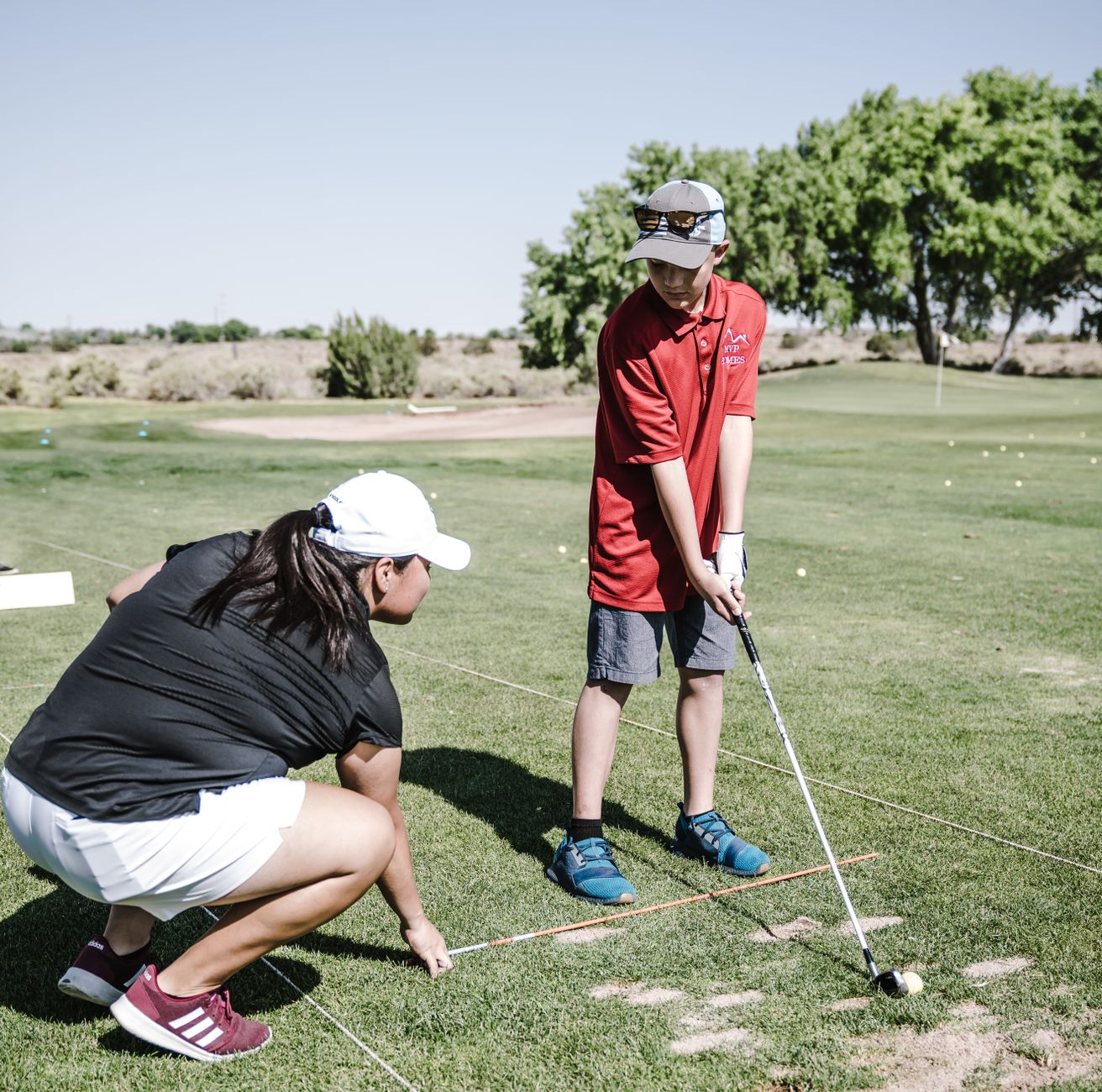
On a day when the rain comes down in buckets and tee times across the Eastern Shore get canceled, golfers who work with Ritter Lott Golf have another option: head indoors and keep working. Ritter Lott, a Fairhope-raised, self-taught golfer turned instructor, built his teaching business around a single, stubborn idea that he repeats to students again and again. Keep it simple.
When he described his approach in June 2022, Lott was teaching out of the No Off Season training facility at 25620 Friendship Road in Daphne, running what he calls a boutique operation that grows almost entirely by word of mouth. His students range from adults trying to shave a few strokes to juniors chasing college roster spots, and his results with that second group have gotten attention.
Saying the Same Thing Thirty Different Ways
Ask Lott’s students what sets him apart and many point to communication rather than mechanics. Every golfer hears instruction differently, and Lott has made adapting to that the center of his teaching.
“No one speaks the same language. People hear things differently,” he says. “I’ve learned how to say the same thing thirty different ways until it clicks.”
That matters more in golf than in many sports. A swing thought that makes perfect sense to one player can send another into a spiral of overcorrection. An instructor who can reframe a concept, show it on video, demonstrate it with a drill and explain it with a different image entirely gives a student more chances to find the version that sticks.
Lott grew up in the Fairhope area and played competitively in junior golf tournaments as a kid. As an instructor, he says his goal is to be the pro he always wanted when he was young. He describes himself as a tough coach who also cares deeply about his students, and he has been known to play rounds with them on his days off at no charge because, as he tells it, he simply likes teaching.
A Method Built on Removing Wasted Motion
Lott’s method focuses on stripping excess movement out of the golf swing. Using video and swing drills, he looks for the parts of a player’s motion that do not contribute to the strike and works to eliminate them. The goal is an easily repeatable swing, one that holds up under pressure and on days when timing is off.
The approach grew out of questions Lott asked himself about the game: why golf is so hard, how the mind perceives it, and how players can overcome both physical and mental obstacles. He favors a natural-position swing with minimal movement and nothing that forces the body into unnatural positions.
He is also quick to warn students that simple does not mean quick. “Just because it’s simple, doesn’t mean it happens fast,” he says.
Lott is a student of the game’s greats and says he spends at least an hour a day studying players such as Tiger Woods, Jack Nicklaus, Ben Hogan and Nick Faldo. He points to Woods in particular as an example of efficiency. “Tiger has no wasted movement, especially now after his accident. Every movement has a purpose,” he says, referring to the February 2021 car crash that seriously injured the golfer’s right leg and forced him to rebuild his game.
He also puts heavy weight on the mental side of golf. “Most fixes are simple,” he says. It just takes time and practice. “I just love what I do.”
A Winding Road to the Lesson Tee
Lott’s path to teaching was not a straight one, and he has been open about it. At age 36, he checked himself into rehab and spent the next couple of years figuring out what to do with his life. As he considered other work, one question kept coming back: what job would let him play golf three times a week?
The answer started at the bottom. He took a job working bag drop at Rock Creek Golf Club in Fairhope and soon worked his way into the pro shop. Along the way, he faced the PGA’s playing ability test, a requirement on the path to PGA of America membership that asks candidates to post a qualifying 36-hole score in a single day. He asked himself a blunt question, “How good of a golfer am I?”, and decided his future lay in teaching.
“My passion is golf,” he says. “I like helping people. I wanted to teach golf, especially to kids.”
He began giving lessons at Rock Creek and taught there for four of the five years he worked at the club. Then he struck out on his own and launched Ritter Lott Golf.
Results That Show Up on College Rosters
For a teacher who emphasizes junior players, the most visible measure of success is where those juniors end up. As of June 2022, four of Lott’s students were playing college golf, and one who was graduating that year already had a scholarship in hand.
That pipeline reflects the depth of junior golf along the Alabama Gulf Coast. Baldwin and Mobile counties have a strong network of high school programs, junior tournaments and public and private courses that give young players plenty of chances to compete. Instructors who can help juniors build a repeatable swing and a sturdy mental game are in demand among families hoping their kids can play at the next level, whether that means a small college program or a major Division I team.
Lott’s emphasis on the mental game fits that goal. College coaches recruiting junior golfers look closely at tournament scoring, and the ability to manage nerves and recover from a bad hole often separates players with similar ball-striking skills.
A Boutique Business Built on Relationships
Lott describes Ritter Lott Golf as a boutique business, and the way he runs it reflects that. There is no big advertising push. He relies on word of mouth and stays in touch with students through Instagram and text messages.
When he takes on a new player, the first conversation is about goals. Some students want to get dramatically better. Others want to fix one or two bad habits that have crept into their game. Lott tailors each plan to a player’s ability and to how much time that player can realistically commit to practice, because a program that assumes hours of daily range work will fail a student who can only practice twice a week.
He also expects students to take ownership. “Golfers have to be responsible for their swing,” he says. “Pick a philosophy and stick to it.”
That last piece of advice may be the most useful for recreational players, who often bounce between tips from friends, online videos and magazine articles. Conflicting advice can leave a golfer with a swing built from mismatched parts. Lott’s point is that almost any sound approach works better than constantly switching between several.
Indoor Training for Rainy Gulf Coast Days
Teaching from an indoor training facility gives Lott’s students an advantage in a region where summer thunderstorms and wet winter stretches regularly interrupt outdoor practice. The Gulf Coast receives some of the highest annual rainfall totals in the continental United States, and afternoon storms are a near-daily pattern in the warmer months. An indoor setting allows lessons and practice to continue regardless of the forecast, and video-based instruction works just as well under a roof as it does on a range.
For golfers on the Eastern Shore who want to improve, the lesson from Lott’s approach is straightforward. Find an instructor who communicates in a way that makes sense to you, commit to one philosophy, remove what does not help and be patient. As Lott puts it, the fixes are usually simple. Making them stick is what takes time.
Golfers interested in lessons should contact Ritter Lott Golf directly for current location, availability and rates, as details may have changed since 2022.