

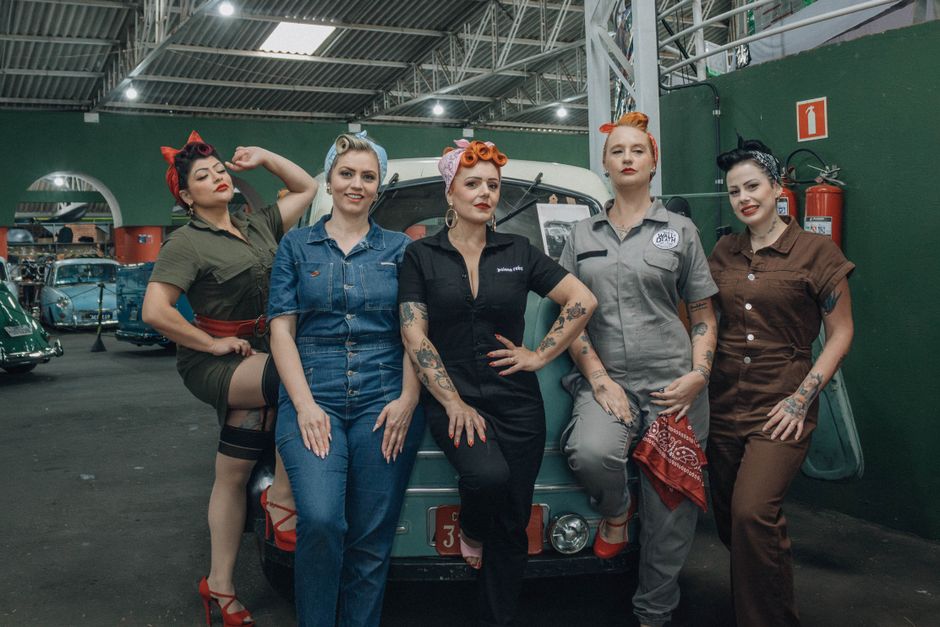
The largest rockabilly festival in Alabama — a three-day stack of live music, classic cars, and a pin-up pageant — landed at the Robertsdale Coliseum, Arena and Fairgrounds under the banner of a brand-new event production company with an ambitious name and a mission to bring a native Southern sound home. RockaBilly Bama Lama: Red, White & Boom, staged by CGE Productions, turned the fairgrounds into a celebration of the music that set rock and roll loose on the world.
The lineup ran to more than two dozen bands drawn from North America, South America, and Europe — a fitting roster for a genre with a bigger following abroad than in the region where it was born. Alongside the music came vendor rows of merchandise, arts and crafts, and food, a food-truck lounge, a classic car show, a dance contest, and a Pin-Up Pageant contesting three titles: Miss Red, White & Boom!, Miss Rockabilly Queen, and Miss Silver-Billy, for contestants 55 and wiser. The weekend ran rain or shine, ten to nine daily, opening Sunday with a gospel morning from the Mississippi Music Makers.
Why rockabilly, and why here
Cameron Ellis, one of CGE’s three partners alongside Judith Galloway and Linda Garret, makes the case for the genre with a historian’s enthusiasm. Rockabilly — the mid-1950s fusion of hillbilly country and rhythm and blues that lit up Memphis studios and radio towers — is, in her telling, the root system of nearly everything that came after. “All these sounds we know of today took their influence from Rockabilly,” she says. “You have a lot of Rockabilly on the East and West coast and in Europe, but you don’t see it where it started, in the Southern United States.”
The genre’s European afterlife is the strange part of the story worth telling. American blues, country, and early rock and roll traveled to Europe during World War II and the Cold War — carried in part by the broadcasting and touring of artists like Muddy Waters, Elvis Presley, and Jerry Lee Lewis — and returned to America in the 1960s transformed, as the Beatles and the Rolling Stones re-imported the sound they had studied on imported records. Today, Germany, Great Britain, and the Netherlands sustain some of the world’s most dedicated rockabilly scenes, with car shows, weekenders, and vintage subcultures that dwarf many American equivalents. A festival in Baldwin County, Ellis argues, is a homecoming.
A blue-collar sound with a history
The genre’s social history matters to its appeal. “It’s a blue-collar sound with its roots in the South,” Ellis says — music that came out of struggle and change, “a way for people to cut loose and break free from the humdrum life.” The records that defined the style were cut in small Southern rooms by young players who mixed gospel harmonies, country picking, and Black rhythm and blues into something neither genre alone could produce. That mixing — cultural, racial, regional — is a big part of why the music still resonates, and why Ellis describes it as everyman’s music.
Festival history, she notes, splits into two traditions: the purist events true to their roots, like the Newport Folk Festival’s early model, and the expansionist festivals that grew into multi-genre undertakings, like the New Orleans Jazz & Heritage Festival. RockaBilly Bama Lama planted its flag firmly in the purist camp — a single-genre celebration with room for the culture around the music, not just the playlists.
The people behind the production
CGE Productions describes itself with the tagline “Be Unforgettable,” and the partnership’s chemistry is the story behind the event. The three partners — varying widely in age — came together through years of attending shows together: New Orleans Jazz Fest, Saenger Theater dates across the South, a pilgrimage to Billy Bob’s Texas in Fort Worth for Willie Nelson. Their taste spans genres, which they count as an asset when booking future events.
Ellis herself is the production’s walking music library — a student of music and film history whose frame of reference runs from Sun Records sessions to the Mick Jagger-Keith Richards train-platform meeting that formed the Rolling Stones. She credits her mother, a lover of classic films and horses, with the adventurous spirit that lets her be, in her words, more than one thing. The timing of the venture rode a genuine wave: the bluegrass and roots resurgence, powered by acts like Billy Strings who were among the first major artists back on stage after the pandemic, put live traditional-adjacent music in a growth cycle just as the festival was being planned.
What a rockabilly weekend looks like
The festival’s formula is intentionally local-first: CGE Productions builds events for local people in partnership with local businesses, from the alcohol vendors to the food trucks to the merchandise booths. VIP areas with server service give attendees a step-up option, and the coliseum grounds offer room for the car show — the low-slung, chrome-heavy classics that are half of rockabilly’s visual identity — plus dance floors for the swing and bop contests.
For Robertsdale, the event represents a bet worth noting: a Baldwin County venue hosting a nationally flavored music festival built by hometown producers. “Live music brings a community together, supports the local economy, and the overall sense of well-being,” Ellis says — and a fairgrounds full of pompadours, poodle skirts, and chopped Mercs makes the argument better than a press release could.
For coastal Alabama music fans, the lesson of the weekend is worth keeping: the sound that left the South and conquered the world keeps coming home, and when it does, the fairgrounds in Robertsdale are ready. Keep the production company’s name in mind — CGE Productions has made it clear this is a first chapter, not a last one.