Sandbar Sharks: The Gulf Coast Most Common Offshore Species
Sandbar sharks are the most common shark species in the Gulf of Mexico, growing to 10 feet and often encountered by offshore fishermen.
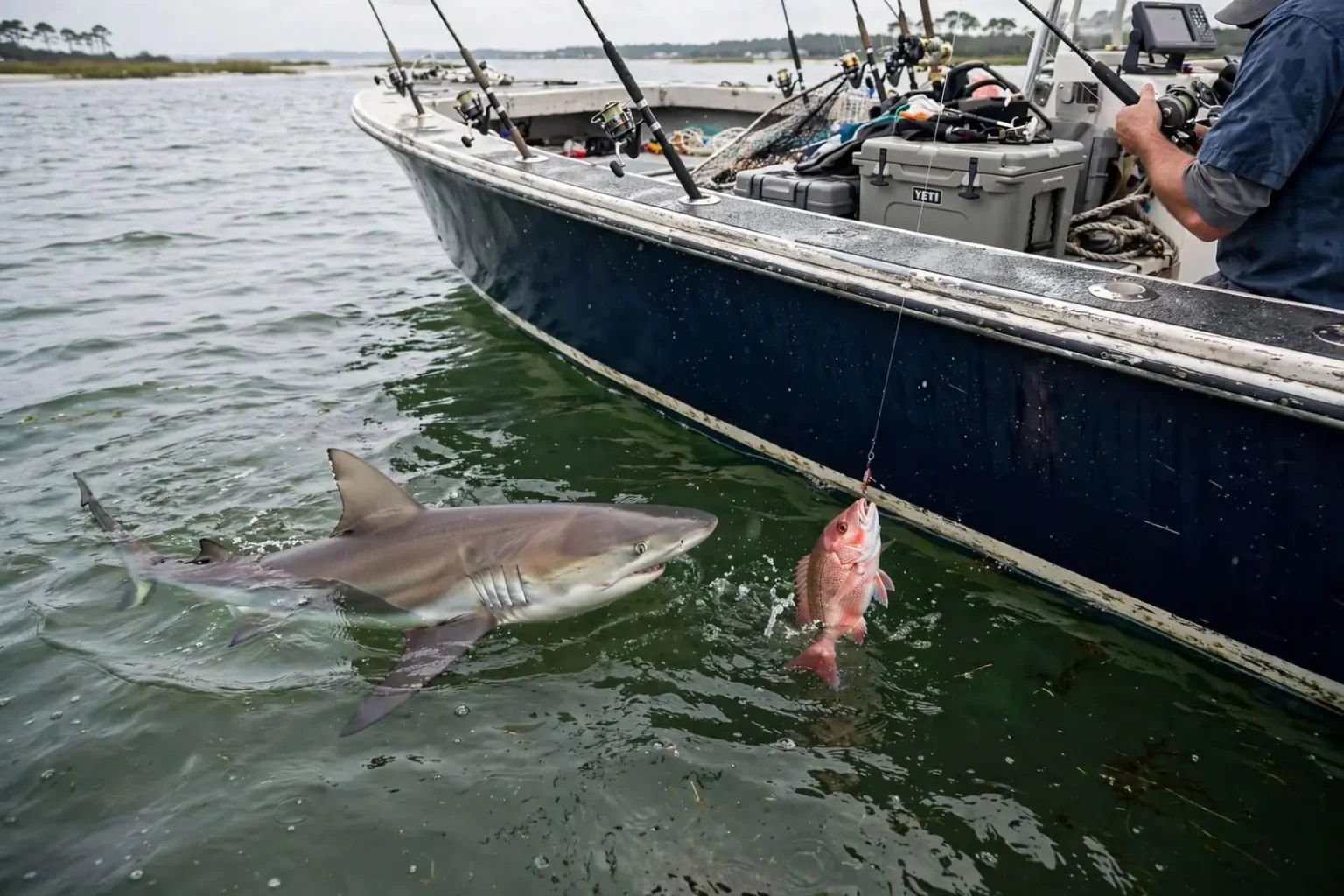
Sandbar sharks are one of the most common shark species in the Gulf of Mexico, and for offshore fishermen working the waters south of Dauphin Island and the Alabama coast, encounters are frequent enough that the species has become a routine part of a day spent fishing for snapper and other reef fish. Marine experts say the shark’s habit of chasing down hooked fish has made it a familiar — and occasionally expensive — companion for anyone dropping a line into deep Gulf water.
Dr. Sean Powers, director of the University of South Alabama’s School of Marine and Environmental Sciences and a senior marine scientist at the Dauphin Island Sea Lab, said the species shows up so consistently around offshore fishing activity that anglers have long since given the behavior its own name.
“Most of the fishermen will intercept this offshore fishing for snapper and fishermen. They call it pay the tax man when they get a bite and a shark bites their fish in half. It’s usually a sandbar shark that’s going to do that,” Powers said.
The nickname captures a dynamic Gulf anglers know well: a fisherman fights a red snapper or amberjack toward the boat, and in the final stretch of the battle a pale gray shark rises from below and takes the fish in a single strike. Losing the catch stings, but Powers said the phenomenon is also one of the clearest signs that sandbar shark numbers in the Gulf have climbed steadily in recent years, bringing more of the animals into contact with the fleets that pursue the same waters.
A Familiar Presence Off the Alabama Coast
The University of South Alabama’s School of Marine and Environmental Sciences works closely with the Dauphin Island Sea Lab, the state’s marine science research and education center located on the eastern end of Dauphin Island, where scientists track the health of fish stocks and the ecosystem of the northern Gulf. Powers said the sandbar shark’s prominence in offshore waters makes it one of the species most frequently encountered during research surveys and fishing trips alike.
Charter boats and private anglers out of Orange Beach, Dauphin Island and Bayou La Batre typically target red snapper, grouper and amberjack around artificial reefs and natural bottom features scattered across the Gulf floor, and it is precisely at those productive spots that sandbar sharks tend to appear. When a hooked fish is being reeled up through the water column, the commotion draws the attention of any shark in the area.
For anglers, the practical result is that a shark encounter is built into the arithmetic of an offshore trip. The “tax man” collects his share, and the fishermen who understand the species’ habits are better prepared to land their fish quickly, before a passing sandbar shark has time to intercept it.
Size and Diet
Sandbar sharks grow to about 10 feet and weigh about 200 pounds, making them one of the larger sharks Gulf fishermen are likely to see alongside the boat. They are stocky, powerfully built animals with a rounded snout, a tall first dorsal fin and a gray-brown to bronze coloration above that fades to a white underside — a profile that experienced anglers can usually pick out at a glance, even in the churning wake of a fishing boat.
They are opportunistic feeders that will eat fish and other prey, taking advantage of whatever the environment offers rather than hunting a single target. That flexibility serves them well in the open Gulf, where food sources change with the season and the water depth, and it explains why the sharks so readily track fishing activity: a struggling fish on a line is simply another easy meal.
Their willingness to eat almost anything also puts them squarely in the middle of the food web of the northern Gulf. By preying on a wide range of smaller fish and other animals, sandbar sharks help keep populations in balance, a role that marine scientists consider essential to the overall health of offshore ecosystems that support both commercial and recreational fisheries.
Powers noted that despite their size and appetite, the sharks show little interest in people most of the time. Their attention underwater is fixed on wounded or struggling prey, which is why the species interacts with fishermen far more often than it does with swimmers on a beach.
Identification and Where Anglers Find Them
For fishermen trying to identify a shark beside the boat, the sandbar’s combination of a large, triangular dorsal fin and a heavy, muscular body separates it from the smaller Atlantic sharpnose sharks that swarm near the beaches and the blacktip sharks that sometimes leap in the surf. The sandbar is a deep-water animal in the Gulf of Mexico, most often found well offshore rather than close to shore.
That offshore habit shapes the experience of a typical Alabama fishing trip. Anglers running out of the Perdido Pass area or Dauphin Island into deeper water can expect sandbar sharks to be part of the landscape, especially around reef sites and bottom structure where bait and game fish concentrate.
The species’ preference for deeper water does not mean it is rare or hidden. In the Gulf, researchers consider it among the most commonly documented sharks, and its interactions with the fishing community have grown common enough that many charter captains now factor a shark tax into every offshore excursion.
Population Recovery
The sandbar shark population has increased dramatically in recent years because the species has been protected as part of the ridgeback shark family, a management grouping federal regulators use for several large coastal sharks that share similar biology and life history. Under those protections, harvest of the protected species has been sharply limited while their numbers recover.
All ridgeback sharks except tiger sharks are protected, and the sandbar population has rebounded significantly as a result. Powers said the turnaround is now obvious to anyone who spends time in offshore Gulf waters.
“Sandbar has been protected for years, and now its population has increased dramatically. Hence, why fishermen interact with them so much,” Powers said.
The recovery story is a familiar one along the Gulf Coast, where federal fishery managers have spent years restricting harvest of slow-reproducing species in order to rebuild their numbers. Sharks generally grow slowly, mature late and produce few young, which makes populations vulnerable to overfishing but also makes a protected stock capable of climbing back once the pressure is removed.
The rebound is good news for the ecosystem but has created friction in the fishing community. Every snapper or amberjack lost to a shark is a fish that counts against an angler’s limit in a bad outcome, and charter captains report that lost fish have become an everyday cost of the season. Powers said the frequency of those encounters is the most visible evidence of how far the sandbar stock has come since protections took hold.
For resource managers, the situation represents the intended outcome of a long rebuilding effort: a recovered predator taking its place in the Gulf food web. For fishermen, it means adapting tactics — moving on from a spot when sharks appear, bringing fish to the boat quickly, and accepting that some catches will go to the “tax man” before they reach the cooler.
What the Rebound Means for the Region
Coastal Alabama’s fishing economy depends on healthy offshore waters, and the return of a major predator is a sign that the ecosystem supporting the region’s snapper and grouper fisheries is functioning as it should. Researchers at the Dauphin Island Sea Lab and the University of South Alabama continue to monitor the species, and their work gives fishermen and managers a shared picture of what is swimming beneath the boats.
The sandbar shark’s rise is also a reminder that the Gulf is a managed fishery in which anglers, scientists and regulators all have a stake. The same protections that rebuilt the sandbar shark have shaped seasons, limits and fishing practices across the region for years.
Beach Safety
While sandbar sharks are not considered highly dangerous to swimmers, they could potentially be a threat to divers and swimmers on the surface, particularly in situations where the animals mistake a person for prey or become agitated by nearby fishing activity. The species’ record, however, is remarkably benign.
“There’s not many recorded attacks by sandbars, but they definitely could be. If you decide to jump in the water, you should be careful just because you might see a sandbar,” Powers said.
The advice is straightforward for Gulf Coast residents and visitors who cool off by jumping off the back of a boat or swimming near offshore fishing activity. Sandbar sharks live far from the surf zone in this region, so the typical beachgoer along Alabama’s Gulf front is unlikely to encounter one, but anglers, divers and snorkelers offshore should treat the animals with the respect owed to any large wild predator.
Common-sense practices remain the same regardless of species: avoid swimming near fishing boats, keep clear of the water when someone is landing a fish, and never dangle wounded fish or bait in the water. The sandbar shark’s main motivation is a free meal, and swimmers who remove the conditions that create one are unlikely to have any problems.
How the Sandbar Got Its Name
Sandbar sharks get their name from where they were first described: Chesapeake Bay, where they were found along sandbars in shallow areas. The shallow nursery grounds of that estuary gave the species its common name, even though its habits in other regions differ considerably.
In the Gulf of Mexico, they are mainly found in deep water. The contrast means the name can be misleading for Gulf anglers, who are far more likely to meet a sandbar shark 20 miles offshore than in the shallows along the beach.
That deep-water preference also reinforces the message Powers and other researchers emphasize: the species Gulf fishermen know so well is a specialized offshore animal, tightly woven into the ecology of the reef fisheries that define South Alabama’s coastal economy. Its growing numbers, its appetite for hooked fish and its protected status have combined to make the sandbar shark a permanent character in the story of Gulf fishing — one that anglers will continue paying tribute to every time the tax man takes his cut.