Second Line Transit Complaints Mount as Mobile Council Sets Dec. 1 Review; City Weighs a Pivot
Late buses, missed medical visits and long waits have Mobile leaders questioning the new Second Line Transit system, with a council committee review set for Dec. 1.
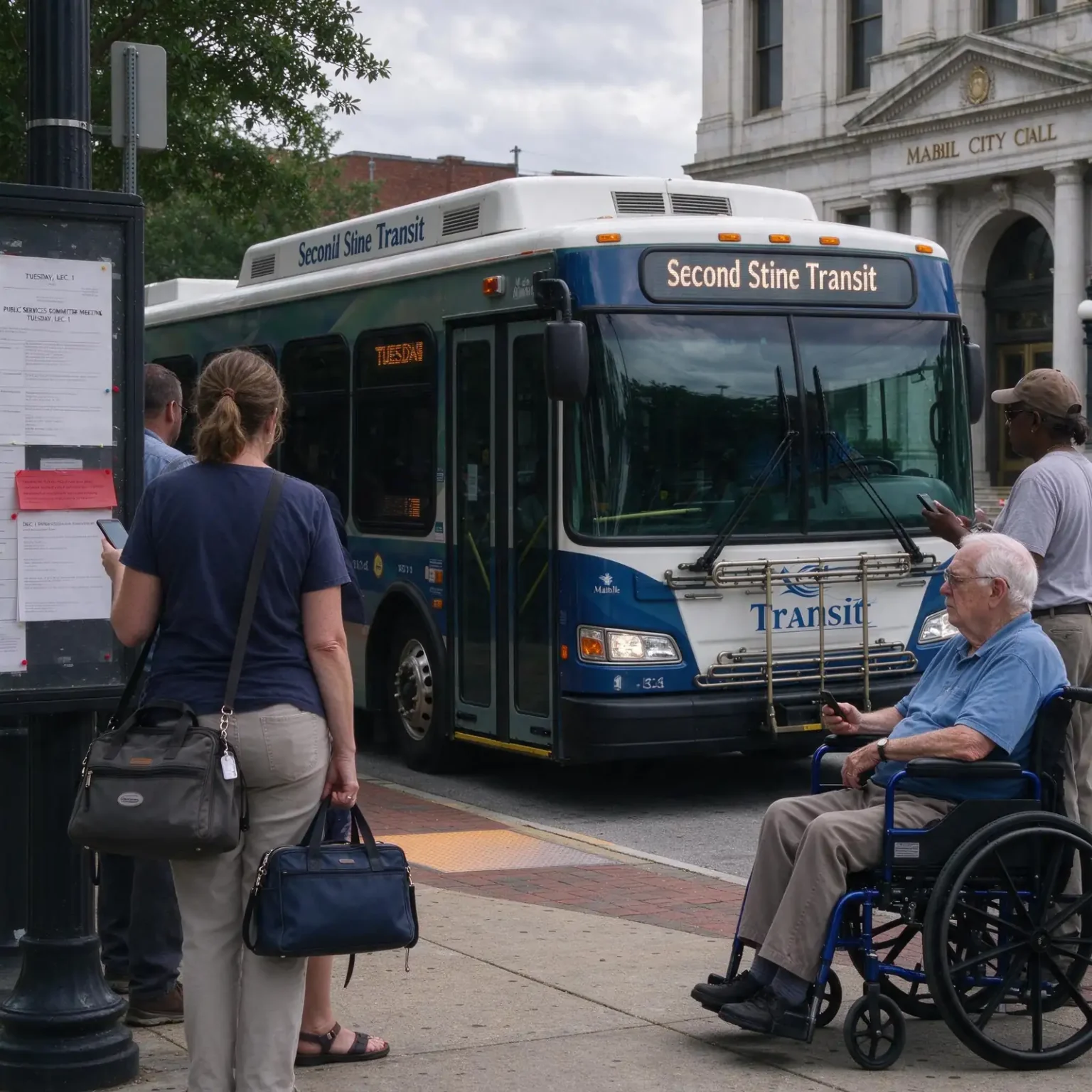
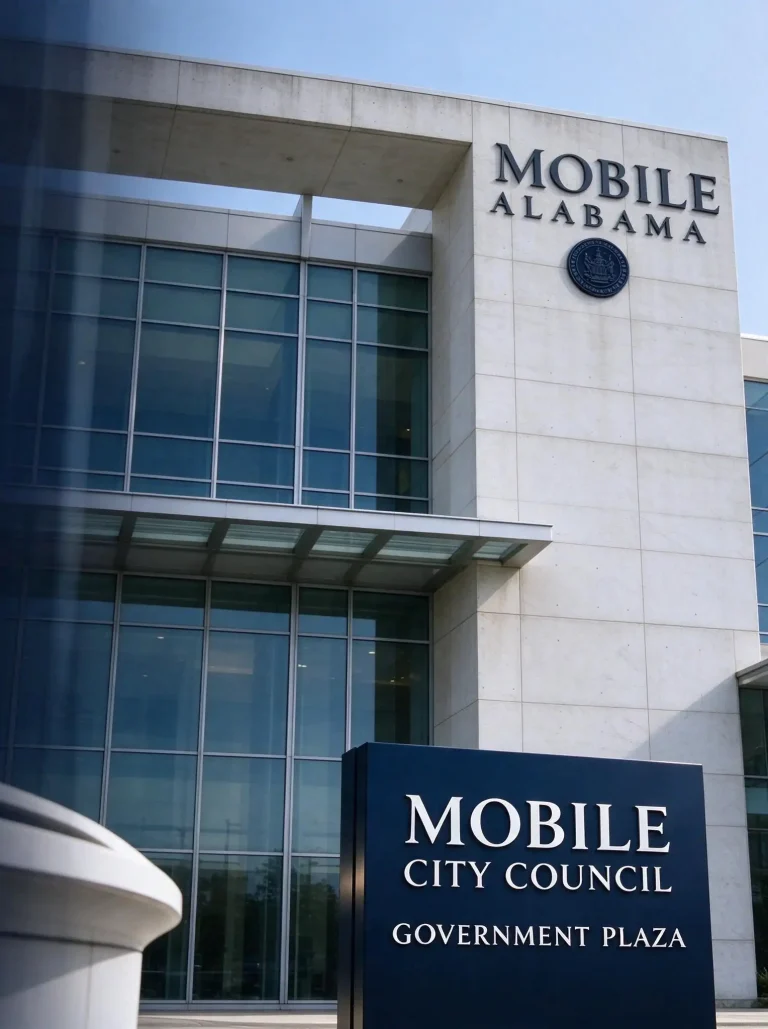
MOBILE, Ala. — Seven weeks after Second Line Transit took over from the Wave, a growing stack of rider complaints has landed at Mobile City Hall, and city leaders say the new public transportation system may need to change course. Riders report showing up late to work, missing medical visits and waiting hours for rides that never come, and a council committee has set a Dec. 1 session to question the people who run the service.
The complaints have arrived by email, phone and in person at council meetings. They include accounts from workers who cannot reach their jobs on schedule, older and disabled residents who cannot get to doctor visits, and a kidney dialysis provider that says its patients are arriving late for scheduled treatments. City leaders said this week that the concerns are real and must be addressed right away, and some raised the possibility that Mobile will have to pivot from the approach it adopted when the system launched.
At a glance
- Launch date: Second Line Transit replaced the Wave Transit System on Sept. 28.
- Operator: Via Transportation, a New York-based company, under an agreement the city adopted in 2025. The contract runs $12.1 million a year.
- Ridership: The city administration says ridership has climbed roughly 8% since the switch.
- Main complaints: Late or missing buses, long walks to stops, unanswered phone calls, multi-hour waits and a hot, uncomfortable trolley.
- Next step: Members of the City Council’s Public Services Committee plan to question the system’s staff and leadership on Tuesday afternoon, Dec. 1.
Riders describe stranded trips and missed care
Some of the most serious accounts involve health care. One rider who depends on supplemental oxygen said a missed connection last week left her without oxygen for about half an hour as she tried to get home. The Dauphin Island Parkway route she needed was not running, she said, and a person working at the stop told her the route did not have enough drivers. Transit workers did eventually give her a ride home that night, she said.
A Dauphin Island Parkway resident who has been raising alarms about the changeover for months spoke to the council on Tuesday, Nov. 17. Older riders and those with disabilities are having a hard time getting to medical visits when scheduled, she said. She said she called on Monday to schedule a trip from her home to her doctor’s office and was told no vehicles were available. She was late to one of her own appointments because she found no way to travel from her Dauphin Island Parkway neighborhood into downtown, she said, and she told council members the new system is not working for people with disabilities. She also said the smaller vehicles can be hard for older and disabled passengers to use.
Another rider said service seems to get worse around the evening shift change, when the system appears to run short of drivers.
Council members said a dialysis provider has reported patients arriving late for treatment because buses were unreliable. For people who need dialysis several times a week, a late arrival can mean a shortened or rescheduled session, which is why clinics watch transportation problems closely.
City leaders acknowledge the problems
City officials did not dismiss the reports. Leaders said they have heard from residents who could not get anyone on the phone, who were left to walk after a bus never showed up, and who sat for hours waiting on a ride. Those concerns are legitimate, officials said, and they expect them to be handled immediately.
One council member said everyone understands that a brand-new system can create problems, but that people trying to get to work cannot afford to go without service. That stress is not something the city wants residents to face, he said. If a change in direction is required, the city should make it, he added, because residents must get the service they need.
Another council member called the situation very important and said it deserves immediate attention. Residents who are making the effort to get to their jobs should not be losing them because they missed a bus or the bus ran late, he said, and the city is failing them if that happens.
Council members also said the cause is not yet clear. One questioned whether Second Line Transit has enough drivers, enough vehicles or enough funding to keep up with demand. The council does not directly manage the transit system, he noted, so members need the operator to explain what is going on behind the scenes, including how the microtransit service is running and how the route cuts are affecting riders. He also wondered whether many riders simply have not yet learned how to use the new system or the Via smartphone app that coordinates trips.
Demand outpacing vehicles and drivers
Ridership is up roughly 8% since the changeover from the Wave, the city administration has said, and it anticipates further growth. Officials believe that growth is part of the problem. Demand for the expanded on-demand service has been higher than expected, and city leaders said the main hiccup appears to be too few vehicles or drivers for the number of trip requests.
More riders is a good sign, officials said, but holding onto them requires the city to deliver what it promised. The plan to retire some large buses was supposed to come paired with enough smaller on-demand vehicles to give riders broader coverage. Many residents relied on the Wave, officials said, and those same residents now need to be able to rely on Second Line Transit.
The current city administration took office last November, after the transit overhaul had already been set in motion.
How the redesign was supposed to work
Mobile invested heavily in rebuilding its transit network. Via, which had already been operating the Wave since October 2025, was hired to reimagine the system under the yearly $12.1 million contract. The new design pairs reworked fixed bus routes with microtransit, an on-demand service in which smaller vehicles carry riders from one point to another after they book a trip. Some routes were consolidated, and the city expected riders on those lines to switch to microtransit or to other routes.
Planners projected that the redesign would extend public transportation access to roughly 50,000 additional residents compared with the Wave. Another goal was that, once fully rolled out, every rider would be within a quarter-mile of a stop. The city also hoped the system would draw new riders, such as fans and visitors who would rather leave the car at home for football games and other events around town.
Some riders say the reality has fallen short. One council member said an email he received came from a rider frustrated that the nearest stop was now miles away on foot. He said he welcomes new riders who use transit for fun and outings, but that right now the system exists first for people who have no other way to get around, and the city must support them.
City leaders also noted a longstanding problem the redesign was meant to fix: most of Mobile’s fixed-route vehicles have traveled nearly empty for much of the time they are in service, often carrying no one but the driver. Shifting resources toward on-demand service was intended to put vehicles where riders actually need them.
Trolley draws its own complaints
Riders have also criticized the city’s first trolley-style bus. Council members said they have heard that the vehicle is hot and uncomfortable inside, runs late to its stops and travels mostly empty on Saturdays.
The city administration has made a move away from large, traditional buses toward smaller rubber-wheel, trolley-style vehicles one of its priorities. Officials said this week was the first they had heard of the trolley complaints. They acknowledged that the city bought the trolley secondhand and that it may have issues no one had flagged to them, but said they still believe the new system will produce a lasting rise in ridership from people who want more practical choices for getting around.
What to expect at the Dec. 1 committee meeting
On Tuesday, Dec. 1, the complaints go before the Public Services Committee, which has invited workers and managers from the transit system to a public session. Members want answers directly from Via Transportation about staffing, vehicle availability and how the on-demand service is handling demand. Via could not be reached right away for its response to the complaints.
Committee meetings give council members a chance to dig into an issue in more detail than a regular voting session allows. Members can ask the operator for data, such as on-time performance, wait times and driver counts, and can ask for a plan to fix specific problems. Any changes to the city’s contract or budget would still need to go through the full council.
What riders can do now
Riders who are having trouble with the system have several options:
- Document problems: Note the date, time, location, route and what happened when a bus is late, a ride is canceled or a call goes unanswered. Specific details make complaints easier to investigate.
- Contact your council member: Council members said much of what they know has come from residents who emailed or called. Each of Mobile’s council districts has a representative who can pass concerns to the administration.
- Attend the Dec. 1 meeting: Committee meetings are open to the public, and the session is the most direct chance to see how the operator responds.
- Ask about paratransit: Riders with disabilities who cannot use regular routes may qualify for MAP, the city’s paratransit program, which provides direct service for eligible riders who enroll.
- Plan ahead for medical trips: Riders with dialysis, oxygen or other medical needs may want to book trips early, leave extra time and keep a backup plan, such as a family member or clinic transportation program, until service improves.
Why microtransit rollouts can be bumpy
Mobile is one of many U.S. cities that have tried on-demand microtransit in recent years as a way to cover areas where large buses run mostly empty. The model can stretch service to more neighborhoods, but it depends heavily on having enough vehicles and drivers on the road at the right times. When more people request rides than the fleet can handle, wait times grow quickly, and riders who are used to a fixed schedule can be left uncertain about when a vehicle will arrive.
Transit agencies across the country have also faced difficulty hiring and keeping drivers, which can make it harder to staff every shift. Riders who are new to booking trips through an app or by phone may also need time and help to adjust, especially older residents and people without smartphones.
For the many Mobile residents who do not own a car, those growing pains are not an inconvenience but a question of whether they can keep a job or reach medical care. City leaders said this week that they understand those stakes and that the system has to deliver on what was promised.