Seminole Food Pantry That Fed 18,000 This Year Needs $650,000 for a Bigger Home
Turning Point Food Pantry in Seminole has outgrown its 1,400-square-foot church space and is raising $650,000 to buy property about a mile away.
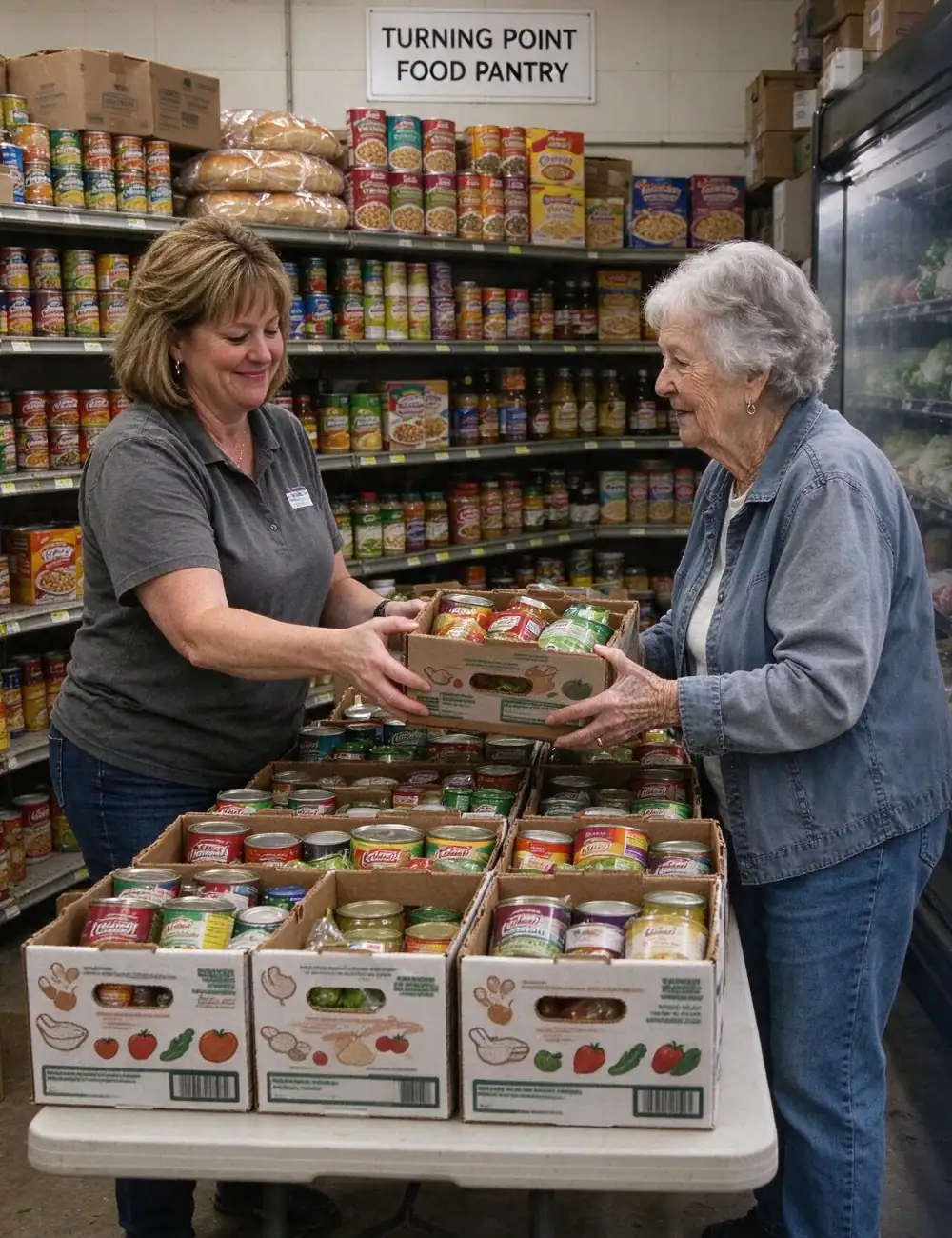
SEMINOLE, Ala. — A volunteer-run food pantry in this rural corner of eastern Baldwin County is trying to raise $650,000 to buy a bigger home, after five years of growth left its church-based storage space so packed that donated groceries are sometimes out of reach and new donations have to be turned down.
Turning Point Food Pantry has served 18,000 people so far this year, according to the couple who founded and run it. That total includes about 5,000 children and close to 6,000 seniors. All of that food currently moves through a church building of roughly 1,400 square feet, space the pantry has simply outgrown.
A Pantry Out of Room
The shortage of space shows up in small, frustrating ways. The pantry’s founder, a pastor, said cases of canned chicken noodle soup have been sitting in storage for about a month and a half because other goods are stacked in front of them. The soup is there, he said, but volunteers cannot reach it to put it into the weekly food boxes.
The refrigeration is just as crowded. The pantry’s director, who is the pastor’s wife, said there are days when opening a cooler sends heads of lettuce and bagged salad kits tumbling out because the units are crammed so tightly.
The church also needs its building back. The space the pantry occupies is now in demand for Bible studies and other church gatherings, adding to the pressure to move.
Five Years of Growth
The couple started the pantry five years ago with very modest resources. At the beginning, they were packing roughly 50 bags of groceries each week, and on some weeks not all of those bags were picked up. Their entire setup, the pastor recalled, amounted to a handful of shelving units and two refrigerator-freezers placed next to each other.
Demand has since grown many times over. The 18,000 people served this year is a measure of how much the pantry has become part of the safety net for families across the area.
Turning Point by the numbers
- 18,000 people fed this year
- About 5,000 of them children
- Nearly 6,000 of them seniors
- More than 224,000 pounds of groceries supplied this year by Feeding the Gulf Coast
- 92,000 pounds more donated by Dollar General
- About 1,400 square feet of space in the current church building
- $650,000 price of the property the pantry hopes to buy
Supply Is Not the Problem
Unlike many small pantries that struggle to find enough food to give away, Turning Point’s challenge is the reverse. The supply is there. This year the regional food bank, Feeding the Gulf Coast, sent it more than 224,000 pounds of groceries, and Dollar General contributed an extra 92,000 pounds on top of that. Every bit of that, the pastor said, puts meals on a family’s table.
But with freezers already full to the top and shelves stacked deep, the couple said the pantry frequently has to refuse offers of donated food because there is no place to store it. For an organization built to fight hunger, turning away groceries is a painful position to be in.
The Property They Have in Mind
The pantry has its eye on a parcel in Seminole, roughly a mile from where it operates now. The asking price is $650,000, and the couple has begun fundraising to try to reach that amount.
Staying in Seminole matters, they said. The current location sits at a central point that people can reach from every direction without long drives, which is important in a rural area where gas money and travel time are real concerns for families on tight budgets. The need in the community is obvious, they said, and the pantry wants to stay where its clients already know to find it.
Without a larger building, the pastor said, the alternative would be a hard one: the pantry would have to reduce how many people it can help. He called that possibility a terrible outcome that would be a shame for the community.
What a Larger Space Would Change
For the volunteers who run Turning Point, a bigger building is less about growth for its own sake than about being able to use what is already being offered. More shelving would mean every case of donated food can be reached and packed. More cold storage would mean fresh produce and frozen items do not have to be squeezed in or refused. And a separate building would free the church to use its own space for worship-related activities again.
The couple has said their aim is to avoid cutting back on the number of people the pantry serves. A move of about a mile would keep the pantry in familiar territory for the thousands of people who already rely on it while giving the operation the room it currently lacks.
About Seminole
Seminole is a small, unincorporated community in far eastern Baldwin County, along U.S. Highway 90 near the Perdido River and the Florida state line. The area is largely rural, with farms, timberland and scattered homes, and it sits a considerable distance from the bigger grocery stores and social service offices found in Baldwin’s larger towns such as Robertsdale, Foley and Bay Minette.
In communities like this, a nearby pantry can make a big difference. For a senior on a fixed income or a family with several children, a long drive to pick up groceries can cost money that might otherwise go toward food itself. That is one reason many food assistance groups try to set up distribution points close to where people live.
How Food Banks and Local Pantries Work Together
Feeding the Gulf Coast is a member of the Feeding America network and serves as the regional food bank for south Alabama, northwest Florida and south Mississippi. Food banks like it collect donated and purchased food in large volumes from manufacturers, grocers, farmers and government programs, store it in warehouses, and then distribute it to a network of partner agencies.
Those partner agencies, which include church pantries such as Turning Point, are the groups that hand food directly to individuals and families. Because the food bank supplies large quantities at little or no cost, a partner pantry’s ability to serve more people often depends less on finding food than on having the storage, refrigeration, volunteers and space to handle it. Cold storage is particularly important, since produce, dairy and meat must stay refrigerated or frozen to remain safe.
Retailers also play a role. Large chains frequently donate items that are near their sell-by dates, have damaged packaging, or are surplus inventory but still safe to eat. Those donations help pantries offer a wider variety of products, but they also arrive in quantities that can quickly overwhelm limited shelf and freezer space.
Hunger in Baldwin County
Baldwin County is often seen as one of Alabama’s more prosperous counties, with rapid population growth, booming beach tourism and new subdivisions. But that picture can hide significant need, particularly in rural areas away from the coast and among seniors, working families with low wages, and households hit by rising costs for housing, groceries and utilities.
Pantries across the county have described growing demand this year. In Spanish Fort, for example, volunteers at another pantry have been loading Thanksgiving boxes as concerns grow about proposed SNAP changes.
How the Community Can Help
Organizations like Turning Point typically depend on a mix of support. People who want to help a local pantry often consider the following:
- Financial gifts: Money is especially important for a building campaign like this one, and it also lets pantries buy items they run short on.
- Volunteering: Pantries need hands to sort donations, pack boxes and help on distribution days.
- Equipment: Shelving, freezers and refrigerators can expand how much food a pantry can accept.
- Spreading the word: Churches, civic clubs and businesses can help connect pantries with donors and with neighbors who need food.
Anyone interested in supporting the building effort can contact Turning Point Food Pantry in Seminole directly to ask about giving or volunteering.